
Where scrap gold and silver hides in an ordinary house
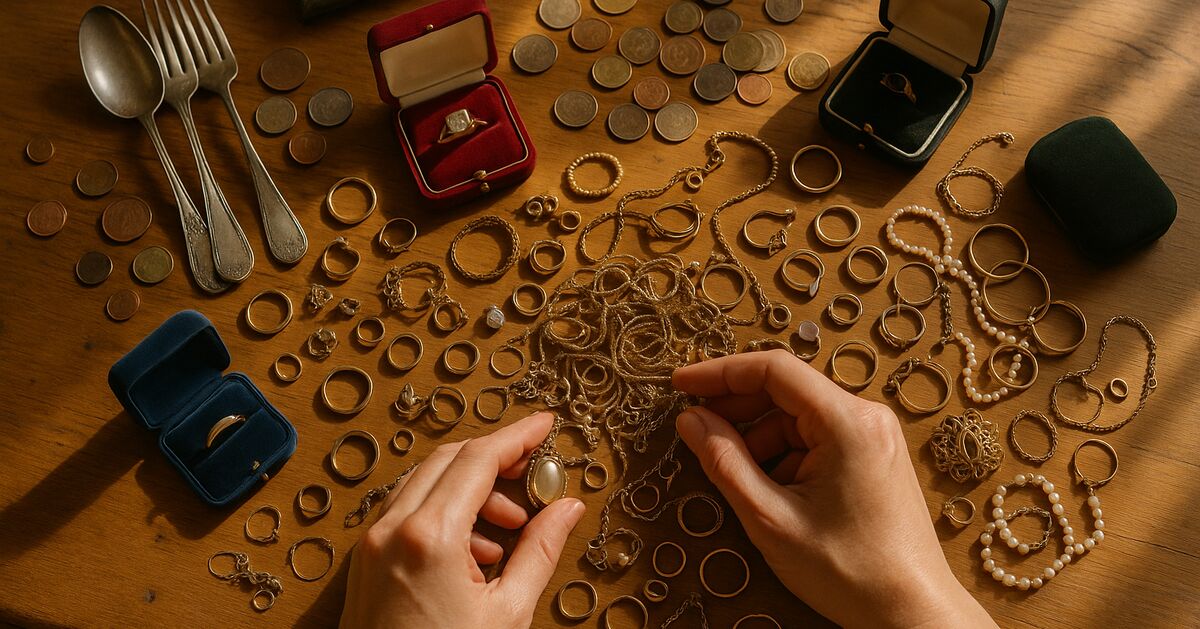
Precious metal is hiding in more homes than people realize, and the owners have no idea it is there. After nearly two decades of buying scrap gold and silver, I can tell you that a surprising share of the best finds came not from dealers or estate auctions but from ordinary people who had a poke around their own house before picking up the phone. This post is a room-by-room, drawer-by-drawer guide to where that metal actually lives, what signs to look for, and how to decide what is worth pursuing once you find it.
Start with the jewelry box, but go deeper than the top tray
The obvious starting point is whatever jewelry box or dish sits on the dresser. The problem is that the pieces displayed there are usually the ones still in rotation, or at least still remembered. The real finds are often underneath, in the velvet-lined second tray, or loose at the bottom under a tangle of broken chains and single earrings.
Go through every piece individually. Do not assume that because something looks cheap or tarnished it has no precious metal value. A lot of 9-carat and 14-carat gold jewelry was made to look understated, and a piece covered in black tarnish is far more likely to be sterling silver than rhodium-plated base metal.
Things worth pausing on:
- Broken chains. Gold and silver chains snap at the clasp or at a thin link, get tossed in a drawer, and sit there for years. Broken does not matter to a refiner. Weight is what counts.
- Single earrings. The partner is gone, the earring feels useless, but if it is gold it still has melt value. A pair of 18-carat studs that has lost one stone is worth more than nothing.
- Rings that no longer fit. These often get stashed and forgotten. Check every one for a hallmark on the inner shank.
- Charm bracelets. Each charm may be a different metal, and some will be solid gold or silver while others are plate. Worth sorting carefully.
If you are unsure how to read the tiny stamped marks on jewelry, the plain-English glossary of silver and gold trade terms explains the most common hallmarks, fineness numbers, and assay symbols without requiring a magnifier the size of a dinner plate.
Bedside tables, chest-of-drawer interiors, and the backs of wardrobes
Jewelry migrates. A ring comes off before bed and goes in the drawer. A bracelet gets tangled in something and gets stuffed to the back of a wardrobe shelf. A watch with a broken strap goes into a shoebox. Over a decade or two, these places accumulate.
Pull drawers all the way out and check the dust at the back. Look inside old handbags stored on wardrobe shelves. Check the pockets of coats that have not been worn in a few years. A gold signet ring in the lining of a winter coat is not a far-fetched scenario. It happens.
Pay particular attention to:
- Men's cufflinks and tie pins. Older sets from the mid-twentieth century were very often solid gold or silver, not plated. They tend to live in small leather boxes or loose in a drawer.
- Watches. The movement is not usually precious metal, but the case can be. Gold-filled and gold-capped cases have limited scrap value, but solid 9- or 18-carat cases are worth real money. The caseback will usually be stamped.
- Religious medallions and crosses. These were frequently given as gifts and made in sterling or gold, then worn briefly and put away.
The kitchen and the dining room sideboard
This is where silver plate confusion gets expensive if you are not careful. A lot of household silver that comes through the sideboard drawers is electroplated, not sterling, and the distinction between silver plate and solid silver genuinely matters when you are deciding whether to sell for scrap or try a different route.
That said, solid sterling flatware is more common in older homes than people expect, especially anything inherited from a grandparent's generation. In Britain and the United States, sterling flatware was often given as a wedding gift for much of the twentieth century. It often looks dark and unloved, but tarnish on sterling is a surface reaction, not damage, and a buyer will not penalise you for it.
Look for:
- Canteens of cutlery. If the set lives in a wooden box, it is worth examining every piece for hallmarks. Sterling British flatware will carry a lion passant stamp. American sterling is marked 925 or "sterling."
- Serving spoons and ladles. These tend to be larger, heavier pieces and can hold significant weight in silver.
- Cruet sets, sugar tongs, and butter knives. Smaller items, but often solid silver, especially the older ones.
- Loose odd pieces. A single fish slice or sauce ladle that does not match any other piece probably came from an older set that got broken up. It may well be sterling.
One practical note: resist the urge to polish anything before you get it looked at. If you have silver coins mixed in anywhere, that point is even more important. The reasons not to clean silver coins before selling apply equally to flatware that might have collector interest beyond its melt value.
Lofts, attics, and the boxes nobody has opened since the last house move
This is where the best surprises tend to hide. Boxes that were taped up fifteen years ago and carried to the loft "temporarily" can contain a generation's worth of forgotten valuables. If you are sorting through an inherited home or clearing a property after a bereavement, the guidance on handling inherited silver when you did not choose it covers the emotional and practical side of that process in a way that might be genuinely useful.
For a straightforward house sweep, focus on:
- Old jewelry cases. The structured, fabric-lined cases that used to come with pearl necklaces or pearl earring sets often have a second compartment. Check underneath the insert.
- Coin collections. Pre-1965 American coinage and pre-1947 British coinage contains real silver. A tin of old pennies from a grandparent's era might not be exciting, but a roll of pre-1965 US quarters absolutely is.
- Dental work. Old amalgam fillings, crowns, and bridges removed by a dentist can sometimes contain silver, gold, or palladium. Patients are sometimes given these back. If you have ever had a tooth crowned and received the old crown, it is worth keeping hold of.
- Camera equipment. Older film cameras used silver-bearing film, and while the cameras themselves are not a source of precious metal, X-ray film, photographic prints, and unexposed film in large quantities can contain recoverable silver. This is specialist territory, but worth knowing.
- Antique clocks and ornaments. Silver plate on a copper base is common, but solid silver candlesticks, photograph frames, and small decorative objects exist, especially from the late Victorian and Edwardian periods.
The garage, the shed, and the tool box
This sounds unlikely, but electrical and electronic components contain small amounts of precious metal. Old hi-fi equipment, computer boards, telephone handsets, and similar electronics can sometimes use silver solder and, in some cases, gold contacts. The quantities per item are small, and refining electronic scrap is a specialist process, but if you have a significant quantity it may be worth looking into.
Sterling silver tools are rare but not impossible. A silversmith's workshop or a dentist's retired instruments could include solid silver items. More practically, silver coins that someone stashed "for emergencies" have been found in workshop drawers and old cash tins in garages many times over.
How to decide what is actually worth your time
Once you have gathered everything, the question is what to do with it. Not everything with a precious metal hallmark is a good candidate for scrap sale. Some pieces are worth significantly more as jewelry or as collectibles than as refined metal, and selling them for melt value would be a real loss.
Before you decide, consider:
- Age and maker. A piece stamped by a well-known silversmith or jeweller may have antique value well above its silver or gold content.
- Condition and completeness. A full canteen of cutlery in a named pattern can sell as a set through a specialist dealer for considerably more than its weight in silver.
- Stone settings. Diamonds, sapphires, rubies, and emeralds retain independent value. A gold ring that holds a genuine stone should not go straight to a scrap buyer without someone looking at the stone first.
For everything else, once you have sorted out what is genuinely only worth its metal content, the practical next step is getting a sensible comparison of where to sell it. The comparison of pawn shops, coin dealers, and mail-in buyers walks through the real trade-offs in plain terms.
And before you accept any offer, spend five minutes with the questions to ask before you accept an offer on silver. Knowing what the spot price is on the day, what percentage of spot the buyer is paying, and whether there are any deductions for processing can be the difference between a fair deal and a disappointing one.
A few practical tips before you start
Sort everything into categories before you go anywhere. Separate gold from silver, solid pieces from plated ones as best you can, and coins from jewelry. If you have a mixed box of inherited items, the guide to sorting an inherited box of silver before getting quotes will save you time and help you avoid the common mistake of lumping everything together and accepting a blended offer.
Use a magnet. Precious metals are not magnetic. If a piece attracts a magnet strongly, the base is iron or steel, and it is almost certainly plated. This is not a perfect test because some bases are copper or brass, which are also non-magnetic, but it quickly filters out a lot of obvious plate.
Weigh what you find. A basic kitchen scale accurate to one gram is enough to give you a rough sense of what you have. Combined with the current spot price and the fineness of the metal, you can work out a ballpark melt value before you go anywhere near a buyer. This protects you.
Finally, keep records. Photograph what you find, note any hallmarks, and keep the images somewhere safe. If you send items to a mail-in buyer, you want documentation of exactly what you sent.
The search is often more rewarding than people expect. Homes hold a quiet history of gifts, savings habits, and inherited objects, and a fair share of that history is made of silver and gold. The sweep takes an afternoon. What you find might surprise you.
Explore more practical guides on the How To Sell Silver blog, or visit the FAQ for answers to the questions that come up again and again when people are ready to sell.
Sources & further reading
- Silver and gold commodity reference data (London Bullion Market Association)
- Scrap metal and recycling of precious metals (U.S. Environmental Protection Agency)
- Silver commodity information and properties (U.S. Geological Survey)
Revision history (1)
- Pre-publish editorial QA: 2 flagged, 2 softened; claim audit: 5 claims, 3 rewritten
Claim-by-claim audit (5 checked)
- “In Britain and the United States, sterling flatware was often given as a wedding gift for much of the twentieth century.” (rewritten to what the article can stand behind)
- “Pre-1965 American coinage and pre-1947 British coinage contains real silver.” (cited → usgs.gov)
- “Use a magnet. Precious metals are not magnetic.” (reasoning shown in the article)
- “Old amalgam fillings, crowns, and bridges removed by a dentist can sometimes contain silver, gold, or palladium.” (rewritten to what the article can stand behind)
- “Old hi-fi equipment, computer boards, telephone handsets, and similar electronics can sometimes use silver solder and, in some cases, gold contacts.” (rewritten to what the article can stand behind)