
Clearing an estate: handling silver when you did not choose
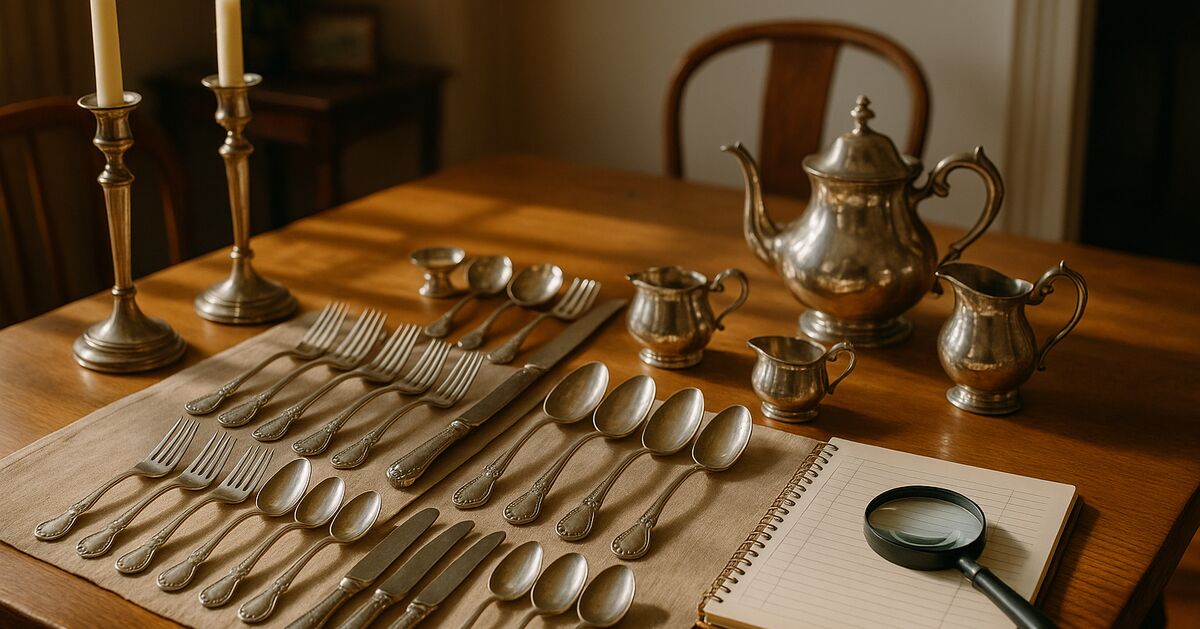
Inheriting silver you never wanted is one of the quieter stresses of losing someone you love. You are grieving, you are tired, and there is a drawer full of tarnished cutlery staring at you from across the room. Nobody handed you a manual.
This guide is that manual. It covers the decisions you actually have to make, in a sensible order, without pressuring you to sell fast or keep everything out of sentiment. The silver will wait. What matters is that when you do act, you act with clear eyes.
Start by doing nothing (for a short while)
The single most expensive mistake that comes up again and again among heirs is selling everything to the first buyer who shows up, usually a house-clearance firm that specializes in speed over accuracy. Those firms are not dishonest by definition, but their business model depends on buying low and moving fast. You do not have to match their pace.
Give yourself a window of two to four weeks before accepting any offer or agreeing to any removal. In that time you can do a proper inventory, separate what might have numismatic or collector value from what is straightforward melt-weight material, and get a second opinion. The silver is not going anywhere, and a small delay can often produce a better outcome.
Take everything out and look at it properly
Pull every piece out of every drawer, cabinet, and box. Estate silver has a habit of appearing in strange places: coin rolls in a coat pocket, a flatware set split between the dining room and an upstairs wardrobe, a small bag of loose pre-1965 coins tucked inside a casserole dish.
As you gather pieces, sort them loosely into these groups:
- Coins (look for dates and any markings)
- Flatware and cutlery (forks, knives, spoons, serving pieces)
- Holloware (jugs, bowls, candlesticks, tea services)
- Jewelry and small decorative items
- Anything you are genuinely unsure about
Do not worry about precise identification at this stage. You are just getting a picture of what exists. Our guide on how to sort an inherited box of silver before getting quotes goes much deeper on the sorting process if you want a step-by-step walkthrough.
The marking question: sterling, plate, or neither?
Once everything is laid out, the next job is to figure out which pieces are solid silver and which are silver-plated. This matters enormously because the two categories have almost nothing in common from a buyer's perspective. Solid sterling silver has a guaranteed metal content; silver plate has almost none.
Look for hallmarks on the back of flatware or the base of holloware. In the United States, sterling pieces are typically marked 925 or STERLING. British pieces carry a set of up to four small punched marks, including a lion passant (a walking lion) that confirms sterling standard. Pieces marked EPNS, A1, Sheffield Plate, or similar terms are silver plate, not solid silver.
If you find a large canteen of cutlery and some pieces are marked and others are not, do not assume the whole set is one thing or the other. Mixed sets exist. The home page has links to several identification guides if you want to go further on marks.
Pieces that turn out to be silver plate are not necessarily worthless, but they need to be assessed very differently. A beautifully made Victorian-era plated tray might have real value to a collector, even though it has negligible metal value. Do not discard plated pieces without at least a quick look at what they are.
Coins deserve special attention before anything else
If the estate includes old coins, slow down considerably before treating them as scrap.
Pre-1965 US dimes, quarters, half-dollars, and dollar coins are generally understood to be about 90% silver, though you should verify this with a coin reference before relying on it. They have a guaranteed melt value that you can calculate from the current silver spot price. But some of those same coins, depending on their date, mint mark, and condition, are worth considerably more than their metal content to collectors and dealers. Some coins, like certain Morgan dollars in good condition, may be sought after by collectors beyond their silver content, so check before selling by weight.
The practical rule: never sell old coins by weight without at least checking the date and mint mark. Even a five-minute search of a reputable price guide or a question to a coin dealer can be the difference between getting melt value and getting several times that. Our detailed article on junk silver and what pre-1965 US coins are really worth explains how to do that calculation, and our piece on Morgan and Peace dollars covers the cases where collector value runs well ahead of melt value.
Flatware sets: count before you quote
For sterling flatware, the weight is the primary driver of value, but the completeness of a set matters too. A full twelve-place setting with all the serving pieces is more attractive to a collector or antique dealer than a jumbled mix of pieces from different patterns. Before you call anyone, take the time to count and group by pattern.
If you find what looks like a large canteen or a fitted wooden case, check whether it is complete. Gaps in a set pull the collector value down but do not affect the melt value, so a nearly-complete set might be better sold to an antique dealer, while a thoroughly mixed collection of orphaned pieces might be better sold to a bullion buyer by weight.
Also pay attention to knife handles. Many older sterling dinner knives have hollow or weighted handles filled with pitch or plaster to give them the right balance. That filler has no silver value and a buyer will deduct for it. This is not a trick; it is just the nature of the item, and knowing about it beforehand means you will not be caught off guard when a buyer explains the deduction.
Do not let guilt drive the decision
This is worth saying plainly: keeping silver you do not want is not a tribute to the person who left it to you. It is just clutter that generates low-level stress every time you open a cupboard.
Families often tie themselves in knots over inherited objects. Someone in the family feels the pieces should be kept "in the family," while the person actually holding them has no space, no interest in polishing silver, and no practical use for twelve place settings of Georgian flatware. These tensions are real and they slow down estate settlements in ways that cost everyone time and sometimes money (particularly if an estate is subject to ongoing costs while items remain unresolved).
A sensible approach is to offer family members a brief window to claim specific pieces they genuinely want, with a clear deadline. After that window closes, treat the remaining pieces as an asset to be managed rather than a relic to be preserved. The person who left the silver to you almost certainly wanted you to benefit from it, not feel burdened by it.
Getting realistic valuations
When you are ready to find out what things are worth, get more than one opinion. Different buyers specialize in different things:
- A bullion dealer or refiner will assess solid silver purely on weight and fineness. They are the right buyer for heavy, undistinguished flatware and scrap pieces.
- A coin dealer will properly assess numismatic value in old coins and can tell you quickly whether something is worth more than melt.
- An antique dealer or auction house is worth approaching for complete sets, holloware with maker's marks, or unusual decorative pieces where the craftsmanship adds value beyond the metal.
Our article on who pays most for silver between pawn shops, coin dealers, and mail-in buyers lays out the trade-offs between each channel clearly. The short version is that no single buyer type is always best; the right channel depends on what you have.
Before you accept any offer, it is also worth understanding what questions to ask. Offers can look superficially similar and represent very different actual payouts once fees, deductions, and terms are factored in. The article on the questions to ask before you accept an offer on silver gives you a short checklist that takes about three minutes to run through.
The paperwork and legal side
If you are the executor of the estate, any silver with significant value needs to be recorded for probate purposes before it is sold. Keep a written inventory with photographs, your best weight estimates, and any identifying marks. This protects you if questions arise later.
In most US states, personal property can be distributed or sold by the executor without a court hearing, but you should confirm the rules that apply to the estate you are handling with a probate attorney or your state's court website. The US government's courts.gov resource can point you toward your local probate court if you are unsure where to start.
If the estate involves a surviving spouse or multiple beneficiaries, make sure everyone with a legal interest has been consulted before any piece is sold. Selling an asset that turns out to belong jointly to others creates real legal problems, even when done with good intentions.
A word on timing and the silver price
The price of silver moves daily, and while you should not try to time the market, it is worth knowing roughly where prices are before you sell. If silver has dropped sharply in the past few weeks, waiting a month or two is not unreasonable, especially for heavier lots. On the other hand, trying to hold silver for years waiting for a better price is a strategy that rarely ends well for non-investors. Sell when you are ready, at a fair price, to a buyer you have verified.
If you are going to use a mail-in buyer for coins or smaller items, pack carefully and insure properly. The mechanics of doing that safely are covered in our guide on how to safely post silver to a mail-in buyer.
What to do with pieces that are genuinely hard to value
Every estate seems to produce at least one item that defies easy categorization: an unusual piece with unclear marks, something that might be silver but also might be pewter or white metal, a piece that a family member insists is valuable but which you cannot verify. For those items, a paid appraisal from a certified appraiser (look for members of the American Society of Appraisers or the International Society of Appraisers) is money well spent if the piece appears substantial. A formal appraisal also provides documentation if the estate is subject to tax reporting requirements.
For general questions about the selling process, the FAQ page covers a lot of the common sticking points, and you are always welcome to browse the full blog archive for topics specific to what you have found.
The bottom line
Handling inherited silver well is not complicated, but it does take a little patience and a willingness to learn the basics before you act. Sort what you have. Identify what is solid silver versus plate. Pull the coins out and check them properly before treating them as scrap. Get more than one valuation for anything substantial. Keep records. And let go of any guilt about selling, because turning an asset into money you can actually use is exactly what the person who left it to you probably intended.
Take your time, do it methodically, and you will come out of this with a fair result and a lot less clutter in your life.
Sources & further reading
- Probate court locator and estate administration guidance (U.S. Courts)
- American Society of Appraisers - find a certified appraiser (American Society of Appraisers)
- International Society of Appraisers - appraiser directory (International Society of Appraisers)
- Precious metals and estate property guidance for executors (Internal Revenue Service)
Revision history (1)
- Pre-publish editorial QA: 1 flagged, 1 softened; claim audit: 5 claims, 2 rewritten
Claim-by-claim audit (5 checked)
- “Pre-1965 US dimes, quarters, half-dollars, and dollar coins are generally understood to be about 90% silver, though you should verify this with a coin reference before relying on i…” (rewritten to what the article can stand behind)
- “Some coins, like certain Morgan dollars in good condition, may be sought after by collectors beyond their silver content, so check before selling by weight.” (rewritten to what the article can stand behind)
- “In most US states, personal property can be distributed or sold by the executor without a court hearing, but you should confirm the rules that apply to the estate you are handling …” (reasoning shown in the article)
- “Selling an asset that turns out to belong jointly to others creates real legal problems, even when done with good intentions.” (reasoning shown in the article)
- “A formal appraisal also provides documentation if the estate is subject to tax reporting requirements.” (cited → irs.gov)