
How to safely post silver to a mail-in buyer
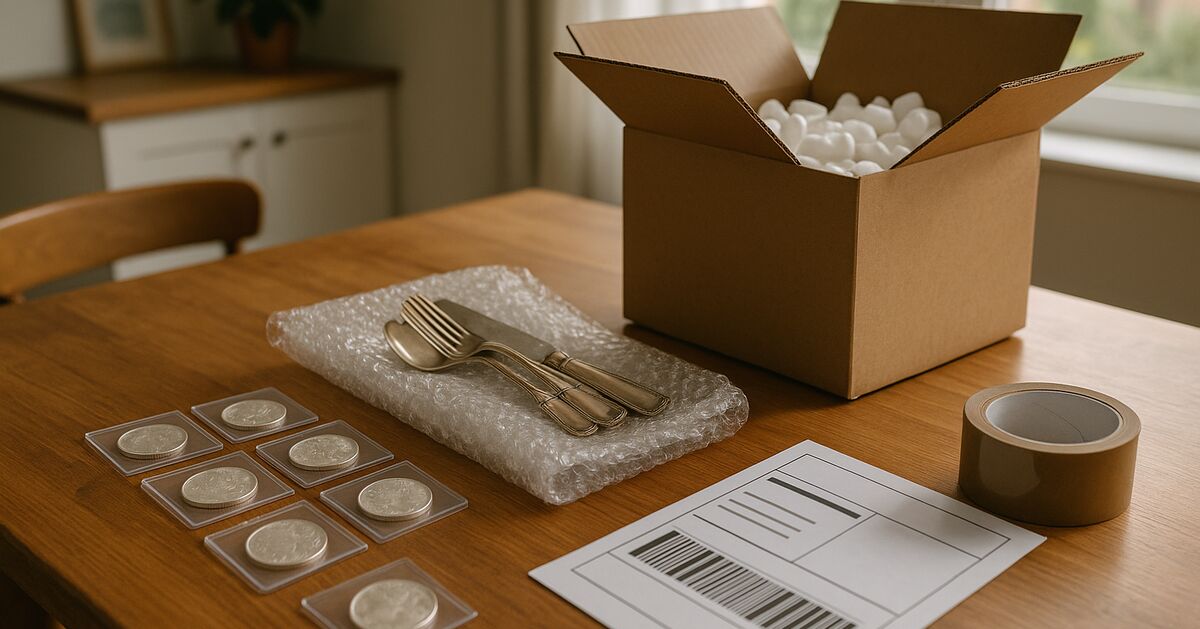
Posting silver through the mail makes some people nervous, and that nervousness is often about the unknown. Once you understand exactly what can go wrong and how to prevent each thing, shipping silver becomes a routine task rather than a white-knuckle gamble. This guide walks through every step, from photographing your items before you box them up to confirming the funds have landed in your account.
Why mail-in buyers exist and when they make sense
Local coin shops and jewellers are convenient, but they have overheads that push their buying prices down. A mail-in buyer (sometimes called a postal buyer or refinery buyer) operates at high volume with lower running costs, which often translates into a better offer per troy ounce. The trade-off is that your silver leaves your hands before you see the money, so the process needs a little more preparation and trust.
Mail-in routes tend to work particularly well for:
- Large quantities of sterling flatware, where the weight adds up fast and local shops may not have the cash on hand
- Junk silver coin lots, where the buyer wants raw melt value and a local dealer might lowball to protect margin
- Scrap silver, broken chains, mismatched cutlery, and other items with no real collectible premium
If you have coins that might be worth more than their silver content, read the post on Morgan and Peace dollars: when the coin beats the melt value before sending anything off. Sending a numismatically valuable coin to a refinery buyer who will simply melt it is one of the more expensive mistakes in this hobby.
Step one: photograph everything before it leaves your hands
This step costs nothing and takes five minutes, yet it is the single most important thing you can do. Lay your items out on a plain white or gray background, take clear photos from multiple angles, and include a ruler or coin for scale. Photograph:
- Each individual piece (front and back for coins)
- The full lot spread out together
- Any hallmarks or maker's marks close up
- The completed package before you seal it
These photos protect you in two ways. First, if there is a dispute about the condition or identity of items on arrival, you have evidence of what you sent. Second, if a parcel is lost or damaged in transit, your insurer will want documented proof of the contents.
Speaking of hallmarks: if you are not sure what the markings on your silver mean, the guide to sterling silver hallmarks explained: reading the four British marks will help you identify what you have and confirm it is genuine sterling before you commit to selling.
Step two: get a reliable quote and read the terms carefully
Before you pack a single thing, contact the buyer and get their current offer structure in writing (email is fine). Pay particular attention to:
- The lock-in date. Some buyers lock your price on the day they receive the parcel; others lock it on the day they assess it. Those can be different days, and silver prices move. If you want to understand why buyers build in these gaps, the post on why a silver buyer offers less when the market is volatile explains the logic clearly.
- Deductions. Ask whether the buyer deducts any processing, assay, or postage return fees from your payment. A buyer advertising 95% of spot might still take back £5 or $5 in handling.
- Minimum weights or values. Some buyers only accept parcels above a certain weight or payout threshold.
- Rejection policy. What happens if the buyer decides an item is silver-plated rather than sterling? Will they return it, and who pays the postage? If you are at all uncertain whether something is genuine silver rather than plated, run through the tests in how to tell sterling silver from silver plate at home before it goes anywhere near an envelope.
Step three: pack the parcel properly
Poor packing is a real problem with silver. Coins and cutlery are heavy and have hard edges; they will punch through a thin cardboard box or tear through bubble wrap if not adequately cushioned. Here is a packing approach that works reliably:
For coins:
- Place each coin in a soft coin flip or small zip-lock bag to prevent scratching.
- Stack no more than ten coins at a time, wrap the stack tightly in bubble wrap, and secure with tape.
- Place the wrapped stacks in a sturdy cardboard box (not a padded envelope) with at least 2 cm of packing material on every side.
- Fill any remaining air space with crumpled paper or foam peanuts so nothing shifts.
For flatware and larger items:
- Wrap each piece individually in tissue paper first to prevent surface scratches, then wrap in bubble wrap.
- Lay heavier pieces flat in the base of the box with lighter items on top.
- Make sure cutlery handles, which can be deceptively heavy, are surrounded by padding and cannot puncture the box walls. There is a broader discussion of weighted handles in the post on weighted knife handles and what they do to canteen value, worth a read if you are sending a full canteen set.
- Use a double-walled box for anything over about 1 kg.
Sealing:
Use strong parcel tape all the way around every seam and join. A box that pops open in a sorting facility is effectively a loss. Write the buyer's address clearly on the outside and include a note inside the parcel with your name, return address, and the buyer's reference number if they gave you one.
Do not write "silver" or "coins" on the outside of the box. A plain, unmarked parcel attracts far less attention.
Step four: choose the right postal service and get the right insurance
This is where many sellers cut corners and occasionally pay a steep price for it. Here is what to know:
Use a tracked, signed-for service. Proof of posting is not the same as proof of delivery. You need a service that logs every handover point and requires a signature at the destination. In the UK, Royal Mail Special Delivery Guaranteed is the standard choice for valuable parcels; in the US, USPS Registered Mail or a courier with full tracking are the usual routes.
Insure for the correct value. Standard postal services include a limited compensation ceiling, which is often far below the value of even a modest silver parcel. Check the ceiling carefully and pay for additional cover if needed. Some mail-in buyers will arrange a prepaid, insured label for you; always ask, because if their label comes with cover, it can simplify a claim if something goes wrong.
Keep every receipt. The tracking number, the proof-of-posting receipt, the declared value receipt - keep all of these until the payment clears your account.
A note on declared value: always declare the correct value. Declaring less than the true value to save on postage can invalidate your insurance cover, and declaring more than the true value is not honest either, so declare the realistic market value. Declare the realistic market value of what you are sending based on current silver prices.
Step five: notify the buyer and track the parcel
Once you have posted, email the buyer with:
- Your name and reference number
- The tracking number
- The carrier and service used
- A list of the contents (weights, items, and any identifying details)
This is also a good moment to attach your pre-posting photographs. Most reputable buyers will acknowledge receipt by email and again when they have assessed the parcel. If you do not hear from them within 48 hours of the tracked delivery confirmation, follow up promptly.
What to do if something goes wrong
Parcels go missing, and occasionally there is a dispute about the contents or condition of items on arrival. Here is how to handle both situations:
Lost parcel: Contact the carrier immediately and file a formal claim. You will need your tracking number, proof of posting, proof of value (your photographs and any previous appraisals or receipts), and the declared value receipt. File your claim within the carrier's deadline, checking their specific terms, as the window varies by service.
Dispute with the buyer: If the buyer's assessed weight or payout differs significantly from what you expected, ask for a written breakdown. Reputable buyers will explain their assessment in detail. If you believe an item has been misidentified (for example, called silver-plate when it is sterling), refer them to your hallmark photographs and ask for a second assessment. If you cannot resolve the dispute and the amount is significant, your consumer protection body or trading standards office is the next step.
A quick checklist before you seal the box
It helps to run through this before the tape goes on:
- [ ] Every item photographed (individual shots, full lot, hallmarks)
- [ ] Quote confirmed in writing with lock-in terms understood
- [ ] Buyer's reference number written on the note inside the parcel
- [ ] Items individually wrapped, no direct metal-to-metal contact
- [ ] Sturdy box with at least 2 cm of padding on all sides
- [ ] No indication of silver or coins on the outside of the box
- [ ] Tracked, signed-for service booked
- [ ] Insurance confirmed and value correctly declared
- [ ] Tracking number noted and buyer notified by email
How this fits into the bigger picture of selling silver
Mailing silver is one tool among several. For smaller quantities, a local buyer may be simpler. For items with strong collector appeal, an auction room or specialist dealer will probably outperform a refinery buyer. For a large lot of scrap silver or circulated pre-1965 coins, a volume mail-in buyer can return more than a local shop simply because of their lower cost base. The frequently asked questions page covers a range of related questions about the selling process if you want to read more broadly.
The home page at How To Sell Silver also pulls together the full range of guides on this site, which is a useful starting point if you are new to the process and want to understand your options before deciding on any one route.
The golden rule through all of it is the same: do your homework before your silver leaves your hands. Understand what you have, know roughly what it is worth (the worked example in what is my sterling flatware actually worth? is a good practical reference), and choose a buyer you have verified rather than one you have simply googled at the last minute.
Posting silver safely is genuinely straightforward once you have done it once. The preparation described above might feel like a lot the first time, but most of it takes under twenty minutes, and it is the difference between a smooth transaction and a stressful one.
Sources & further reading
- USPS Registered Mail: features and compensation information (U.S. Postal Service)
- Trading Standards: consumer rights when goods are lost or damaged in transit (UK Government / Trading Standards)
- Packaging guidelines for sending valuable and fragile items (U.S. Postal Service Domestic Mail Manual)
Revision history (1)
- Pre-publish editorial QA: 1 flagged, 1 softened; claim audit: 3 claims, 2 rewritten
Claim-by-claim audit (3 checked)
- “Standard postal services include a limited compensation ceiling, which is often far below the value of even a modest silver parcel.” (cited → usps.com)
- “Declaring less than the true value to save on postage can invalidate your insurance cover, and declaring more than the true value is not honest either, so declare the realistic mar…” (rewritten to what the article can stand behind)
- “File your claim within the carrier's deadline, checking their specific terms, as the window varies by service.” (rewritten to what the article can stand behind)