
Why a silver buyer offers less when the market is volatile
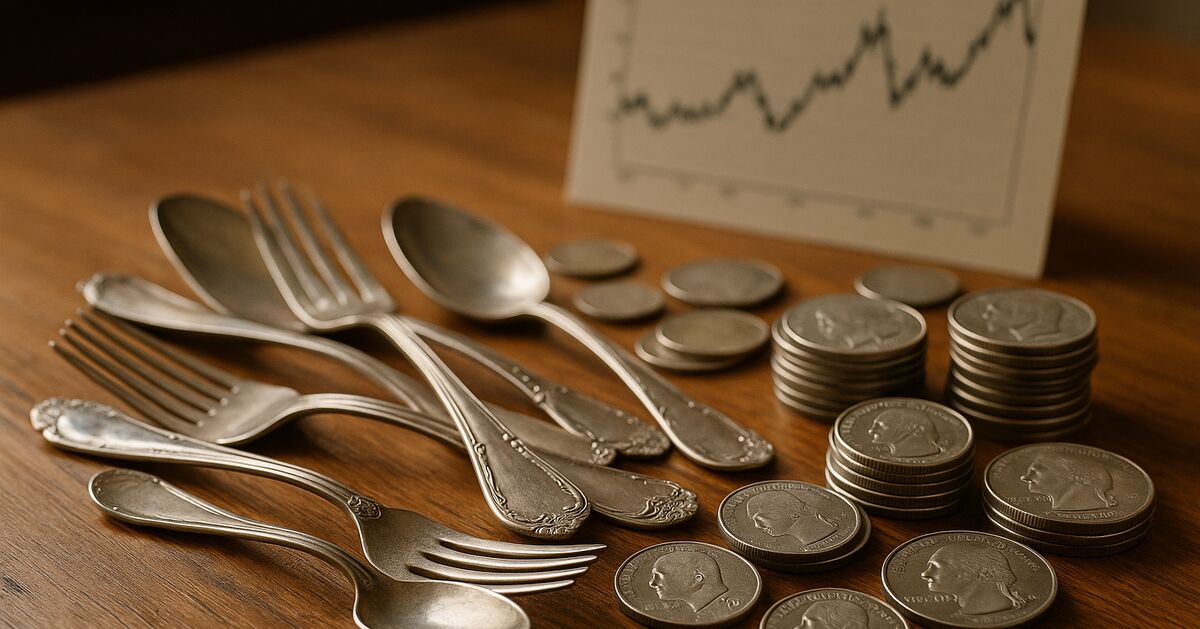
Volatile silver markets are one of the most frustrating things a seller can walk into, and the frustration gets worse when the buyer in front of you quietly lowers their offer without much explanation. That gap between the spot price you saw online and the number on the table can feel like a shakedown. It usually isn't. Understanding the mechanics behind that discount can help you push back where it's fair, accept where it's not, and time your sale to get a genuinely better result.
The spot price is a snapshot, not a promise
Silver's spot price - the number you see on Kitco, Bloomberg, or any commodity ticker - reflects what a contract for immediate delivery of refined silver is trading for at that exact second on the global market. It changes every few minutes during trading hours, sometimes dramatically within a single day.
When a buyer makes you an offer, they are not locking in the spot price for themselves at the same moment. They need time to assess your items, weigh and test them, calculate the fine silver content, bundle them with other purchases, and then actually move the metal to a refiner or wholesaler. That process can take anywhere from a few days to several weeks. During a calm market, the price they'll receive when they eventually sell is reasonably predictable. During a volatile market, it isn't.
This is the core of the problem: the buyer is carrying price risk from the moment they hand you cash to the moment they convert your silver back into money. The more the market swings, the larger that risk, and the bigger the cushion they need to build into their offer to avoid a loss.
What "volatility" actually means in practice
Volatility is a measure of how much and how quickly prices move. Silver is already one of the more volatile major commodities, because its market is smaller than gold's and it has a dual role - both an industrial metal and a monetary one. Silver's price can move sharply within a single trading session, especially when economic uncertainty spikes or the U.S. dollar moves sharply.
To put that in concrete terms: if spot silver is $30 per troy ounce and drops 8% overnight, it is at $27.60 the next morning. A buyer who paid you based on $30 spot and is sitting on a pound of sterling silver (roughly 12 troy ounces of fine silver equivalent in .925 sterling) has just watched around $28 of potential profit evaporate before they've even called the refiner.
A buyer who does this day after day has seen exactly this scenario play out. Their response is rational: widen the discount to create a buffer against the next surprise move.
The components of a buyer's offer
When a dealer quotes you a percentage of spot, that percentage has to cover several real costs, not just profit. Breaking them down helps you see where volatility fits in.
- Refining costs. Getting silver melted, assayed, and certified costs money. Refiners charge per ounce or per lot, and those fees come straight off the top.
- Operating overhead. Rent, staff, insurance, scales, acid test kits, XRF machines - all of this has to be paid whether the market is calm or choppy.
- Sorting and processing labor. Sterling flatware, coins, jewelry, and industrial silver all require different handling and travel to different buyers or refiners.
- Holding time. The longer a buyer holds your metal before selling it on, the longer they are exposed to price risk.
- Market risk buffer. This is the variable one. In a calm market this buffer tends to be small, while in a volatile market buyers often widen it considerably to protect against price swings.
Add those together and you can see why offers well below full melt value are common even in stable markets. In a volatile stretch, that percentage can drop further for items that need extra processing, like mixed lots of flatware with uncertain hallmarks.
If you want to understand how melt value itself is calculated before you even get to the discount question, the worked example at What is my sterling flatware actually worth? A worked example walks through the arithmetic step by step.
Why some silver is discounted more than others during volatility
Not all silver gets hit equally when markets turn choppy. A buyer's discount tends to be larger for items that:
Take longer to verify. If a piece doesn't have a clear hallmark, the buyer has to test it before they know what they're buying. Testing takes time, and time is exposure. Items with legible .925 or "Sterling" stamps move faster and carry less uncertainty. If you haven't confirmed what you actually have before showing up, the guide on how to tell sterling silver from silver plate at home is worth reading first - knowing your material puts you in a stronger position.
Require specialist buyers. Antique flatware with collector value, vintage jewelry, or large irregular pieces may need to be sold to a more specific buyer rather than sent straight to a refiner. That extra step adds time and another party who also needs a margin.
Come in mixed lots. A bag of assorted silver-looking items that need to be sorted, tested, and separated is more work and more holding time than a neat set of marked sterling spoons.
Have lower fine silver content per unit weight. Lightweight pieces like thin chains or hollow silver items have a higher ratio of labor to metal value, making the fixed processing costs bite harder as a percentage.
The hedging problem: buyers can't always hedge silver like the pros
Large commodity trading firms and big refiners hedge their metal exposure using futures contracts on the COMEX exchange. If they buy silver at spot, they can simultaneously sell a futures contract locking in the price they'll receive later, effectively neutralizing the price risk.
Most local coin shops, pawn shops, jewelry buyers, and small dealers cannot do this efficiently. COMEX futures contracts require a large minimum size, worth well over $100,000 at typical spot prices, putting hedging out of reach for small buyers. A local dealer buying a few hundred ounces of sterling at a time cannot hedge one transaction at a time without enormous transaction costs. So they carry their risk naked, and they price their offers accordingly.
This is a genuinely important structural reason why small, local buyers discount more aggressively during volatile periods than large refiners. It's not purely margin-seeking; they are compensating for real financial exposure with no cheap way to neutralize it.
Timing your sale around volatility
You can't predict markets, but you can observe them and act on what you see.
Watch the 30-day chart, not just today's price. If silver has moved more than 8-10% in either direction over the past month, you are in an elevated volatility environment. Buyers will be cautious regardless of where the price sits right now. A price that has been relatively flat for several weeks is a better selling environment even if the absolute number is a little lower.
Sell on the day after a sustained move up, not the day of. If silver has been climbing for a week, buyers often haven't fully adjusted their offers upward yet - they're still nervous about a reversal. But if the move has held for several days, some of that caution eases and offers tend to improve.
Avoid selling right after a sharp spike.A sudden one-day jump in spot price often makes buyers more cautious, not less. They assume a reversal is coming and widen their discount to protect against it. Counter-intuitive but consistent with how risk-averse buyers behave.
Get multiple quotes. This is always true but matters more when markets are moving. Different buyers have different inventory levels and different urgency to buy at any given moment. One dealer who is overstocked in sterling flatware will offer less than one who has a refiner pickup scheduled next Tuesday. Shopping around costs time but can recover several percentage points of offer price. The FAQ covers what to expect from the quoting process if you haven't been through it before.
What you can reasonably negotiate
Understanding a buyer's risk logic also tells you where negotiation has traction and where it doesn't.
You can reasonably push on:
- Processing time. If you can offer to come back in two weeks when the market may have settled, some buyers will offer more because they can time their sale more carefully.
- Lot clarity. Bringing in a clean, well-documented, already-identified lot of sterling removes uncertainty. Less testing time means less exposure. That has real value to the buyer and some will recognize it.
- Volume. A larger lot means fixed costs spread over more metal, which can improve the percentage offer even during choppy markets.
You cannot reasonably argue away:
- The market itself. Telling a buyer the spot price was higher yesterday doesn't change what it is today or what they expect it to be tomorrow.
- Sentimental or historical value. Melt buyers are buying metal. The story behind a piece doesn't enter the calculation.
- What another buyer allegedly offered. If you genuinely have a better offer, take it. If you're testing the bluff, experienced buyers hear it often and it rarely moves them.
When to walk away and wait
Sometimes the best move is simply not to sell during a volatile stretch. Silver does not expire. If you don't need the cash immediately and the market is behaving erratically, holding for a calmer period is a legitimate strategy. The risk is that prices fall further, but that cuts both ways - they can also recover.
A practical middle ground: sell a portion now if you need liquidity and hold the rest. That way you capture some of the current price without betting entirely on where the market goes next.
For a broader grounding in how all of this works - the math, the terminology, the process - the home page, the about page, and the rest of the blog cover the full landscape of selling silver as a private individual.
The buyer sitting across the table from you isn't your enemy. They're running a business in a market that can move against them overnight, with limited tools to protect themselves. Knowing that doesn't mean you have to accept any number they name - it means you can negotiate from a position of understanding rather than frustration, and that tends to produce better outcomes for everyone involved.
Sources & further reading
- Silver commodity market overview and spot price data (U.S. Commodity Futures Trading Commission)
- Silver supply, demand, and price statistics (The Silver Institute)
- Precious metals pricing and market data (Kitco Metals Inc.)
Revision history (1)
- Pre-publish editorial QA: 1 flagged, 1 softened; claim audit: 5 claims, 5 rewritten
Claim-by-claim audit (5 checked)
- “Silver's price can move sharply within a single trading session, especially when economic uncertainty spikes or the U.S. dollar moves sharply.” (rewritten to what the article can stand behind)
- “In a calm market this buffer tends to be small, while in a volatile market buyers often widen it considerably to protect against price swings.” (rewritten to what the article can stand behind)
- “Add those together and you can see why offers well below full melt value are common even in stable markets.” (rewritten to what the article can stand behind)
- “In a volatile stretch, that percentage can drop further for items that need extra processing, like mixed lots of flatware with uncertain hallmarks.” (rewritten to what the article can stand behind)
- “COMEX futures contracts require a large minimum size, worth well over $100,000 at typical spot prices, putting hedging out of reach for small buyers.” (rewritten to what the article can stand behind)