
How to tell sterling silver from silver plate at home
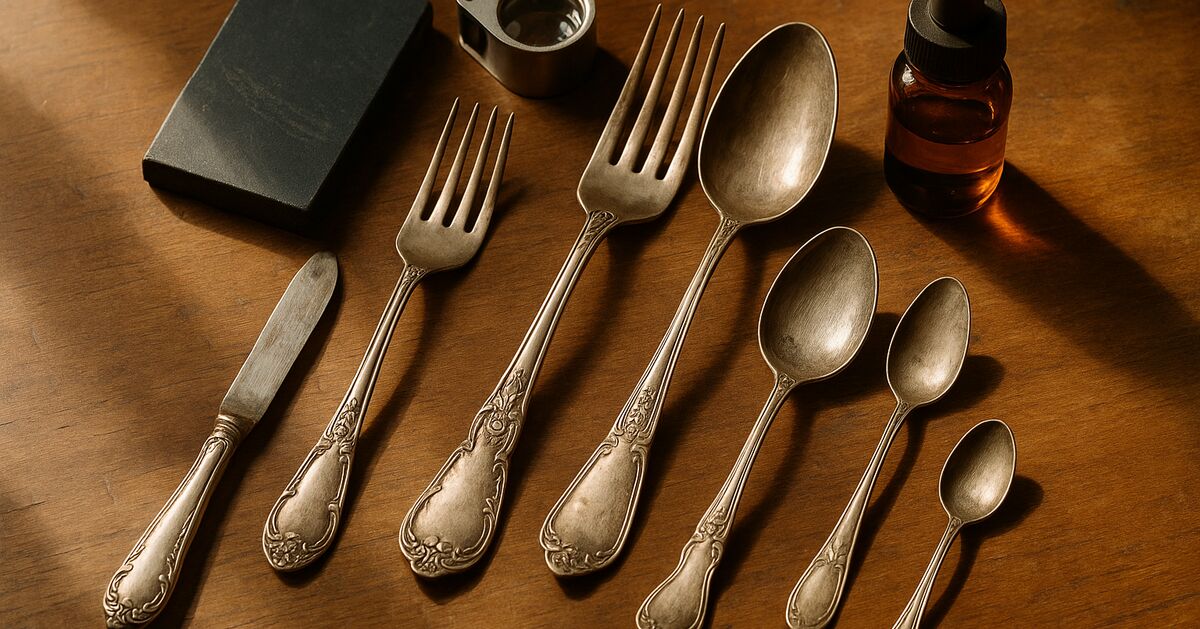
Sterling silver and silver plate look nearly identical on a shelf, but the difference in what a buyer will pay can be dramatic. A set of solid sterling flatware might fetch hundreds of dollars in melt value alone. The same set in silver plate might bring twenty dollars, if it sells at all. Knowing which you have before you walk into a coin shop or list something online is not optional - it is the foundation of every smart selling decision you will make.
The good news is that you do not need a chemistry lab or expensive tools to make a confident identification. A few minutes of careful looking, combined with one or two simple physical tests, will get you to a reliable answer in most cases. Let's walk through the whole process, step by step.
Start with the hallmarks - this is your single best clue
Turn the piece over and look for stamped marks. On genuine sterling silver made in the United States, you will nearly always find the stamp 925, Sterling, or 925/1000. Those numbers refer to the alloy composition: sterling is 92.5% pure silver by weight, with the remaining 7.5% typically being copper. That ratio is not arbitrary - it was standardized to give silver enough hardness to be durable while keeping silver content high enough to matter.
British hallmarks follow a different but equally reliable system overseen by the UK Assay Offices. A genuine British sterling piece carries a lion passant (a walking lion) alongside a date letter and an assay office mark. Older American pieces from the 1800s sometimes say Coin or Coin Silver, which means roughly 90% silver - still solid, still valuable, still very different from plate.
Silver plate, by contrast, will often carry stamps like:
- EPNS (Electroplated Nickel Silver)
- EPBM (Electroplated Britannia Metal)
- EP, A1, Silver on Copper, or Quadruple Plate
- A brand name with no purity number at all
The word "Silver" alone on a piece, without a purity stamp, is not a guarantee of sterling. Plated items are legally allowed to use the word silver in their description. What you are looking for is a purity number (925) or the word Sterling.
A magnifying glass or even your phone's camera zoom can help read worn marks. Good lighting at an angle across the surface makes stamped text pop. If you see no marks at all, that is itself useful information - move on to physical tests rather than assuming either way.
Check where marks appear and what surrounds them
On genuine sterling, hallmarks are typically stamped directly into the body of the metal. On plated pieces, you will sometimes find marks on a separate cartouche or a small raised panel, and the surrounding metal may look slightly different in color. This is because manufacturers sometimes applied a small patch of sterling or sterling-looking metal around the mark purely for appearance.
Also look at the edges and high-wear areas. On a plated piece that has seen regular use, you will sometimes see a different color peeking through where the thin silver layer has worn away. Copper or brass underneath shows up as a yellowish or reddish tinge. Nickel silver shows as a dull grayish white. If you see any of this color variation, you are almost certainly looking at plate.
The ice cube test (thermal conductivity)
Silver is one of the best thermal conductors of any material on earth. When you place an ice cube directly on a piece of sterling silver, the ice begins melting almost instantly - visibly, noticeably faster than it would on glass, stainless steel, or most base metals used in plate.
Here is how to do it properly:
- Bring the piece to room temperature first. A cold piece will slow everything down.
- Place a single ice cube flat on the surface.
- Watch the contact point during the first 10 to 20 seconds.
On sterling, the ice cube typically begins to slump and melt at the contact point noticeably quickly, often within a few seconds. On silver-plated copper, the result is somewhat similar because copper is also a good conductor - but on EPNS (nickel silver base) or Britannia metal, the melting is noticeably slower. This test works best as a comparison. If you have one piece you already know is sterling, test it first so you know what "fast" looks like, then test your unknown piece side by side.
This test will not give you a definitive result on its own. It is most useful when combined with the hallmark check.
The magnet test - quick, cheap, and very reliable as a negative check
Silver is not magnetic. Neither is copper, brass, nickel silver, or most metals used as a base for plating. So the magnet test will not tell you whether something is sterling versus plate - but it will tell you immediately if a piece is made of steel or iron underneath.
Use a strong rare-earth magnet (the kind sold cheaply at hardware stores). Hold it near the piece. If the piece is attracted to the magnet, the base metal is ferrous (iron or steel), which rules out most antique silver plate and all sterling. Pieces attracted to a magnet are worth essentially nothing in the silver market.
If the piece does not react to the magnet, that is a good sign, but keep going with other tests.
The acid test - the most definitive home method
Silver testing acid (nitric acid solution at a safe concentration, sold specifically for this purpose) gives you a color-coded result that is hard to argue with. Testing kits are inexpensive and widely available from jewelry supply companies and online retailers.
The process looks like this:
- Find an inconspicuous spot, or rub the piece lightly on a testing stone to leave a streak of metal.
- Apply one small drop of the acid.
- Watch the color change over 30 to 60 seconds.
For sterling (925), testing kit guides generally describe the drop turning a creamy beige or light brownish color; check your kit's chart to confirm. For coin silver (900): the result is similar but slightly darker. For silver plate over copper, testing kit charts often show the drop turning bright green or greenish brown, since the acid may reach the copper beneath a thin silver layer. For nickel silver, testing kit charts often show a greenish gray or grayish blue result; verify against your specific kit's reference guide.
Always follow the manufacturer's safety instructions when using testing acid. It is a mild acid but still needs basic handling care - work in a ventilated area, keep it off skin, and store it properly.
What about silver-filled and Argentium?
Two categories come up often in this conversation and deserve a quick mention.
Silver-filled is a more recent product (common since roughly 2005) where a layer of sterling silver is mechanically bonded to a base metal core, giving a much thicker silver content than electroplate but still not solid sterling. Silver-filled items are sometimes stamped 1/10 Sterling or 1/20 Sterling. These are not worthless - the silver layer is real - but they are not solid sterling either, and buyers price them accordingly.
Argentium silver is a genuine sterling alloy (it still meets the 92.5% threshold) where some of the copper is replaced with germanium. It behaves like sterling for testing purposes. You may see stamps like AS 935 or Argentium. It is worth treating the same as standard sterling.
When tests disagree - how to think it through
Occasionally your hallmark check points one way and a physical test points another. Here is a sensible approach:
- If hallmarks say Sterling or 925 but no wear-through color shows and the ice test seems ambiguous, trust the hallmark first - forging sterling hallmarks is uncommon on everyday household pieces.
- If there is no purity hallmark but the acid test gives a sterling result, the piece may be unmarked American coin silver or an old piece where marks have worn off. Worth having a professional check.
- If you see EPNS or EP stamps but the acid test gives a sterling-like result, consider that the plating may be unusually thick, or that you happened to test an area of thicker silver. Test a worn edge.
When genuine uncertainty remains, a professional appraiser or a reputable coin and precious metals dealer can run an XRF (X-ray fluorescence) test that reads elemental composition without touching or damaging the piece. Many dealers do this for free if they think you might sell to them.
What to do once you know what you have
If your testing confirms sterling silver, you are in a strong position. The value tracks closely with the silver spot price and the weight of the piece. Understanding that relationship - how spot price, weight, and dealer margin interact - is covered in depth on the home page, where you will find a solid overview of how the whole selling process works.
If the piece turns out to be silver plate, do not be discouraged. Some plated pieces have real antique or collector value that has nothing to do with silver content - a sought-after pattern in a complete set, for example, or a piece by a notable silversmith. That value comes from the collector market rather than the melt market, and it pays to explore both before selling.
For answers to the questions that come up most often in this process - things like whether dealers test your silver before buying, or whether you need to clean pieces before selling - the FAQ page covers those topics in plain language.
You can also browse the blog for related guides on weighing silver correctly, understanding troy ounces, and reading spot price charts, all of which matter once you are ready to get quotes.
A few things to keep in your kit
Building a small testing kit costs very little and pays for itself the first time you correctly identify a sterling find at an estate sale:
- A 10x loupe or jeweler's magnifier
- A strong rare-earth magnet
- A silver acid testing kit (look for one that includes a testing stone)
- A decent flashlight or angled desk lamp
- A notebook to record what marks you find and where
This is genuinely useful equipment whether you are sorting through an inherited collection or picking through thrift store finds on weekends. For more background on the site and how these guides are put together, the about page explains the approach.
The honest bottom line
No single home test is 100% definitive in every case. But combining hallmark reading with one or two physical checks can give you enough information to be confident in most cases. The goal is not laboratory certainty - it is knowing enough to avoid selling sterling for plate prices, or wasting a dealer's time with a bag of EPNS.
If you ever feel uncertain about a specific piece or want to share your findings with others going through the same process, the contact page is there for that. A well-identified piece is a well-sold piece, and the ten minutes you spend testing at home is time well spent.
Sources & further reading
- Silver and Silver Alloys - Hallmarking and Standards (World Gold Council)
- UK Hallmarking Act and Assay Office Standards (The Assay Office (Birmingham))
- Thermal Conductivity of Common Materials (Engineering ToolBox)
- XRF Analysis for Precious Metal Identification (National Institute of Standards and Technology (NIST))
Revision history (1)
- Pre-publish editorial QA: 1 flagged, 1 softened; claim audit: 10 claims, 4 rewritten
Claim-by-claim audit (10 checked)
- “Pieces attracted to a magnet are worth essentially nothing in the silver market.” (reasoning shown in the article)
- “Silver is one of the best thermal conductors of any material on earth.” (cited → engineeringtoolbox.com)
- “On sterling, the ice cube typically begins to slump and melt at the contact point noticeably quickly, often within a few seconds.” (rewritten to what the article can stand behind)
- “For sterling (925), testing kit guides generally describe the drop turning a creamy beige or light brownish color; check your kit's chart to confirm.” (rewritten to what the article can stand behind)
- “For silver plate over copper, testing kit charts often show the drop turning bright green or greenish brown, since the acid may reach the copper beneath a thin silver layer.” (rewritten to what the article can stand behind)
- “For nickel silver, testing kit charts often show a greenish gray or grayish blue result; verify against your specific kit's reference guide.” (rewritten to what the article can stand behind)
- “a professional appraiser or a reputable coin and precious metals dealer can run an XRF (X-ray fluorescence) test that reads elemental composition without touching or damaging the p…” (cited → nist.gov)
- “sterling is 92.5% pure silver by weight, with the remaining 7.5% typically being copper.” (cited → gold.org)
- “A genuine British sterling piece carries a lion passant (a walking lion) alongside a date letter and an assay office mark.” (cited → theassayoffice.com)
- “Older American pieces from the 1800s sometimes say Coin or Coin Silver, which is generally understood to mean roughly 90% silver content.” (rewritten to what the article can stand behind)