
How to sort an inherited box of silver before getting quotes
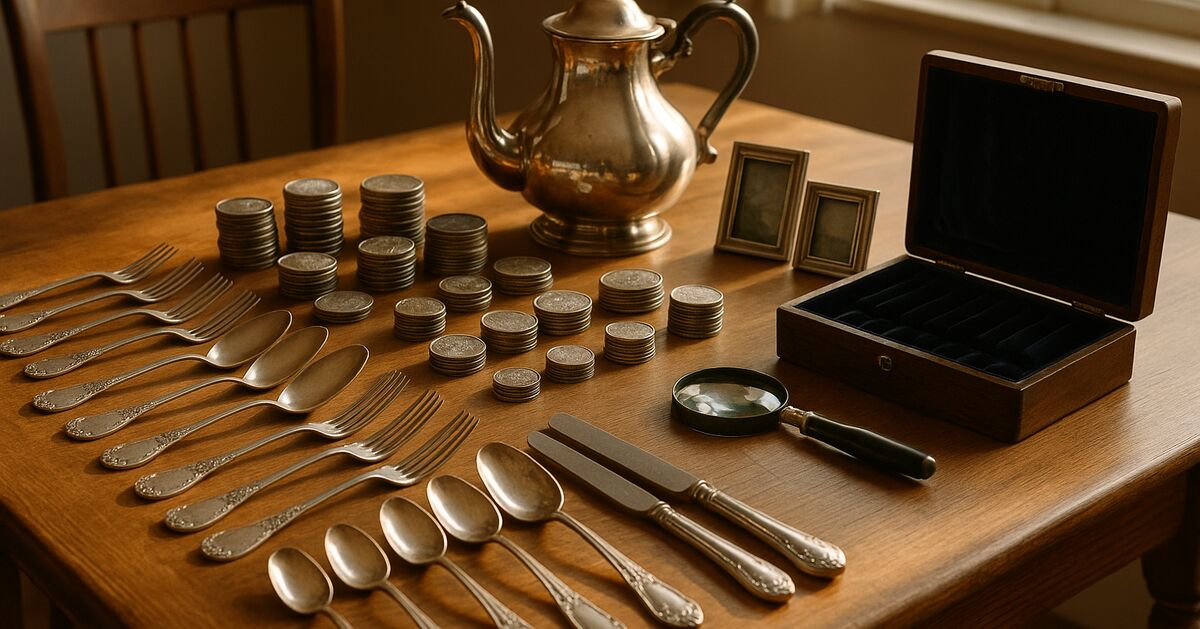
Inherited silver has a way of arriving in the most chaotic possible form: a cardboard box stuffed with tissue paper, a velvet-lined canteen with a few spoons missing, a carrier bag of loose coins and oddments, and a tin that rattles with things nobody can identify. Before you call a buyer, photograph a hallmark, or accept a single offer, it pays to spend an hour on the kitchen table sorting everything into sensible groups.
Why does sorting matter so much? Because buyers price each category of silver differently, and the moment you present a buyer with an unsorted pile, you are essentially asking them to do the sorting for you on their terms, not yours. A coin dealer who handles the whole lot as "mixed silver" will average down. A flatware specialist who spots a complete canteen will pay a premium for it. Knowing what you have, in plain terms, is the single most effective piece of preparation you can do.
This guide walks through a practical sorting method, category by category, so that by the time you contact anyone you are negotiating from a position of knowledge rather than guesswork. For a broader overview of the whole selling process, the home page is a good starting point.
Start with a clean workspace and a simple system
Clear a table and lay out six collection zones. You can use sheets of newspaper, empty boxes, or just sections of the table surface. Label them mentally as:
- Sterling flatware and holloware
- Silver-plated items
- Coins and medallions
- Jewelry and small decorative pieces
- Unknowns and oddments
- Items that need closer inspection
The "unknowns" pile is important. Resist the urge to guess and place everything definitively. Items you are unsure about go into zone five, and you work through that pile last. This keeps the sorting fast and stops you from making premature decisions that could cost money.
You will need a few cheap tools:
- A 10x loupe or a strong magnifying glass
- A soft cloth (for handling items without fingerprints)
- A magnet (a fridge magnet works; a neodymium magnet is better)
- A printed list of common silver hallmarks, or a hallmark reference app on your phone
- A small kitchen scale that reads in grams
None of these need to be specialist equipment. The goal is informed sorting, not laboratory testing.
The magnet test: your fastest first pass
Before you read a single hallmark, run a magnet over every piece. Silver, whether sterling, fine, or plated over a silver-nickel alloy, is not magnetic. If something sticks firmly to the magnet, it is almost certainly steel or iron with a decorative coating and has no silver value whatsoever. Set those pieces aside immediately.
Be aware that some Sheffield plate and early electroplate was made on a copper base, which is also non-magnetic, so a non-magnetic result does not confirm silver. It simply rules out steel. The magnet is a filter, not a verdict.
A magnetic result on a canteen handle or knife handle, on the other hand, is worth noting separately rather than discarding entirely. Weighted handles were a common construction method, and the handle weighting does not necessarily mean the rest of the piece is worthless. There is a dedicated explanation of this in the post about weighted knife handles and what they do to canteen value.
Reading hallmarks: the most important fifteen minutes you will spend
Every piece of genuine British sterling silver should carry a set of marks struck into the metal. The core marks to look for are:
- The lion passant (a walking lion), which confirms 92.5% silver content on English pieces
- A date letter in a shaped shield
- An assay office mark (anchor for Birmingham, crown for Sheffield, leopard's head for London, and so on)
- A maker's mark, usually two or three initials in a shield
Continental European silver uses a different system. Common marks include an owl (French import mark), a crown over a number, or a "800" or "925" purity stamp. American sterling is usually marked simply "STERLING" or "925.""
Silver plate, by contrast, will carry marks such as "EPNS" (electroplated nickel silver), "EPBM" (electroplated britannia metal), "A1" (a quality grade used by some platers), or simply the word "Plate." These items contain no significant silver and are valued entirely differently, as covered in the post on silver plate being not worthless, but not scrap either.
Sort every piece you can read confidently into the sterling or plate pile. Pieces with worn, rubbed, or illegible marks go into the "needs closer inspection" pile. Do not guess.
Flatware and canteen sets: why completeness matters
Once you have identified your sterling flatware, count it carefully. Canteen sets were historically sold in standard configurations: a service for six (typically 44 to 54 pieces), for eight (around 60 to 70 pieces), or for twelve. Dealers and private buyers pay a meaningful premium for a complete or near-complete set because it is saleable as a working canteen rather than just metal.
Lay the pieces out by type: dessert spoons, table spoons, dinner forks, dessert forks, fish knives, fish forks, soup spoons, teaspoons, serving spoons, and any specialist pieces such as sugar tongs, butter knives, or ladles. Count each type and note how many you have.
If a canteen box is present, note whether it is in good condition, whether it has a lock and key, and whether the name plates or cloth lining are intact. A quality canteen box adds tangible value and should be kept with the set, not discarded.
Missing pieces matter, but not as much as people fear. A set of six of each type that is internally consistent (all the same pattern, all the same maker's marks) is still very sellable. A complete jumble of mismatched patterns has mainly melt value. Noting the pattern name, if you can find it stamped on the reverse of a piece, will help you research whether it has collector appeal before you approach anyone.
For the bigger question of whether to sell a family canteen at all, the post on whether to sell your grandmother's silver canteen or keep it walks through that decision honestly.
Coins and medallions: handle with care
Place all coins and coin-like objects into a separate group without cleaning them. This is important: cleaning coins removes surface patina and can destroy numismatic value far in excess of melt value. A circulated but uncleaned coin is worth more to a collector than a polished one.
Sort coins roughly by apparent age and type:
- Pre-1920 British silver coins (genuine sterling, 92.5% silver)
- 1920-1946 British silver coins (50% silver, still valuable)
- Post-1947 British coins (cupro-nickel, no silver value at all)
- Pre-1965 American dimes, quarters, half dollars, and dollars are generally 90% silver, though this is worth confirming for specific coin types.
- Foreign coins, which need individual research
Pre-1965 American silver coins are a well-documented category. The post on junk silver and what pre-1965 US coins are really worth explains the melt calculation in plain terms if you have American coins in the box.
If the box contains any large, obviously old coins such as Morgan Dollars, Peace Dollars, or early British crowns, set those aside for specialist attention. Their collector premium over melt can be substantial. See the post on Morgan and Peace dollars, and when the coin beats the melt value for guidance on that category specifically.
Medallions and commemorative pieces are trickier. Check for a silver mark. Many are silver-plated brass and have only sentimental value. Genuine silver commemoratives will carry appropriate hallmarks and can be worth weighing in for melt if they have no collector following.
Jewelry and small decorative pieces
Silver jewelry, small picture frames, napkin rings, card cases, and similar items often carry hallmarks in tight or obscure spots. On a brooch, check the reverse of the clasp fitting. On a ring, look on the inside of the band. On a small frame, check the back panel or the hinge area.
Weigh each genuine sterling piece individually on your kitchen scale. Note the weight in grams. This lets you calculate a rough melt floor value using the current spot price of silver, which you can find on any commodities site. The formula is:
Weight in grams x 0.925 (sterling purity) x current silver price per gram = approximate melt floor
This is a floor, not a selling price. Buyers work on a spread below spot, but knowing the floor means you recognize instantly if an offer is derisory.
Jewelry with stones or enamel work should be noted separately. Gemstones do not affect the silver melt value but a buyer who handles jewelry may offer more for the piece as a whole than a scrapper would pay for the metal alone.
The "needs closer inspection" pile
Work through this pile last, now that you have a better eye from handling the clear-cut pieces. Items that remain genuinely uncertain after a second look are candidates for a professional opinion.
A few free routes to identification:
- Many auction houses will offer a free verbal identification at a valuation day, with no obligation to sell
- Some coin dealers will identify hallmarks on walk-in items without charge
- The Antiques Trade Gazette and RICS both maintain directories of accredited valuers if you want a written opinion
Do not pay for a formal written valuation unless you need one for probate or insurance. For selling purposes, you simply need to know what category something falls into.
What to do with the sorted piles before approaching buyers
Once sorted, take photographs of each group. Lay flatware out in rows on a neutral background and photograph from directly above. Photograph hallmarks with your phone's macro mode or through the loupe. Good photos mean you can approach multiple buyers remotely and efficiently rather than carting everything from shop to shop.
Make a simple written list: category, approximate count or weight, and any notes on condition or pattern name. This does not need to be elaborate. A single page of handwritten notes makes you look prepared and discourages lowball offers.
The post on questions to ask before you accept any offer on silver is worth reading before you make contact with anyone, and if you decide to use a mail-in buyer for any portion of the lot, how to safely post silver to a mail-in buyer covers the practical steps to protect yourself.
A note on keeping records
Before anything leaves your hands, photograph each item again, ideally against a white background with a ruler for scale. Note the buyer's name, the date, and the agreed price for each category. This protects you if there is any dispute about condition or weight, and it gives you a record for any estate or probate administration that may follow.
Sorting is not glamorous work, but an hour of careful attention before you speak to your first buyer is the single most reliable way to ensure you are treated fairly. You will know what questions to ask, you will recognize when an offer reflects only melt value on something that deserves more, and you will not accidentally bundle a coin worth several hundred pounds in with a bag of cutlery sold by weight.
For more practical guidance across every stage of selling, browse the full blog index where each post tackles a specific part of the process in the same no-nonsense terms.
Sources & further reading
- Silver coin compositions and pre-1947 British coinage (The Royal Mint)
- RICS directory of registered valuers (Royal Institution of Chartered Surveyors (RICS))
Revision history (1)
- Pre-publish editorial QA: 1 flagged, 1 softened; claim audit: 8 claims, 1 rewritten
Claim-by-claim audit (8 checked)
- “The lion passant (a walking lion), which confirms 92.5% silver content on English pieces” (cited → royalmint.com)
- “Pre-1920 British silver coins (genuine sterling, 92.5% silver)” (cited → royalmint.com)
- “1920-1946 British silver coins (50% silver, still valuable)” (cited → royalmint.com)
- “Post-1947 British coins (cupro-nickel, no silver value at all)” (cited → royalmint.com)
- “Pre-1965 American dimes, quarters, half dollars, and dollars are generally 90% silver, though this is worth confirming for specific coin types.” (rewritten to what the article can stand behind)
- “Cleaning coins removes surface patina and can destroy numismatic value far in excess of melt value.” (reasoning shown in the article)
- “Dealers and private buyers pay a meaningful premium for a complete or near-complete set because it is saleable as a working canteen rather than just metal.” (reasoning shown in the article)
- “The Antiques Trade Gazette and RICS both maintain directories of accredited valuers if you want a written opinion” (cited → rics.org)