
Junk silver explained: what pre-1965 US coins are really
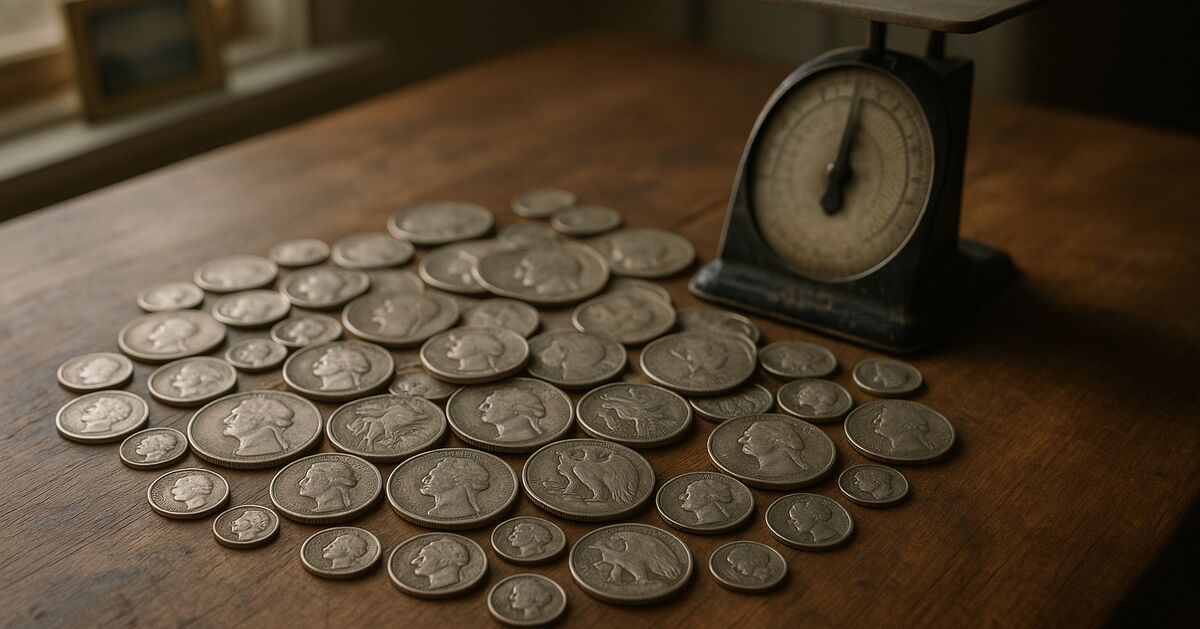
Flip a dime from 1964 and a dime from 1965 side by side, and you are holding two completely different animals. One is 90% silver. The other is a copper-nickel sandwich worth exactly ten cents. That one-year gap is the dividing line for what coin collectors and silver dealers call "junk silver," and understanding it can put real money in your pocket.
The term "junk" is a little misleading. It does not mean worthless or damaged. It simply means the coins have no special numismatic (collector) premium above their metal content. They circulated widely, they show wear, and the only thing that really matters is the silver inside them. For anyone who just discovered a jar of old coins in a relative's closet, or who is simply curious whether those coins rattling around in a drawer are worth anything, this guide walks you through the numbers and the process step by step.
Which US coins count as junk silver?
The U.S. Mint produced silver coins for general circulation for decades, but the Coinage Act of 1965 changed everything. Rising silver prices are widely cited as the reason Congress authorized the switch to clad coinage in 1965. The coins affected are:
- Dimes (Roosevelt and Mercury): All dimes dated 1964 and earlier are 90% silver. Each is generally reported to contain about 0.07234 troy ounces of pure silver, based on standard mint specifications.
- Quarters (Washington and Standing Liberty): All quarters dated 1964 and earlier are 90% silver. Each is generally reported to contain about 0.18084 troy ounces of pure silver, based on standard mint specifications.
- Half dollars (Kennedy 1964, Franklin, Walking Liberty, Barber): The 1964 Kennedy half is 90% silver. Kennedy halves from 1965 to 1970 are 40% silver and still worth a small premium. All earlier halves are 90%.
- Silver dollars (Morgan and Peace): Minted between 1878 and 1935, these coins are typically listed as 90% silver, containing about 0.77344 troy ounces each per standard mint records. They sometimes carry collector premiums too, so treat them separately from the smaller coins.
- War nickels (1942-1945): A lesser-known category. During World War II, nickel was needed for the war effort, and the Mint reportedly made five-cent pieces from a 35% silver alloy instead. Look for a large mint mark above Monticello on the reverse to identify them.
Kennedy halves from 1965 to 1970 trip a lot of people up. They look identical to the 90% 1964 halves but are worth noticeably less per coin. Always check the date carefully before you calculate.
How the value is calculated
Silver is priced by the troy ounce on global commodity markets. The spot price changes every trading day, and you can check it on financial sites like Kitco or the CME Group's exchange data. Once you know spot, the math is straightforward.
Formula: Silver content (troy oz) x spot price = melt value per coin.
Here is a concrete example using a round number for spot. Say silver is trading at $28.00 per troy ounce:
- One dime: 0.07234 oz x $28.00 = $2.03
- One quarter: 0.18084 oz x $28.00 = $5.06
- One 1964 half dollar: 0.36169 oz x $28.00 = $10.13
- One Morgan silver dollar: 0.77344 oz x $28.00 = $21.66
A $10 face-value bag of pre-1965 dimes and quarters is commonly said to contain about 7.15 troy ounces of pure silver, a figure dealers use as a standard unit. At $28 spot, that bag would have a melt value of roughly $200.20. A $1,000 face-value bag, the classic dealer unit, works out to about 715 troy ounces of silver.
That last number is important: it explains exactly why a silver buyer offers you a percentage of spot rather than face value. The dealer is buying refined silver by another name, and they still have to move it along the chain. If you want to understand the gap between spot and what you are actually offered, the post on why a silver buyer offers less when the market is volatile breaks down that logic in detail.
What condition actually does (and does not) do to value
For junk silver, condition matters far less than it does for collector coins. A well-worn 1942 Mercury dime with a flat date is still 90% silver. You are not losing metal just because the coin looks tired.
That said, there are two exceptions worth knowing:
- Key dates and rare varieties. A few dates within the junk silver window command genuine collector premiums. Certain rare dates, such as the 1916-D Mercury dime and the 1932-D and 1932-S Washington quarters, are widely reported to sell for multiples of their melt value. Before you toss a coin into a bulk lot, glance at the date and mint mark. A basic coin reference or a free resource like the PCGS CoinFacts database can flag these instantly.
- Slabbed or uncirculated coins. If you come across a pre-1965 coin in an airtight graded holder from PCGS or NGC showing a grade of MS-63 or higher, it is no longer junk silver. Get a second opinion from a coin dealer before selling it as bulk silver.
For most worn, circulated coins with common dates, melt value is the only value, and that is perfectly fine. At current silver prices, it is still a very respectable number.
What dealers actually pay per ounce
Many sellers report receiving somewhere between 90% and 98% of melt value from a reputable dealer, though this varies by volume and market conditions. Smaller quantities typically land closer to 90%. A full $1,000 face bag might earn you closer to 95-97% because the dealer's per-unit handling cost drops.
Pawn shops and general second-hand stores are often said to pay less, sometimes as low as 70-80% of melt. They are not wrong to do so since that margin covers their overhead and the risk they take on, but it means you are leaving money on the table if a dedicated silver buyer is accessible to you.
Online silver buying platforms have grown significantly. They typically publish a "per-face-dollar" buy price on their websites, making it easy to compare. Shipping and insurance cut into the net, so calculate that before committing. For large quantities, the math often still favors online specialists even after postage.
Coin shows are another solid venue. Multiple dealers compete in the same room, which gives you natural price discovery without having to drive across town multiple times.
The home page has more on the general landscape of where and how to sell silver, which is worth a read before you commit to any single buyer.
Sorting and presenting your coins
A little preparation before you sell can meaningfully improve your outcome, not because it changes the silver content but because it signals to a buyer that you know what you have.
- Separate by denomination. Keep dimes together, quarters together, halves together. It makes weighing and calculating faster for both of you.
- Pull out the 40% Kennedy halves (1965-1970). They belong in a separate pile because their per-coin silver content is different.
- Flag any possible key dates. Even if you are wrong, a buyer will appreciate that you looked.
- Count and record face value. Write down the total face value of each denomination. Dealers convert face to ounces using the standard multipliers, so knowing your face value lets you verify their math instantly.
- Do not clean the coins. Cleaning does not add silver and can actually destroy collector value on any key dates you might have missed.
Weighing as a cross-check
According to standard mint weight specifications, a pre-1965 dime weighs about 2.50 grams, a quarter about 6.25 grams, a half dollar about 12.50 grams, and a Morgan or Peace dollar about 26.73 grams. If you have a kitchen scale accurate to 0.1 grams, you can weigh a stack of like coins and quickly sanity-check the count and the expected silver content. Heavily worn coins may be a few hundredths of a gram light, but the difference is negligible for bulk sales.
Weighing also helps catch non-silver imposters. A post-1964 clad dime is generally listed at about 2.27 grams, measurably lighter than a silver dime. If you are sorting a large jar of mixed coins, a scale speeds up the process considerably once you have calibrated your eye.
The bigger picture: why people keep junk silver
Beyond selling, it is worth understanding why junk silver has a loyal following among people who hold it deliberately. Coins are immediately recognizable, officially government-issued, and divisible into small units, qualities that make them practical for anyone who wants to hold physical silver without committing to large bars or rounds. The face value also provides a nominal floor: a 1964 quarter is legally worth at least 25 cents regardless of what silver does.
None of that changes your calculus if you simply want to convert inherited coins to cash. But it explains why some buyers are enthusiastic, which ultimately supports the prices you can achieve.
If you inherited a broader collection of silver items alongside your coins, it is worth reading about what sterling flatware is actually worth with a worked example as a companion piece, since the underlying logic of melt value versus buyback percentage applies across all silver categories.
Common questions and mistakes
"Do I need to melt the coins to sell them?" No. Dealers buy junk silver in coin form every day. Melting is neither necessary nor recommended since it creates a refined product that requires different paperwork and handling.
"Are silver dollars always just melt value?" Not always. Morgan and Peace dollars frequently carry a small premium above melt even in worn condition because collector demand is steady. Get at least two quotes before selling dollars as pure melt.
"The buyer offered me less than I calculated. Are they cheating me?" Not necessarily. The melt calculation gives you 100% of spot. No buyer pays 100% because they need a margin to stay in business. A gap of 5-10% is normal and honest. A gap of 30% or more deserves scrutiny. Our FAQ page covers this dynamic in more depth.
"I found a coin with no mint mark and no date I recognize." If it is a small silver-colored coin from the pre-1965 era, check for a "V" on the reverse (a Liberty nickel, not silver) or a Barber portrait (Barber dimes, quarters, and halves are all 90% silver). When in doubt, a coin dealer can identify it in thirty seconds.
For anyone new to identifying silver in the first place, the guide on how to tell sterling silver from silver plate at home covers the fundamentals, including the magnet test and acid testing kits, that work equally well for verifying whether an unfamiliar coin is genuinely silver.
Putting it all together
Junk silver is one of the most transparent corners of the silver market. The silver content is fixed and published. The spot price is public and updates in real time. The math is simple multiplication. That transparency makes it easier to walk into a sale with confidence, verify any offer on the spot, and walk away knowing you got a fair deal.
Start by sorting and counting what you have. Look up today's spot price. Calculate the melt value using the silver content figures above. Then approach two or three buyers, whether local coin shops, coin shows, or reputable online platforms, and compare what they offer against that baseline. The blog has more guides on specific silver categories if you want to dig deeper into other pieces in a collection.
The coins in that old jar were never "just change." They were silver all along.
Sources & further reading
- Troy ounce and precious metals weight standards (National Institute of Standards and Technology (NIST))
Revision history (1)
- Pre-publish editorial QA: 1 flagged, 1 softened; claim audit: 11 claims, 11 rewritten
Claim-by-claim audit (11 checked)
- “Rising silver prices are widely cited as the reason Congress authorized the switch to clad coinage in 1965.” (rewritten to what the article can stand behind)
- “Each is generally reported to contain about 0.07234 troy ounces of pure silver, based on standard mint specifications.” (rewritten to what the article can stand behind)
- “Each is generally reported to contain about 0.18084 troy ounces of pure silver, based on standard mint specifications.” (rewritten to what the article can stand behind)
- “Minted between 1878 and 1935, these coins are typically listed as 90% silver, containing about 0.77344 troy ounces each per standard mint records.” (rewritten to what the article can stand behind)
- “During World War II, nickel was needed for the war effort, and the Mint reportedly made five-cent pieces from a 35% silver alloy instead.” (rewritten to what the article can stand behind)
- “A $10 face-value bag of pre-1965 dimes and quarters is commonly said to contain about 7.15 troy ounces of pure silver, a figure dealers use as a standard unit.” (rewritten to what the article can stand behind)
- “Many sellers report receiving somewhere between 90% and 98% of melt value from a reputable dealer, though this varies by volume and market conditions.” (rewritten to what the article can stand behind)
- “Pawn shops and general second-hand stores are often said to pay less, sometimes as low as 70-80% of melt.” (rewritten to what the article can stand behind)
- “According to standard mint weight specifications, a pre-1965 dime weighs about 2.50 grams, a quarter about 6.25 grams, a half dollar about 12.50 grams, and a Morgan or Peace dollar…” (rewritten to what the article can stand behind)
- “A post-1964 clad dime is generally listed at about 2.27 grams, measurably lighter than a silver dime.” (rewritten to what the article can stand behind)
- “Certain rare dates, such as the 1916-D Mercury dime and the 1932-D and 1932-S Washington quarters, are widely reported to sell for multiples of their melt value.” (rewritten to what the article can stand behind)