
Pawn shop, coin dealer or mail-in buyer: who pays most for
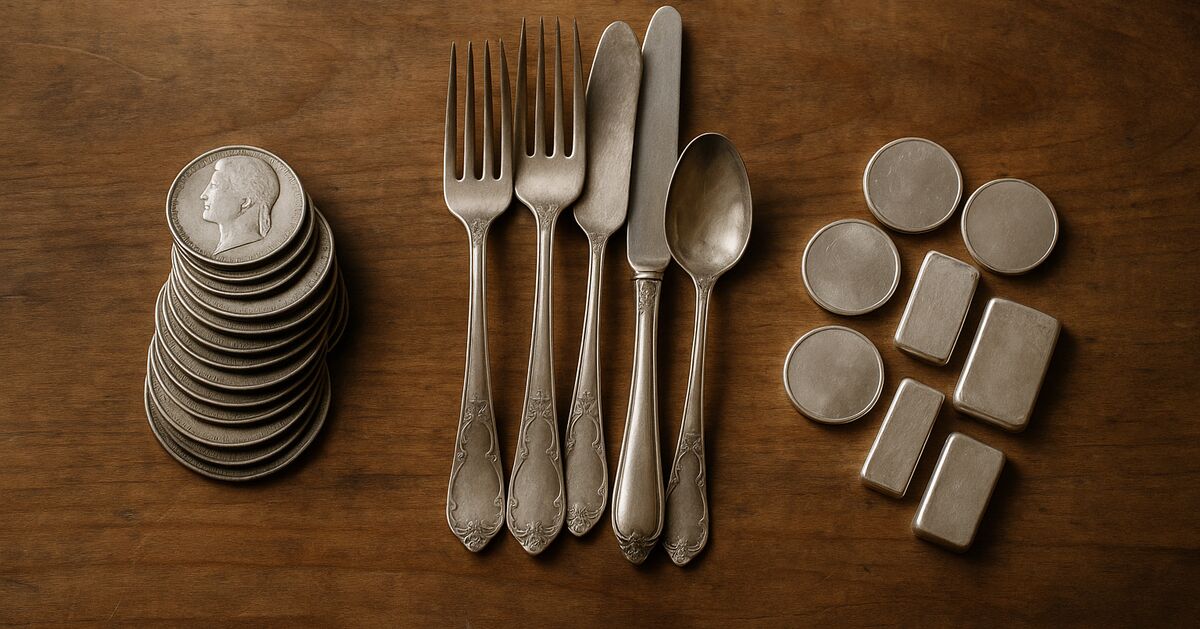
The single biggest variable in how much money you walk away with when you sell silver is not the silver price on the day, but who you sell it to. Two people can sell identical items on the same afternoon and get offers that differ by 20, 30, or even 40 percent. Understanding why that happens, and how each type of buyer actually sets their number, is the most practical thing you can do before letting your silver go.
This post covers the three buyer types people encounter most: the local pawn shop, the coin dealer (both local and online), and the mail-in precious metals buyer. Each has a different business model, and that model determines how much room they leave for you.
How buyers actually make money on silver
Every buyer, regardless of what they call themselves, does the same basic calculation: they need to buy your silver for less than they can sell it. The gap between what they pay you and what they recover when they flip the metal is their margin. The wider that gap, the less you see.
The factors that widen or narrow the gap include:
- Overhead. Rent, staff wages, insurance, and business rates all come out of margin. A buyer with a prime high-street location needs a bigger gap than a buyer operating from a warehouse.
- Liquidity. How quickly can they turn your silver into cash? A buyer who has to refine and wait faces more risk than one who can list your coin online tomorrow.
- Expertise on their end. If a buyer cannot quickly verify what they are holding, they price in uncertainty.
- Volume. High-volume buyers can survive on thinner margins because they're running the maths across thousands of transactions.
Keeping that framework in mind makes every specific offer easier to understand, and easier to negotiate.
Pawn shops: convenient but structurally expensive
Pawn shops are the most accessible buyer on this list. Pawn shops are numerous across the United States, and a walk-in appointment is almost never required. That convenience is real, and for some sellers it genuinely matters. But accessibility has a price.
The core issue is that a pawn shop is a generalist business. On any given day, the staff might be valuing a guitar, a game console, a ring, and your silver teapot. Silver is one product category among dozens. Because the business cannot afford deep specialist knowledge across every category, it prices in a larger margin as insurance against mistakes. If a staffer misjudges your sterling candlesticks, the business absorbs that loss, and they compensate by buying conservatively across the board.
A second structural issue is the pawn shop's primary business model. Many pawn shops actually prefer to lend against items rather than buy them outright, because loans generate interest income. When they do buy outright, they are often pitching the offer lower than they might because they expect to negotiate with you in the room. If you accept without pushing back, they keep the extra margin.
What pawn shops tend to pay for silver ranges widely, and offers for generic sterling items are often well below melt value, with common silver coins sometimes fetching a little more if the staff recognizes them. That is not a rule, just a pattern that comes up repeatedly in seller accounts. Your local shop may do better or worse depending on how actively they deal in precious metals.
When a pawn shop makes sense: If you need cash today, in person, and you're selling a small amount of mixed silver where the hassle of alternatives outweighs the difference in offer, a pawn shop can be perfectly reasonable. Go in knowing the melt value, have a floor in mind, and be prepared to walk if the offer is too low.
Coin dealers: better for coins, variable for everything else
A coin dealer is a specialist, and specialization matters enormously when selling silver. A dealer who handles silver coins all day knows spot price, knows premiums, knows which dates carry collector value, and can make a decision quickly. That speed and confidence allows them to operate on thinner margins than a generalist.
For silver coins specifically, a good local coin dealer is often the best in-person option available. They can identify the difference between a common-date Morgan dollar and one that might carry significant numismatic value above melt. This matters because Morgan and Peace dollars sometimes beat their melt value considerably, and only a specialist will credit you for that. A pawn shop is unlikely to.
Similarly, if you have pre-1965 US coins, a coin dealer understands what junk silver is actually worth and will make an offer that reflects the real silver content rather than a rough guess. The math is straightforward for them, and that efficiency can translate into a better price for you.
For non-coin silver, the picture is more variable. Some coin dealers actively trade in sterling flatware, bullion bars, and jewelry. Others prefer to avoid it. A dealer who doesn't really want your grandmother's canteen set will offer you less simply because it isn't their market. Before bringing in a large lot of flatware or hollowware, it is worth calling ahead and asking whether they are active buyers of sterling items, not just coins and bullion.
Coin dealers typically pay closer to melt value than pawn shops for common silver bullion and junk silver coins, though this varies with the local market, the dealer's current inventory, and spot price movements on the day. Collectible coins with numismatic value can attract premiums beyond melt entirely, which is why identification matters so much before you sell.
When a coin dealer makes sense: For silver coins, especially any coin that might have collector value, a reputable coin dealer is often a better choice than a pawn shop. For sterling items, do your homework first: call ahead, and get a quote from at least one other channel before accepting their offer.
Mail-in precious metals buyers: low overhead, high offers, with caveats
Mail-in buyers, sometimes called cash-for-silver or precious metals refiners, operate on a fundamentally different model. They have no high-street shopfront, no walk-in customers, no retail staff on the floor. Their overheads are dramatically lower than both pawn shops and coin dealers with physical premises, and in a competitive market, some of that saving is passed on to sellers.
For straightforward sterling silver items, specifically items that will be refined rather than resold as collectibles, reputable mail-in buyers often offer a higher percentage of melt value than pawn shops or many coin dealers. That range depends on the buyer's volume and pricing policy, the purity of the items, and whether you are sending a large or small parcel. Many buyers reserve their best rates for larger lots.
The trade-off is that you give up physical control of your items during transit and the assessment process. That makes choosing the right buyer, and packaging your items correctly, genuinely important. The practical details of how to safely post silver to a mail-in buyer are worth reading before you pack a single thing.
There is also an important caveat about collectible items. A mail-in refiner wants to melt your silver, which means they will value it at melt, full stop. If your coins, flatware, or hollowware have any value beyond the metal itself, a mail-in buyer will not credit you for that. Sending a rare date coin to a mail-in refiner and receiving melt value for it would be a costly mistake. Always identify what you have before choosing your channel.
When a mail-in buyer makes sense: For generic sterling flatware, silver plate sorted out (since they won't pay for it), silver jewelry without gemstones, and bullion items with no collectible premium, a reputable mail-in buyer will frequently outperform both the pawn shop and the local coin dealer on raw payout percentage.
Comparing the three side by side
Here is a direct comparison across the key dimensions most sellers care about:
| | Pawn shop | Coin dealer | Mail-in buyer | |---|---|---|---| | Typical payout (melt %) | 40-60% | 70-90% | 80-95% | | Speed of payment | Immediate | Same-day or next-day | 5-14 days typically | | Best for coins with collector value | No | Yes | No | | Best for large lots of sterling | Rarely | Sometimes | Often | | Physical control retained | Yes | Yes | No (during transit) | | Requires expertise on your part | Low | Medium | Medium |
These percentages are general illustrations, not guarantees. Spot price volatility affects every buyer's margin, which is worth understanding in detail if the market has been moving sharply before your sale.
The case for getting multiple offers
The single most effective thing any silver seller can do is get more than one offer before committing. This sounds obvious, but a surprisingly large number of sellers accept the first number they hear because they feel awkward about comparison shopping, or because they don't realize how wide the spread can be.
Getting three offers costs you a few phone calls or emails, and potentially an extra visit to a coin dealer. The upside can easily be hundreds of dollars on a meaningful lot of silver. If you have questions about what your silver is likely to be worth before you start shopping it around, the frequently asked questions page covers the common ones, and for anything more specific our about page explains the approach behind this site.
When you get offers, make sure you're comparing them on the same basis. Ask each buyer:
- What is their current spot price basis? (Some quote a slightly stale price.)
- What purity are they assigning your items?
- Are any items being excluded or discounted?
- Is the offer firm once they receive the items, or subject to change?
That last question matters especially for mail-in buyers, where some less reputable operations quote one number upfront and revise it downward after they have your silver in hand. Look for buyers who put their rates in writing before you send anything.
What type of silver you have changes everything
The right channel depends heavily on what you're selling. Here is a rough guide:
- Pre-1965 US coins in bulk: coin dealer first, mail-in refiner second.
- Silver coins with potential collector value: coin dealer only, after you research the dates.
- Sterling flatware in quantity: mail-in refiner is usually strongest; confirm by getting a coin dealer quote too.
- Silver jewelry (no gems): mail-in refiner or coin dealer; avoid pawn shops unless genuinely pressed for time.
- Antique hollowware or canteen sets: read what your sterling flatware is actually worth before approaching anyone, because weighted pieces and silver plate significantly change the calculation.
- Small mixed lots: the margin difference may not justify the extra effort; a local coin dealer is probably your most practical option.
Understanding sterling silver hallmarks before you walk into any of these conversations also puts you in a significantly stronger negotiating position. A buyer who knows you know what you have is less likely to offer you a lowball number.
A note on negotiation
Every offer from a pawn shop or coin dealer is a starting point. Buyers set their opening number with the expectation that at least some sellers will counter. You don't need to be aggressive or confrontational; simply knowing the spot price, knowing the weight and purity of what you have, and being willing to say "I was expecting something closer to X based on today's spot" is often enough to move the offer meaningfully.
Mail-in buyers are generally less negotiable on rate, since they publish their pricing publicly and apply it consistently. But you can often negotiate on the size threshold for their best rates, particularly if you have a large lot.
The bottom line
If you take one thing from this comparison, it is that channel choice matters at least as much as timing. Selling to the right buyer at a slightly worse spot price will often beat selling to the wrong buyer at a perfect spot price. Do the identification work first, understand what you have, check the home page for any topic that applies to your specific items, and get at least two or three offers before you decide. The extra hour you spend shopping around is usually worth it.
Sources & further reading
- Pawnbrokers and the U.S. pawn industry overview (National Pawnbrokers Association)
- Silver spot price and precious metals market data (Kitco Metals)
- Coin dealer and numismatic trade standards (Professional Numismatists Guild)
- Consumer tips for selling precious metals (U.S. Federal Trade Commission)
- Gold and silver refining and precious metals recycling overview (The Silver Institute)
Revision history (1)
- Pre-publish editorial QA: 4 flagged, 3 softened; claim audit: 5 claims, 4 rewritten
Claim-by-claim audit (5 checked)
- “Pawn shops are numerous across the United States, and a walk-in appointment is almost never required.” (rewritten to what the article can stand behind)
- “What pawn shops tend to pay for silver ranges widely, and offers for generic sterling items are often well below melt value, with common silver coins sometimes fetching a little mo…” (rewritten to what the article can stand behind)
- “Coin dealers typically pay closer to melt value than pawn shops for common silver bullion and junk silver coins, though this varies with the local market, the dealer's current inve…” (rewritten to what the article can stand behind)
- “For straightforward sterling silver items, specifically items that will be refined rather than resold as collectibles, reputable mail-in buyers often offer a higher percentage of m…” (rewritten to what the article can stand behind)
- “Many pawn shops actually prefer to lend against items rather than buy them outright, because loans generate interest income.” (reasoning shown in the article)