
Selling silver in bulk vs. one piece at a time
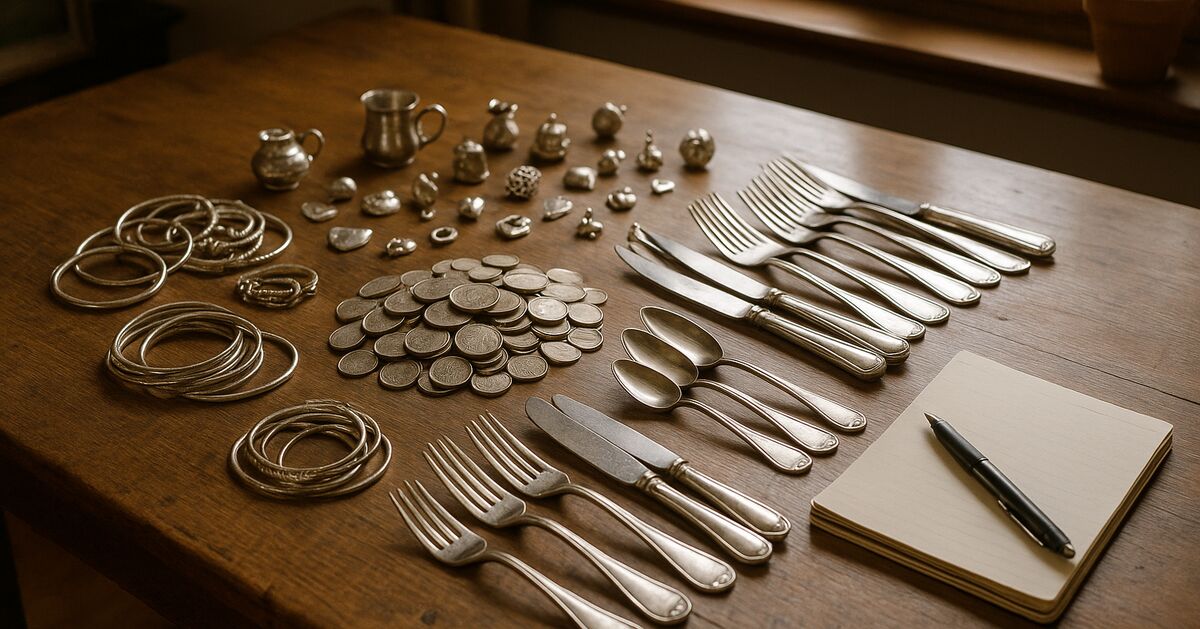
Selling everything in one go sounds wonderfully simple, and sometimes it is the smartest move you can make. Other times it costs you a surprising amount of money. Whether bulk or piecemeal is right for you depends on the type of silver you hold, the buyers who are realistically available, and how much time and effort you can honestly put in. This guide walks through both approaches honestly so you can decide with clear eyes.
What "bulk" actually means in practice
When buyers and sellers talk about selling silver "in bulk," they usually mean one of three things:
- Handing a mixed collection to a single buyer in a single transaction
- Selling a large, uniform lot of the same item (forty matching teaspoons, say, or a roll of junk silver coins)
- Offloading everything from an estate or clearance in one sitting regardless of what it is
These three scenarios play out very differently, even though people lump them together under the same word. A uniform lot of the same item is the easiest kind of bulk sale for a buyer to price quickly and fairly. A mixed collection, on the other hand, contains pieces with wildly different value profiles, and a single buyer pricing the whole pile will tend to anchor their offer to the lowest-value items in it.
Understanding why two buyers quoted different prices for the same silver is worth reading before you approach any bulk deal, because the same logic applies at scale: different buyers specialise in different things, and a buyer whose expertise is scrap melt will not give you collectible value on the coins buried in your box.
The case for selling in bulk
Speed is a common reason people choose bulk. If you have inherited a large collection, moved, or are simplifying your finances, organizing pieces individually, photographing them, listing them, and shipping them to multiple buyers over several weeks is a real cost in time and energy. Bulk removes much of that friction.
Cost savings on logistics also matter. When you sell piecemeal online or through mail-in buyers, you pay for packaging, insurance, and postage on each parcel. Sell the lot to one local dealer and you walk out with a check and zero postage costs.
Bulk sales also eliminate the risk of sitting on unsold inventory. When you list pieces one at a time on an auction platform, some will sell quickly and some will languish for months. During that time, if the silver price falls, so does the value of everything still waiting. If you are curious how a dropping market affects individual versus bulk strategies, selling silver in a bear market: what changes covers that in depth.
A mixed lot of lower-value pieces is especially well-suited to bulk selling. If you have a box of mismatched cutlery, bent bangles, and unidentified chains, the time required to list each piece individually will almost certainly exceed the premium you might earn over a bulk scrap quote.
The case for selling piece by piece
The argument for going piecemeal is straightforward: different pieces have different ceilings, and a single buyer cannot realistically pay those ceilings for all of them at once.
Consider a typical inherited collection. It might contain:
- A few pre-1965 US silver coins with numismatic premiums
- A sterling silver photograph frame worth more as an antique than as metal
- A set of heavy flatware where the pattern name drives collector interest
- Some broken or worn pieces worth only their melt value
If you hand all of that to one buyer at once, you will almost certainly receive melt value (or close to it) for the entire lot. The buyer cannot afford to pay collector prices on every piece in a pile they have not had time to research individually.
Sorting your collection before you start, even roughly, puts you in a much stronger position. How to sort an inherited box of silver before getting quotes is a practical guide to doing exactly that without needing expert knowledge upfront.
Selling piece by piece works best when:
- You have identifiable, individually valuable items (named coin series, hallmarked antique pieces, complete sets in desirable patterns)
- You have time, patience, and access to multiple buyer types
- You are not under financial pressure to liquidate quickly
- The pieces are in good, presentable condition that photographs well
The hybrid approach: sorting before bundling
You do not have to choose between selling everything together and selling every single item separately. A middle path often produces the best overall result for a mixed collection.
The idea is to sort your silver into three rough piles:
- Potentially collectible or antique pieces worth researching individually
- Complete sets or uniform lots that can be sold as a lot to a specialist
- Scrap, broken, or unidentified pieces best sold by weight
You then sell each pile to the buyer type best suited to it. The antique pieces go to an antiques specialist or auction. The uniform lots go to a dealer who handles that category. The scrap pile goes to a refiner or scrap buyer. This is more work than a single bulk sale but far less work than listing every teaspoon individually on an auction site.
Selling silver plates and medallions: melt or collectible? illustrates this kind of decision well: the right answer for each piece depends on whether a collector market exists for it, and that question is worth asking individually for anything that looks like it might carry a premium.
How buyer types respond to bulk versus piecemeal
Not every buyer is equally comfortable with bulk lots, and knowing who wants what will sharpen your strategy.
Scrap buyers and refiners love bulk. They buy by weight, they do not care about patterns or provenance, and a larger volume is simply more efficient for them to process. Refiners generally pay based on weight and purity, and some may offer somewhat better rates for larger shipments, though this varies by buyer.
Coin dealers are comfortable with lots of coins but will want to look at each coin, or at least a representative sample, before pricing the lot. They will not pay numismatic premiums blind. If you have a large roll of junk silver coins, you can almost certainly sell the lot in one go at a fair price. If you have a handful of potentially rare dates mixed in, separating those first will protect you.
Antique dealers and auction houses strongly prefer to assess pieces individually. They are buying potential, and they need to see hallmarks, condition, and provenance before they can price anything. Handing an antique specialist a mixed box and asking for a single offer puts them in the same position as a scrap buyer: they will price defensively.
Mail-in buyers vary. Some accept mixed lots readily; others have category restrictions. Before you ship anything, reading the fine print on what they will and will not accept is essential. The guide on how to read a mail-in silver buyer's terms before you ship walks through exactly what to look for in that paperwork.
Common mistakes that come up again and again
A mistake that surfaces repeatedly in seller communities is treating all silver as functionally identical and handing it all to the first buyer who seems trustworthy. Trust is necessary but not sufficient. A trustworthy scrap buyer is still the wrong home for a rare coin or a sought-after antique pattern.
Another frequently seen problem is misjudging the time cost of piecemeal selling. It is easy to imagine listing twenty items on an auction platform over a weekend. In practice, photographing, describing, answering buyer questions, packing, and posting twenty items takes many hours spread over several weeks, and some items will not sell on the first listing. People who underestimate this tend to abandon the process partway through, ending up with a partial sale and a remaining pile they eventually sell as scrap anyway.
On the bulk side, a recurring issue is selling a mixed lot before doing any basic identification work. Spending two hours looking up hallmarks and pattern names before you call a buyer can reveal pieces that belong in the piecemeal pile. How to figure out what your silver is actually worth is a useful starting point for that identification step.
There is also the question of damaged or broken pieces. Many sellers assume that damaged items should go straight into the scrap pile, which is often correct but not always. Broken silver jewelry: does damage change what you get? explores the nuances here, particularly for jewelry where the design or maker's mark still holds value even on a damaged piece.
Negotiating leverage in bulk deals
When you sell in bulk to a single buyer, you lose the ability to play buyers against each other on individual pieces, but you gain a different kind of leverage: volume. Buyers want volume because it reduces their per-unit cost. A large lot gives you genuine negotiating room if you are willing to use it.
Practical tips for negotiating a bulk deal:
- Get at least two or three quotes before accepting anything
- Know the approximate spot-value weight of your lot before you walk in (weigh it at home, note the purity)
- Ask the buyer to break out their offer: how much for the coins, how much for the flatware, how much for the scrap items. A buyer willing to show their working is easier to negotiate with.
- Be prepared to remove the highest-value pieces from the lot if the bulk offer does not reflect their individual worth
This last point is important. You can always say, "I'll sell everything except these three items, which I'd like to sell separately." A buyer who genuinely wants your volume business will usually work with you rather than walk away.
Which approach actually nets more money?
There is no universal answer, but the honest framework is this: piecemeal selling has a higher ceiling and a much higher time cost, while bulk selling has a lower ceiling and much lower friction. The gap between those two ceilings narrows sharply when:
- The pieces in the lot are mostly scrap or near-scrap quality
- The volume is large (larger lots attract better bulk rates)
- Market conditions are stable and buyers are competing actively
The gap widens when:
- The lot contains identifiable collectibles or antiques
- Pieces are complete sets in desirable patterns
- You have access to specialist buyers for specific categories
For many people clearing an estate or simplifying a collection, a hybrid approach captures much of the upside without the full burden of selling everything individually. Identify the two or three highest-value items, sell those through the appropriate specialist channel, and sell the remainder as a bulk lot to a scrap or generalist buyer.
If you are still working out the basics of where to go and who pays what, the home page is a good place to start, and the FAQ covers the questions that come up earliest in the process.
The bottom line
Bulk selling is not a lesser strategy. It is the right strategy for a lot of silver in a lot of circumstances. What matters is knowing which pieces deserve individual attention before you bundle everything together. Spend an hour sorting, spend another hour getting a couple of competing quotes, and you will often come out ahead of sellers who either rushed a bulk deal without looking or burned out halfway through an overambitious piecemeal campaign. The silver will sell either way; the goal is to make sure the effort you put in matches the value you actually recover.
Sources & further reading
- Silver commodity market and pricing overview (U.S. Commodity Futures Trading Commission)
- Precious metals refining and recycling industry overview (U.S. Environmental Protection Agency)
- Estate administration and asset valuation guidance (U.S. Internal Revenue Service)
Revision history (1)
- Pre-publish editorial QA: 4 flagged, 4 softened; claim audit: 2 claims, 1 rewritten
Claim-by-claim audit (2 checked)
- “Refiners generally pay based on weight and purity, and some may offer somewhat better rates for larger shipments, though this varies by buyer.” (rewritten to what the article can stand behind)
- “If you have a large roll of junk silver coins, you can almost certainly sell the lot in one go at a fair price.” (reasoning shown in the article)