
Selling silver plates and medallions: melt or collectible?
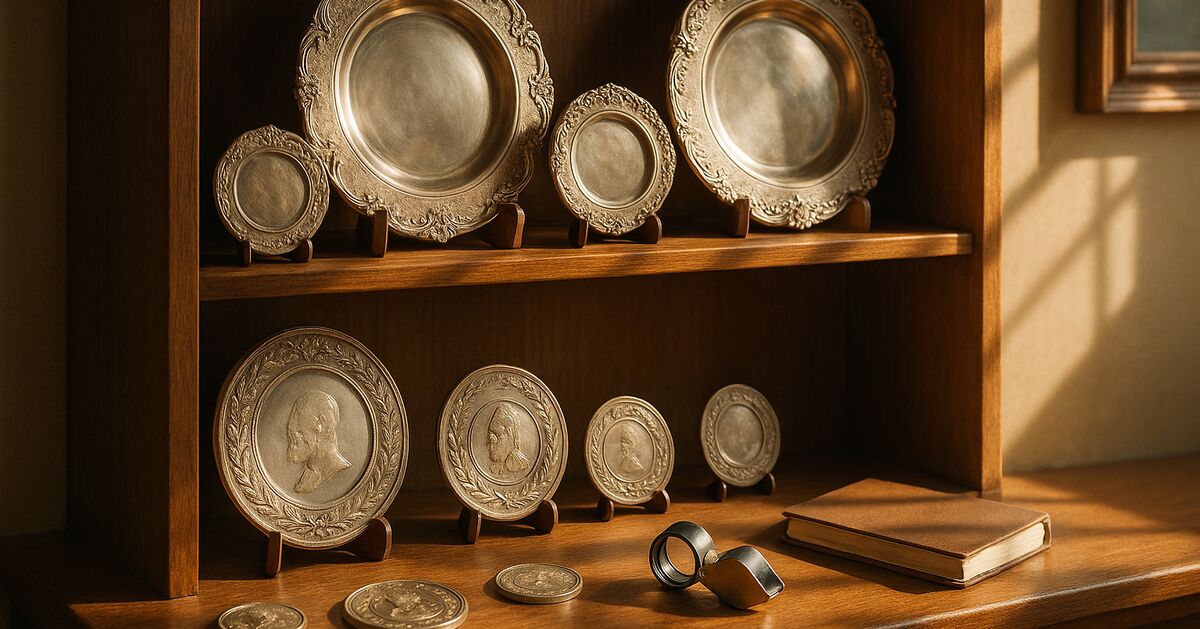
Commemorative silver plates and medallions are one of the most consistently misread categories in the secondhand silver market. Some sellers assume they must be worth a fortune because they look impressive. Others assume the opposite and drop them off at a scrap dealer without a second thought. The truth sits somewhere more nuanced than either extreme, and understanding where your specific piece lands can mean the difference between $20 and $200 for the same object.
This guide walks through exactly how to make that call.
Why commemoratives are tricky to value
Silver coins, flatware, and jewelry each have fairly predictable value frameworks. Commemorative plates and medallions do not, for a simple reason: they were produced specifically to be sold as collectibles, which means the original retail price was usually far above melt value. That gap tends to shrink over time rather than grow, because the collectibles market for most of these pieces is thin.
At the same time, a genuine collectible with a loyal following can hold or even exceed its original price decades later. The challenge is distinguishing which category your piece falls into before you choose a buyer.
If you are new to selling silver and want a solid foundation before diving into specifics, the home page has a plain-English overview of how the selling process works from start to finish.
Step one: establish what you actually have
Before you can decide between melt and collectible, you need to answer three questions about the physical object.
Is it solid silver or silver plate?
This is the most important question, and the answer changes everything. A silver-plated commemorative plate has essentially no melt value (the silver layer is too thin to recover economically) and usually has limited collectible value too, unless it is a rare issue with documented demand. Solid sterling (92.5% silver) or fine silver (.999) pieces are a different story entirely.
Look for hallmarks. On plates made in the United Kingdom, the standard four-mark hallmarking system will tell you purity, assay office, and date letter. On American pieces, you may see "Sterling," ".999," or "Fine Silver" stamped somewhere on the back edge. Words like "Silver Plate," "EPNS," or "Silver on Copper" confirm you have a plated piece. If you want to go deeper on reading those marks, the post on sterling silver hallmarks explained walks through the four-mark British system in detail.
If there are no marks at all, testing is the next step. A reputable coin dealer or jeweler can do a quick acid test or XRF scan, often at no charge if you ask politely.
How heavy is it?
Weigh the piece on a kitchen scale and convert to troy ounces (1 troy oz = 31.1 grams). Multiply by the current spot price of silver, then by the purity fraction (0.925 for sterling, 0.999 for fine silver). That is your melt floor. No legitimate buyer will pay you less than this for a solid silver piece, and if they try, walk away.
Who issued it and in what quantity?
The issuer and mintage figure are the two biggest drivers of collectible premium. Limited-edition pieces from respected mints (the Franklin Mint, the Danbury Mint, the Royal Mint, national government mints) in low mintages can carry a premium. Unlimited or very high mintage issues rarely do. Check the back of the piece or any accompanying paperwork for a mintage figure, a certificate of authenticity, or a series number.
The melt camp: when scrap is the honest answer
There is a large and frankly honest category of commemorative plates and medallions where melt value is simply the right answer. These include:
- High-mintage Franklin Mint or Danbury Mint plates from the 1970s and 1980s were produced in large numbers, and their collectible market has softened over time as demand from original buyers has declined.
- Themed plates (wildlife scenes, Norman Rockwell reproductions, holiday subjects) that were sold through direct-mail subscription programs. Beautiful as they are, the secondary market for these is narrow.
- Medallions issued by private companies to commemorate corporate anniversaries, local events, or sports achievements, unless the event itself has a dedicated collector community (certain sports Hall of Fame issues do).
- Any piece where the silver content is less than one troy ounce, because the collectible premium would need to be very high just to double the melt value, and that rarely happens.
If your piece falls into this camp, a coin dealer, a local precious metal buyer, or a mail-in refiner are all reasonable destinations. The key is getting at least two or three quotes, because margins vary. The post on why two buyers quoted different prices for the same silver explains exactly why those numbers differ and how to read them intelligently.
One practical note: do not clean the piece before you go. Polishing removes patina that some collectors value, and it does absolutely nothing to improve the melt offer. The buyer buying it for silver content does not care what it looks like.
The collectible camp: when there is a premium worth chasing
Some commemorative silver pieces do carry a genuine premium above melt, and it is worth the extra effort to find out if yours is one of them.
Signs that a collectible premium may exist:
- Government-issued legal tender status. Silver coins issued by a sovereign mint as legal tender (even if they were never intended for circulation) trade in a well-established numismatic market. A proof silver dollar from the U.S. Mint, a Royal Mint silver Proof coin, or a similar government issue will often fetch more than melt through the right channel.
- Low, documented mintage. A plate or medallion with a certified mintage under a few thousand, especially if it came with a numbered certificate, has at least a chance of attracting a collector willing to pay above melt.
- Active collector communities. Some themes have loyal followings: certain military commemoratives, presidential series, railroad history, aviation, and specific sporting events. A quick search on eBay's completed listings (filter by "Sold" items) will tell you within minutes whether real buyers paid real money for your specific issue.
- Original packaging and paperwork intact. Presentation boxes, certificates of authenticity, and original purchase receipts all support a collectible premium. A plate that has been rattling around loose in a box for thirty years is harder to sell as a collectible, even if the silver itself is fine.
If the evidence points toward collectible value, your best venues are specialist auction houses, eBay (sold listings give you a realistic price anchor), coin shows, and dealers who specialize in the relevant category (militaria dealers for military commemoratives, for example). A general scrap buyer is the wrong destination here.
The middle ground: partial premium pieces
A third category sits between the two extremes: pieces with modest collectible interest that can outperform melt value in the right venue, but would only get melt value if dropped off at a scrap buyer.
A good example is a proof silver medallion from a respected private mint in a mintage of around 5,000 to 10,000, in original packaging, on a subject with some collector following. A scrap buyer will pay you for the silver. An eBay listing or a coin show table might get you 30 percent more. The question is whether that 30 percent is worth the extra time and effort to you.
That is a genuinely personal calculation. If you are selling in a hurry, taking the scrap offer may be the right call. The post on selling silver in a hurry: what you give up and how to limit the damage lays out that trade-off clearly.
How to research your specific piece
Research does not have to take long. Here is a practical sequence:
- Identify the piece exactly. Look for the title, series name, issuer, year, and any edition or series number on the piece or its paperwork.
- Search eBay completed/sold listings. Filter by "Sold Items" to see what buyers actually paid, not just what sellers are asking. This is the most reliable real-world price signal available to you.
- Check specialist forums. Communities around specific collecting categories (coins, militaria, Rockwell collectibles) often have price guides or active members who can give you a quick read.
- Calculate melt value as your floor. Use spot price, weight, and purity. If eBay's sold listings come in at or below that number, the collectible market has evaporated and melt is your best path.
- Get at least two quotes from buyers. For solid silver, always compare. If you are curious about what a buyer's report actually tells you, the post on what a silver assay report actually tells a buyer is worth a read before you walk into a negotiation.
What buyers actually pay for commemoratives
Scrap and coin dealers buying for melt generally offer less than full silver melt value, with the exact percentage depending on their business model, volume, and current market conditions. The spread reflects their cost of refining and their margin. A buyer who refines in-house can often offer more than one who sells on to a third-party refiner.
Collectible buyers, whether private collectors, specialty dealers, or auction bidders, are paying for the piece, not just the metal. Their offers are harder to generalize, but the eBay sold-listing data you gathered in step two gives you a realistic target.
One thing to watch: sellers sometimes receive an offer that sounds impressive until they realize it is still below melt. This happens when a buyer quotes a dollar figure that feels large in isolation but represents a poor percentage of the actual silver content. Always do the melt math first so you know your floor before any conversation starts. The FAQ page has a worked example of how to calculate melt value quickly if you want a refresher.
Sending commemoratives to a mail-in buyer
If local options are limited, mail-in silver buyers are a legitimate route for melt-value sales. The practical concerns are weight, packaging, and the buyer's terms around how they price the silver and when payment is made. Settlement timing matters more than many sellers realize. The post on what "settlement date" means in silver sales explains why the date the buyer locks in the spot price can affect what you actually receive.
For collectible pieces with real numismatic value, mail-in commodity buyers are generally not the right destination. Those pieces deserve a specialist.
A word on sets and series
Commemorative plates are frequently issued as part of a numbered series. If you have multiple plates from the same series, it is worth checking whether having a complete set adds value. In general, complete sets with original display racks or storage cases sell better as a unit than as individual plates, particularly for decorative series where the visual impact of the full set is part of the appeal. The dynamics are similar to those described in the post on selling silver tea sets: when the set is worth more than its parts, which is worth reading even if your item is not a tea set.
Conversely, if you have an incomplete set, a full set on eBay gives you a realistic ceiling for what individual plates might fetch.
The honest bottom line
Most commemorative silver plates and medallions from the mass-market era will sell at or near melt value, and that is not a bad outcome. Solid sterling or fine silver has real worth. The key is to know the melt floor, do a quick market check to see whether a collectible premium exists, and then choose your selling channel accordingly.
Do not assume impressive appearance equals impressive value. Do not assume the opposite either. A few minutes of research, a kitchen scale, and a look at eBay's sold listings will tell you almost everything you need to know.
For a broader look at how silver selling works and what to watch for at every stage, the blog index has articles covering the full range of situations sellers run into.
Sources & further reading
- Hallmarking of precious metals in the UK (British Geological Survey / UK Assay Offices)
- Silver spot price and precious metals data (Kitco Metals Inc.)
- eBay seller guidance: completed and sold listings research (eBay Inc.)
Revision history (1)
- Pre-publish editorial QA: 2 flagged, 2 softened; claim audit: 3 claims, 3 rewritten
Claim-by-claim audit (3 checked)
- “High-mintage Franklin Mint or Danbury Mint plates from the 1970s and 1980s were produced in large numbers, and their collectible market has softened over time as demand from origin…” (rewritten to what the article can stand behind)
- “Scrap and coin dealers buying for melt generally offer less than full silver melt value, with the exact percentage depending on their business model, volume, and current market con…” (rewritten to what the article can stand behind)
- “A third category sits between the two extremes: pieces with modest collectible interest that can outperform melt value in the right venue, but would only get melt value if dropped …” (rewritten to what the article can stand behind)