
Selling silver in a hurry: what you give up and how to
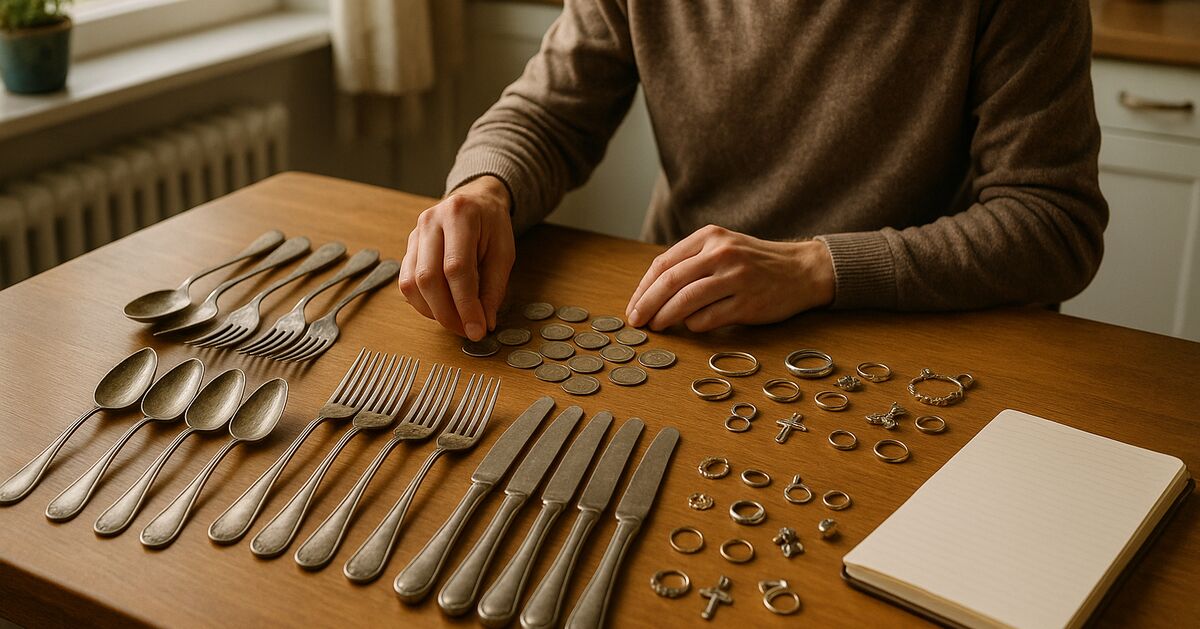
Selling silver fast is entirely possible. What it costs you depends far more on preparation and buyer choice than on the clock itself.
That distinction matters. A lot of sellers assume that urgency means surrender, that they have to take whatever a pawnbroker waves under their nose. That is not quite true. Yes, rushing a sale does carry real trade-offs, and understanding them honestly is the whole point of this piece. But there are also specific things you can do in the space of an afternoon that meaningfully close the gap between a panicked price and a fair one. Let's go through the reality, step by step.
What "selling fast" actually means in practice
Speed in precious metals means different things depending on your starting point. In a normal, unhurried sale you would:
- Identify and sort everything you have
- Research spot price and understand how your items are priced against it
- Get at least three quotes from different buyer types
- Wait for a good moment in the market
- Accept the best offer and complete the paperwork
When time compresses, you cut steps. Each step you skip is worth something, and knowing roughly what each one is worth helps you decide which corners are acceptable to cut and which are genuinely expensive.
The real cost of each shortcut
Skipping the sort and identification step
When you dump an unsorted box of silverware, coins, and jewelry in front of a buyer, you hand them an information advantage. They know what is sterling and what is plate. They know which coin might be a collector piece above melt value. You may not. A buyer acting in good faith will tell you. A buyer acting in self-interest will not.
Even ten minutes of basic sorting before you walk through the door changes the dynamic. Sterling items should be separated from silver-plated ones, because plate is not scrap silver and a buyer who takes both together at a sterling price is doing you a favor, while one who takes both together at a "blended" lower price is not. If you have never done this before, the guide on how to sort an inherited box of silver before getting quotes walks through exactly how to do it quickly.
Skipping the market check
Silver's spot price changes every trading day and can swing several percent in a week. Selling on a day when spot has dipped costs you real money compared with selling three days later when it has recovered. In a genuine emergency you may not have three days, but it costs nothing to glance at a live chart the morning you plan to sell. If spot is obviously depressed relative to the recent range, even a 24-hour wait can recover a meaningful percentage. Our breakdown of how silver spot price is set each day and what that means for timing your sale explains this without the jargon.
Getting only one quote
This is the single most expensive shortcut. A buyer who knows they are your only option has no competitive pressure. Getting a second quote takes perhaps 20 minutes of phone time or an hour of travel. In most cases it is the highest-return activity available to a seller in a hurry, far better than any amount of online research or negotiating tactics. Even two quotes instead of three often reveal a noticeable gap between buyer offers, so it's worth the extra call.
Accepting the first number offered without asking for a breakdown
Buyers are not obliged to show their working, but many will if you ask. Asking "can you show me the weight and the percentage of spot you're offering?" takes 30 seconds and immediately tells you whether the offer is competitive. If a buyer refuses to break it down, that tells you something important too.
Which buyer types pay most when you're in a hurry
Different buyer types sit at different points on the speed-versus-price spectrum.
Pawnbrokers are the fastest option. Walk in, get a number, get cash. The trade-off is that pawnbrokers carry overhead (a retail shop, staff, insurance, the risk of holding your item) and they typically offer the lowest percentage of melt value as a result. For small, urgent sales this is sometimes the right call. For larger collections it is rarely the best one.
Coin dealers and jewellers who buy outright are a middle ground. They can often pay out the same day, they tend to be better at identifying collector value above melt, and their offers are generally stronger than a pawnbroker's for silver coins or jewelry. Ring ahead to confirm they are buying that day and have cash or same-day transfer available.
Specialist scrap buyers and refiners generally offer the strongest percentage of spot for larger quantities of scrap silver, but their process involves weighing, testing, and sometimes a short wait for settlement. For a genuine same-day cash need, this channel can be impractical unless the buyer you find has a walk-in counter rather than a postal or collection model.
Mail-in buyers are off the table if you need money today. Settlement typically takes several days after receipt, and postage adds time at the front. For a "need cash in a week rather than a month" situation they are worth considering, because their offers are often competitive, but for genuine same-day needs they are not the right tool.
The broader guide on selling inherited or scrap precious metal: tips that actually work covers buyer comparison in more depth for situations where you have a little more time to work with.
The items most penalised by a hurried sale
Not all silver suffers equally when you rush. Some categories carry collector or antique premiums that are easy to miss under time pressure.
Sterling flatware and canteen sets can have significant value above melt if pieces are from a sought-after maker or a complete service. A rushed sale to a scrap buyer who weighs it and prices it purely on silver content misses that entirely. If you have a full canteen set and a few days rather than a few hours, it is worth reading about selling a silver canteen set: whole versus piece by piece before committing to a scrap price.
Silver coins are particularly vulnerable. Pre-1965 US dimes, quarters, and half dollars, Morgan and Peace dollars, British pre-1947 silver coins, and many others carry numismatic premiums that a pawnbroker or generic scrap buyer will not necessarily reflect in their offer. A coin dealer will at least look at them properly. The cost of one extra stop at a coin shop can be surprisingly high if it uncovers a key-date coin that was about to be melted.
Antique pieces with hallmarks may carry provenance or maker value. A piece by a recorded silversmith or carrying a famous retailer's mark (Tiffany, Mappin and Webb, and similar) is worth more than its weight in silver to the right buyer. In a hurry you may not be able to find that buyer, but knowing whether you have such a piece at least tells you whether the speed cost is acceptable or painful.
Silver plate should not be sold as scrap silver at all, because it is not. It has some value but it is not the same thing, and mixing it in with genuine sterling items gives a buyer room to average down their offer. Keep them separate regardless of time pressure.
Things that do NOT help when you are in a hurry
A few habits that feel productive actually waste time or actively reduce your return.
Cleaning the silver. This is a well-documented trap. Buyers of scrap silver do not pay more for clean silver. Buyers of antique silver often pay less for cleaned silver because cleaning can damage patina that serious collectors value and can remove evidence of maker's marks or hallmarks. Leave everything exactly as you found it. The full explanation of why this matters is in what "as-found" silver means and why cleaning costs you money.
Spending hours on online research trying to find a "true value." A general sense of spot price and your approximate weight is genuinely useful. Hours of forum browsing rarely is, because the price is ultimately what a willing buyer will pay on the day. Time spent getting a second or third quote is often more productive than time spent researching.
Waiting for a buyer to "come back to you." If you need to sell urgently, tell the buyer that. Most legitimate buyers can give you a firm answer on the day. If a buyer says they need to "send it away for testing" or "come back next week," that is a signal to move on to the next one.
A realistic hour-by-hour plan for a same-day sale
If you genuinely need cash today, here is a practical sequence that limits unnecessary loss without pretending time pressure does not exist:
Morning (30 to 60 minutes):
- Glance at today's spot price. Note whether it is high, low, or mid-range relative to the past two weeks.
- Do a quick sort: sterling items in one pile, anything marked "EPNS," "silver plate," or with no hallmark in another. Coins separate.
- Photograph everything before you leave the house. This protects you and gives you a record.
Mid-morning:
- Call two or three local buyers (coin shops, jewellers who buy, pawnbrokers) and ask if they are buying silver today and if they can give a same-day offer. Some will give you a ballpark over the phone after you describe what you have.
- Choose the two most promising and visit them in person.
Around noon:
- Get your first offer. Ask for the weight, the purity they are using, and the percentage of spot they are basing the offer on. Write it down.
- Take that information to buyer two. You do not have to reveal the number from buyer one, but having it in your head gives you a reference point.
Early afternoon:
- Accept the stronger offer if you are satisfied. If both offers seem low and you can push your timeline to tomorrow, a call to a specialist coin or silver dealer (even one a bit further away) may be worth making.
This sequence can realistically be completed before mid-afternoon on any working day in a reasonably populated area, and it does not require expertise you don't already have.
How much does rushing actually cost?
There is no single number, because the answer depends on what you are selling, how much of it there is, and which buyers are available in your area. As a rough frame of reference drawn from the general shape of the market:
- Scrap sterling silver sold to a pawnbroker under time pressure tends to return well below spot value, since pawnbrokers price in their overhead and risk.
- The same material sold after a proper three-quote comparison to a specialist buyer tends to return a noticeably higher share of spot value.
- The gap for coins with collector value can be far larger if a rushed sale misses a numismatic premium entirely.
That range represents what urgency can cost you in the scrap channel alone. The actual gap in your situation depends on the items and your local buyer landscape, but it illustrates why even a small amount of preparation is worth the effort.
For a broader look at how different precious metals compare in a sale context, the overview on recycling precious metals: a practical guide to scrap and inherited silver and gold is a solid grounding point.
The one thing worth remembering
Urgency hands the buyer information power. The best defense is not patience (you may not have it) but preparation and comparison. Sorting before you go, checking spot, and getting two quotes instead of one are all things that can be done in a morning. None of them require expertise or special knowledge. They just require not skipping the step.
A sale made under time pressure does not have to be a sale made under ignorance. The two things are not the same, and the gap between them is often worth closing.
For more guidance on all aspects of selling, the home page is a good starting point, and the frequently asked questions page covers the questions that come up again and again from first-time sellers.
Sources & further reading
- Silver spot price data and commodity market overview (London Bullion Market Association)
- Consumer guidance on selling precious metals and jewelry (U.S. Federal Trade Commission)
- Hallmarking of precious metals: legal standards and marking requirements (London Assay Office)
- Pawnbroker regulation and consumer rights guidance (UK Financial Conduct Authority)
Revision history (1)
- Pre-publish editorial QA: 2 flagged, 2 softened; claim audit: 5 claims, 3 rewritten
Claim-by-claim audit (5 checked)
- “Even two quotes instead of three often reveal a noticeable gap between buyer offers, so it's worth the extra call.” (rewritten to what the article can stand behind)
- “Scrap sterling silver sold to a pawnbroker under time pressure tends to return well below spot value, since pawnbrokers price in their overhead and risk.” (rewritten to what the article can stand behind)
- “The same material sold after a proper three-quote comparison to a specialist buyer tends to return a noticeably higher share of spot value.” (rewritten to what the article can stand behind)
- “Buyers of antique silver often pay less for cleaned silver because cleaning can damage patina that serious collectors value and can remove evidence of maker's marks or hallmarks.” (reasoning shown in the article)
- “Silver's spot price changes every trading day and can swing several percent in a week.” (cited → lbma.org.uk)