
Selling inherited or scrap precious metal: tips that
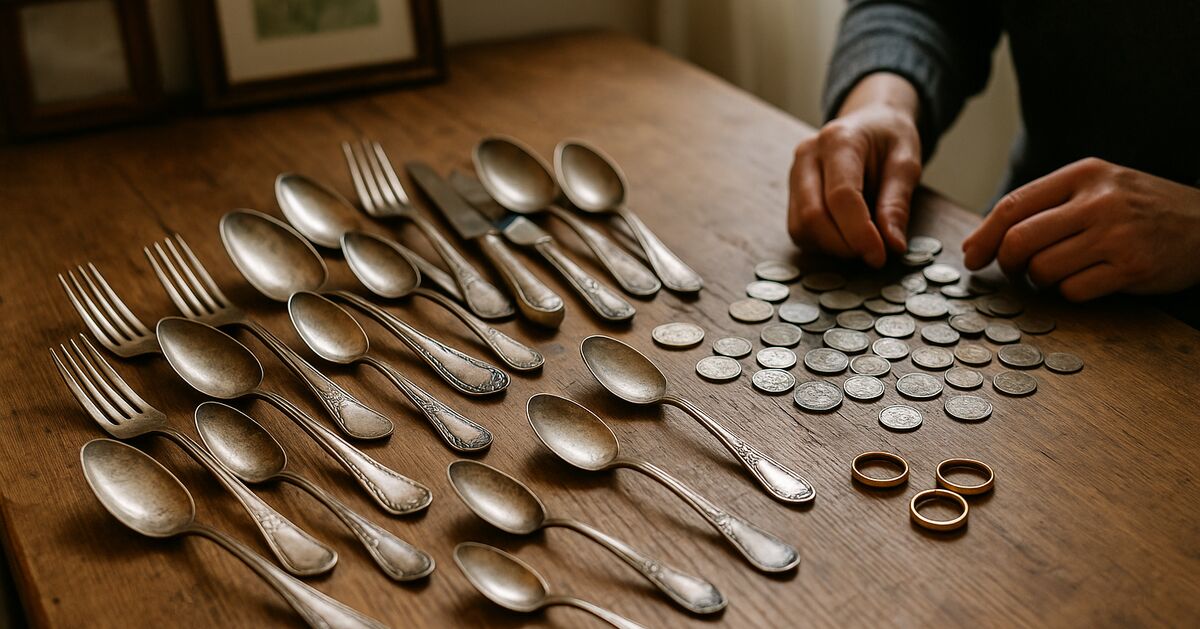
Sitting across from a stranger with a loupe and a scale is a nerve-racking experience when you have never done it before and you are not sure whether the items in front of you are worth fifty dollars or five hundred. If that sounds familiar, this guide is for you.
What follows is a distillation of eighteen years of buying silver and gold from the public. The shop is closed now, but the lessons are not. Every section below addresses something that came up again and again across thousands of transactions.
Start by understanding what you actually have
Before you approach any buyer, spend an hour sorting and identifying your items. Working blind is one of the most avoidable mistakes sellers make, because a buyer who senses that you have not done your homework may not feel obliged to fill in the gaps honestly.
Group your items into broad categories:
- Coins - are they old US silver coins (pre-1965 dimes, quarters, half dollars), silver dollars, proof sets, or modern bullion coins?
- Jewelry - rings, chains, bracelets. Look for stamps: "925", "Sterling", "800", "14K", "18K", "750".
- Flatware and hollowware - spoons, forks, candlesticks, trays. Look for "Sterling" or a lion passant hallmark on British pieces.
- Scrap and unknowns - broken items, mixed lots, things with no obvious stamp.
Keeping these groups separate matters because buyers evaluate them completely differently. A sterling silver serving spoon is scrap; a rare date Morgan dollar is a coin that might be worth many times its silver content. Mixing them together in a zip-lock bag is a fast way to lose money.
Our guide to finding and selling silver: a practical field guide for new sellers goes deeper on identification if you are starting from zero.
Know the hallmarks - they are your first line of evidence
A hallmark does not prove something is genuine, but the absence of one is useful information, and the presence of the right ones narrows your research considerably.
For silver:
- "Sterling" or "925" means 92.5% pure silver by weight.
- "800" is a continental European standard (80% silver), common on older German and Scandinavian pieces.
- The British lion passant appears on sterling silver made in the UK and is one of the world's most recognized silver marks.
- "EP", "EPNS", "Silver Plate", or "Sheffield Plate" means there is no solid silver at all. The piece is base metal with a thin coating.
For gold:
- "14K" or "585" means 58.5% gold.
- "18K" or "750" means 75% gold.
- "10K" or "417" is commonly treated as the minimum standard for gold jewelry sold in the United States.
- "GF" (gold-filled) or "GP" (gold-plated) means a very thin layer over base metal. These are nearly unsellable as gold.
If you are unsure whether a piece is solid or plated, testing silver and gold at home: what actually works walks through the practical methods available to ordinary sellers without professional equipment.
Understand what drives the price you receive
Three things determine what a buyer will pay you:
1. The spot price of the metal
Silver and gold trade on commodity markets around the clock. The "spot price" is the current market price per troy ounce. Every serious buyer bases offers on spot. When you hear that silver is trading at a particular price, that is the starting point, not the ending point.
2. The purity and weight of your item
A sterling silver bracelet that weighs 20 grams contains 18.4 grams of pure silver (92.5% of 20). Buyers convert everything to fine-metal content before calculating an offer. This is why the troy ounce matters so much: it is the unit that connects weight to price. Weight units explained: Troy, grams, and pennyweight for silver sellers covers the maths in plain English.
3. The buyer's margin
No buyer pays 100% of spot. They have overhead, testing costs, refining costs, and a profit margin. The question is not whether there is a margin, but how large it is and whether it is reasonable. A well-run buyer typically pays a majority of the fine-metal melt value for standard scrap, though the exact percentage varies by buyer. Coins with numismatic (collector) value can trade at or above melt, but only if you find a buyer who actually trades in that market.
Do not skip the step of getting more than one offer
This is the single piece of advice that, when followed, makes the biggest practical difference.
Buyers are not interchangeable. A coin dealer who specializes in numismatics will pay far more for a key-date Morgan dollar than a scrap refiner will. A refiner will pay a better percentage on a large volume of clean sterling than a pawnshop will. A mail-in buyer with low overheads sometimes beats a local jeweler on straightforward scrap.
Getting two or three offers costs you nothing but time, and the spread between the lowest and highest offer can be genuinely surprising. In my own experience buying metal, customers who had shopped around typically had a much clearer sense of fair value and were easier to deal with on both sides.
Relevant reading from the blog: recycling precious metals: a practical guide to scrap and inherited silver and gold covers how different buyer types approach pricing.
Coins deserve special attention before you sell them as scrap
Old silver coins are a category where sellers leave money on the table more often than anywhere else. A worn 1964 Roosevelt dime is essentially scrap silver. A 1916-D Mercury dime in Fine condition is a rare coin worth hundreds of dollars to a collector - yet they are the same size, the same composition.
Before you sell any pre-1965 US silver coin as junk silver, check the date and mint mark. The mint mark is the small letter (D for Denver, S for San Francisco, no letter or P for Philadelphia) usually found on the reverse.
Key dates to look up before selling:
- Morgan dollars: 1893-S, 1895, 1903-O, 1921-S (among others)
- Peace dollars: 1921, 1928
- Mercury dimes: 1916-D, 1921, 1926-S
- Walking Liberty half dollars: 1916 issues, 1921, 1938-D
You do not need to be an expert. You need to be careful enough to Google the date before handing over a coin to someone who may know exactly what it is.
Silver Eagles, Gold Eagles, and modern bullion coins are generally valued at or close to their melt or market value, but condition still matters to many buyers. Silver coins as a hobby and investment: a practical guide explains how buyers think about the distinction between bullion and numismatic value.
Flatware: the most misunderstood category
A canteen of sterling silver flatware is appealing to look at and often has genuine sentimental value. But it is also one of the most frequently mispriced items that sellers bring in.
A few things to know:
- Weighted pieces are a trap. Some silver candlesticks and hollow handles are filled with cement, pitch, or plaster to give them stability. The weight includes a large amount of non-silver filler. Buyers weigh-and-test before offering, and any reputable one will explain exactly what they found. If a piece feels very heavy for its size, ask before assuming.
- Plated flatware has essentially no scrap value. The silver layer is too thin to recover economically. A large set of silver-plated cutlery might be worth something to an antique dealer or a prop house, but it will not fetch a meaningful price from a precious metals buyer.
- Pattern and completeness matter for antique dealers, not for scrap buyers. If you want to explore the antique market for a complete, attractive set, do that first. Once it goes to scrap, it is gone.
Choosing the right type of buyer for what you have
Different buyer types have different strengths. Matching what you have to the right buyer is how you maximize what you receive.
Local coin dealers are a good first stop for coins, especially older US silver and gold coins. They can tell you quickly whether anything has numismatic value. They buy for inventory as well as scrap, so they can sometimes offer more than melt.
Jewelry stores and pawnshops tend to focus on gold jewelry and commonly traded items. Margins vary widely. Some are excellent; others are not. Always compare.
Refiners and scrap buyers pay close to the metal value on large, clean lots of scrap. They are less interested in small mixed lots and rarely pay premiums for numismatic value.
Mail-in buyers can be genuinely competitive on straightforward scrap and standard bullion because their overhead is lower than a retail shop. The key is to use one with a clear, published pricing policy, a fair return policy if you decline the offer, and verifiable third-party reviews.
Whatever route you choose, insure your shipment if you mail anything. Precious metals often exceed the coverage limits of standard postal insurance, so check the carrier's rules and declare value specifically if needed. Our frequently asked questions page has more on what to look for when evaluating a mail-in buyer.
Red flags: when to walk away
A few patterns that appeared repeatedly in the buying business, and that sellers reported encountering elsewhere:
- The offer that expires in ten minutes. A fair offer does not need artificial urgency. Pressure to decide immediately is a tactic, not a policy.
- No itemized breakdown. A trustworthy buyer will show you the weight, the tested purity, and the percentage of spot they are paying. If the offer is just a number with no explanation, ask for the breakdown. If they refuse, leave.
- Lowballing on the assumption you will not check. Buyers who separate your items and give you a single lump sum without explaining how they got there may be relying on you not doing the arithmetic. Do the arithmetic.
- Refusal to return items if you decline. Any reputable buyer will return your items promptly if you do not accept the offer. This should be in writing before you hand anything over.
The paperwork side of inherited metal
If you inherited silver and gold as part of an estate, a few practical points are worth knowing:
The fair market value of precious metals at the date of death typically forms the cost basis for capital gains purposes in the United States, per IRS guidance. This is generally favorable to heirs compared with the original purchase price. Keep a record of when you received the items and what the approximate market price was at that time. Consult a tax professional for your specific situation; this is general information only, not tax advice.
If the estate is being administered formally, the executor may need to have assets appraised before distribution. A certified appraiser who specializes in precious metals or estate jewelry is the appropriate person for that step. A buyer's offer is not an appraisal.
A word on condition and cleaning
Do not clean coins. Ever. Cleaning removes microscopic layers of metal and the natural patina that collectors and graders use to assess originality. A cleaned coin is typically worth less than an uncleaned one in equivalent wear, sometimes significantly so. Why you should never clean silver coins before selling explains the mechanics of why this happens.
For jewelry and flatware, light cleaning is less damaging but still unnecessary before getting an offer. Buyers weigh and test regardless. A polished piece is not worth more metal than a tarnished one.
Putting it together: a simple sequence
- Sort by category - coins, jewelry, flatware, scrap unknowns.
- Check for hallmarks and note what you find.
- Look up any coins for key dates before assuming they are scrap.
- Weigh what you have (a basic kitchen scale in grams is fine for an estimate).
- Check the current spot price for silver and gold online.
- Get at least two offers from different buyer types suited to your items.
- Ask for a written, itemized breakdown from any buyer before accepting.
- Compare offers and accept the one that makes the most sense for your specific items.
The whole process is learnable. You do not need to be an expert before you start. You just need to be informed enough to ask the right questions and patient enough to get more than one opinion.
For a broader look at how precious metals hold their value and why buyers pay what they do, why gold holds value: what every seller should understand first is a useful companion read to this guide.
The home page has links to more practical guides organized by topic if you want to go deeper on any of these areas before you sell.
Sources & further reading
- IRS Publication 544: Sales and Other Dispositions of Assets (U.S. Internal Revenue Service)
- IRS Topic No. 703: Basis of Assets (U.S. Internal Revenue Service)
Revision history (1)
- Pre-publish editorial QA: 1 flagged, 1 softened; claim audit: 5 claims, 3 rewritten
Claim-by-claim audit (5 checked)
- “A well-run buyer typically pays a majority of the fine-metal melt value for standard scrap, though the exact percentage varies by buyer.” (rewritten to what the article can stand behind)
- “"10K" or "417" is commonly treated as the minimum standard for gold jewelry sold in the United States.” (rewritten to what the article can stand behind)
- “The fair market value of precious metals at the date of death typically forms the cost basis for capital gains purposes in the United States, per IRS guidance.” (cited → irs.gov)
- “Precious metals often exceed the coverage limits of standard postal insurance, so check the carrier's rules and declare value specifically if needed.” (rewritten to what the article can stand behind)
- “A cleaned coin is typically worth less than an uncleaned one in equivalent wear, sometimes significantly so.” (reasoning shown in the article)