
Silver coins as a hobby and investment: a practical guide
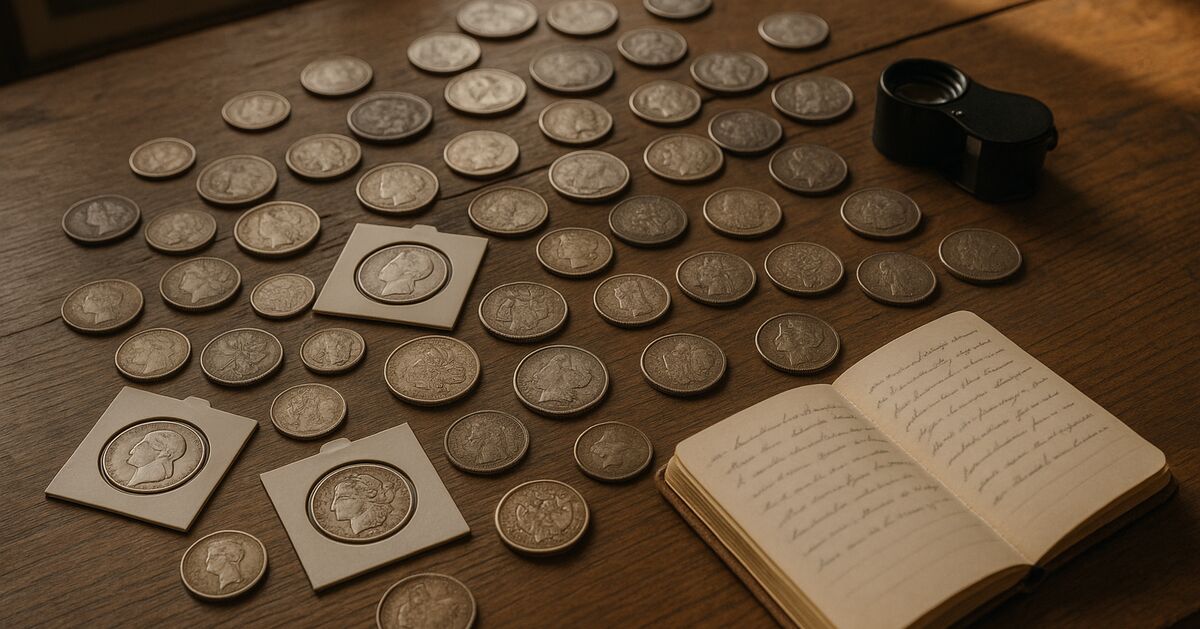
Silver coins are one of the few things you can hold in your hand that tell a story, hold real metal value, and pass cleanly from one generation to the next. That combination keeps drawing people in, whether they stumble into the hobby after inheriting a collection or deliberately set out to build one as a hedge against inflation.
I ran a precious-metals buying business for eighteen years. During that time I handled everything from Mason jars of loose change to carefully cataloged collections in archival folders. What follows is an honest account of how silver coin collecting works in practice, where the real value lives, and what to do when the time comes to sell.
Why silver coins in the first place?
A lot of hobbies cost money with no return. Coin collecting is unusual because even the most modest accumulation of genuine silver coins retains metal value regardless of collector grade. A circulated 1963 Franklin half-dollar, being 90% silver, contains a known fixed amount of silver regardless of collector demand. When silver spot price sits at, say, $28 per troy ounce, that coin is worth around $10 on melt alone, well above its face value of fifty cents.
That floor matters enormously. It means that a beginner who overpays slightly for a common-date coin has not lost everything. The metal is still there. Compare that to, for example, a collection of vintage baseball cards, where a card in poor condition is simply worth very little.
Beyond the monetary floor, silver coins carry genuine historical weight. Handling a Morgan dollar minted in the 1880s, turning it over to read the date and mintmark, connecting it to the economic conditions of that era, that is an experience that no exchange-traded fund delivers. Many collectors describe it as a gateway into economic history, and I have seen it pull in grandchildren who initially had zero interest in anything old.
For those thinking about the broader picture of selling inherited or scrap precious metal, coins are often the most straightforward part of an estate to appraise and sell, precisely because the silver content is standardized by law and well documented.
Collector value versus melt value: understanding the two tracks
This distinction is at the heart of every practical decision you will make as a collector or seller, so it is worth spending real time on it.
Melt value is simply what the metal is worth if the coin were melted down and refined. It is calculated from the coin's silver content (expressed in troy ounces) multiplied by the current spot price. You can find spot price on any financial data site at any hour of the day.
Collector value (also called numismatic value) is what the market of collectors will pay over and above that melt figure because of rarity, grade, historical significance, or demand. A common-date Morgan dollar in circulated condition might trade at a small premium over melt. A key-date Morgan in mint state condition could sell for hundreds or even thousands of dollars, entirely regardless of what silver is doing that day.
The critical mistake that comes up again and again among people sorting through an inherited collection is treating all old silver coins the same. Some should absolutely be sold to a coin dealer or through a specialist auction. Others are simply bullion in old clothes, best sold to whoever pays closest to spot. Conflating the two categories costs money in both directions: you might sell a numismatically valuable coin to a scrap buyer who pays only melt, or you might spend years trying to find a collector price for a coin that simply does not have one.
Understanding weight units like troy ounces, grams, and pennyweights is the first practical step, because every calculation you make as a seller or collector starts with knowing what the metal content actually is.
Which US silver coins are purely bullion-track, and which might carry a premium?
Here is a practical breakdown based on what I saw repeatedly over eighteen years.
Common bullion-track coins (sell near spot, no specialist needed):
- Pre-1965 US dimes, quarters, and half-dollars (90% silver) in circulated condition with common dates
- Kennedy half-dollars from 1965 to 1970 (40% silver)
- Eisenhower dollars with the "S" mintmark in 40% silver (1971-1976 issues)
- Modern one-ounce American Silver Eagles in standard issues (these carry a modest premium over spot due to their bullion status, but are not typically numismatic)
Coins where you should check for collector value first:
- Some Morgan dollar dates and mintmarks are known among collectors to be scarcer and command higher premiums, so check a price guide before assuming a coin is only worth melt. Mintmarks matter enormously.
- Some Peace dollar issues are scarcer than others, so check a price guide before selling any at melt value.
- Barber dimes, quarters, and halves: circulated examples are usually bullion, but high-grade or key-date pieces are another matter entirely.
- Walking Liberty half-dollars: most circulated examples sit close to melt, but high-grade specimens attract collector premiums.
- Most circulated Mercury dimes are bullion-track, but certain dates are known to carry a collector premium, so check a price guide before selling.
The guidance here is not to assume you know which category a coin falls into without checking. A quick lookup on a reputable coin price guide (PCGS or NGC both publish freely accessible price guides online) takes three minutes and can save you real money.
Where to find silver coins worth collecting
The sourcing question is where a lot of the genuine fun in this hobby lives. Here are the channels that actually produce results, along with the honest trade-offs of each.
Coin shows and dealer shops. Prices are fair market, stock is authenticated, and you can examine pieces in person. You will rarely find bargains here, but you will rarely get burned either. Good for building a focused, quality collection.
Estate sales and auctions. The best finds I ever saw came through estate sales where the heirs did not know what they had. A mixed box of coins priced at "old coins, assorted" might contain genuine silver that an unaware seller has not identified. This takes patience and a willingness to go through a lot of ordinary material.
Garage sales and thrift stores. Less productive than estate sales as a rule, but not useless. The key is speed: arrive early, and know your coin types well enough to recognize silver without spending twenty minutes per coin.
Online marketplaces (eBay, specialist forums, numismatic boards). Vast selection, but requires discipline. Check completed sales, not just asking prices. Read seller feedback carefully. For expensive individual coins, insist on professional grading (PCGS or NGC slabs) to confirm authenticity and grade.
Roll searching. This is a time-honored approach in which you obtain rolls of coins from a bank, search through them for silver (pre-1965 US coins are still occasionally found in circulation, though increasingly rarely), and return the non-silver ones. Very low cost, almost no risk, and oddly satisfying as a weekend activity. The hit rate has dropped significantly over the decades, but it has not reached zero.
Other collectors. Joining a local numismatic club or an online forum is underrated as a sourcing channel. Collectors selling pieces from their own collections to fellow enthusiasts often set prices that reflect genuine mutual fair dealing rather than retail markup.
How to tell a keeper from a seller
Once you have a coin in hand, you need to decide: add it to the collection, or sell it for melt?
The decision framework is straightforward in principle, though it takes experience to apply quickly.
First, identify the coin: country, denomination, date, and mintmark. A loupe (a small magnifying glass, ideally 5x or 10x) is essential for reading mintmarks on older US coins. You can find a decent one for a few dollars.
Second, check its grade honestly. Coin grading uses a 70-point scale (the Sheldon scale), from Poor-1 at the bottom to Mint State-70 at the top. For most circulated coins you will encounter, grades between Good-4 and Extremely Fine-45 are typical. The higher the grade, the higher the potential premium over melt, but only if the coin has collector demand in the first place. A perfectly preserved example of a coin that nobody collects is still worth melt.
Third, cross-reference with a price guide. PCGS and NGC both maintain publicly accessible population reports and price guides. If the price guide shows collector value meaningfully above melt, consider having the coin professionally graded and authenticated before selling. The grading fee is typically worth paying for coins where the potential upside is significant.
If you are uncertain about what you have, the frequently asked questions page covers some of the foundational identification questions that come up most often when people first engage with a coin collection.
Selling scrap-track silver coins: getting a fair price
When you have established that a coin is bullion-track (common date, circulated, no collector premium), the goal is simple: get as close to spot value as possible.
A buyer always pays less than spot. That is not a scam; it is the business model. They need margin to cover the cost of refining or reselling, storage, insurance, and their time. The question is how much less. Reputable buyers generally pay less than full melt value, since they need margin for refining, storage, and resale; get multiple quotes to see where the market sits for your coins. Smaller lots and less common coin types tend to sit at the lower end of that range.
Key practical steps when selling:
- Know your melt value before any conversation. Calculate it yourself using the known silver content of each coin type and the current spot price. This is non-negotiable. A buyer who quotes a flat per-coin price without reference to spot or silver content is not quoting transparently.
- Get multiple quotes. Prices vary, sometimes substantially. Two or three quotes cost nothing and reveal where the market actually sits for what you have.
- Distinguish coin dealers from scrap buyers. A coin dealer may pay less than spot for bullion-track coins (they typically buy to resell to collectors) but may pay significantly more for numismatic pieces. A scrap buyer pays close to melt for everything. Knowing which type of buyer you are talking to shapes what you bring to the conversation.
- Check the buyer's credibility. For online buyers specifically, look at independent review platforms and how long they have been operating. A pattern of complaints about slow payment or low offers after coins are received is a serious warning sign.
The piece on common complaints when selling silver and gold covers the recurring patterns of bad practice you want to watch for before you commit to any buyer.
Junk silver: the collector's workhorse
"Junk silver" is the trade term for pre-1965 US coins (and some 1965-1970 half-dollars) that carry no collector premium and are sold purely for their silver content. The name is a little unfair: these coins are perfectly genuine, often historically interesting, and extremely practical as a silver investment vehicle.
The appeal for both collectors and investors is that they come in small denominations. A single pre-1965 dime contains a small, standardized amount of silver, since these coins were minted at 90% silver content. You can buy a few dimes for a modest sum and already own real, tangible silver. There is no premium for fabrication or design, and the silver content is uniform and well documented.
For new collectors, a bag of junk silver is an excellent starting point. The coins are inexpensive, the silver content is easy to verify, and sorting through them to find any that might have numismatic value is a genuine educational exercise.
Silver coins as a long-term investment: honest expectations
Silver has real value as a long-term store of wealth and as a portfolio diversifier, but its price is volatile. Silver prices have swung widely over the past two decades, from very low levels to well above $40 per troy ounce at times, so treat it as volatile rather than a steady climber. Anyone who tells you silver only goes up is selling you something.
Silver coins are a particularly sensible form of silver ownership if you plan to hold for years and value the dual optionality of melt value plus potential collector appreciation. They are less efficient than silver ETFs or futures for short-term trading, and they carry storage and insurance costs that paper silver does not.
The honest positioning: silver coins work well as a meaningful component of a diversified portfolio or as a meaningful hobby with a financial floor, not as a get-rich-quick vehicle.
Passing it on: coins as family heirlooms
One dimension of silver coin collecting that does not get discussed enough in financial terms is what happens to the collection when you are done with it. A well-documented, properly stored collection is genuinely easy to pass to the next generation or to sell in an orderly way. Each coin should have a basic record: country, date, denomination, mintmark, rough grade, and how it was acquired. A simple spreadsheet or even an index card per coin is enough.
Coins stored in proper archival holders (not the soft plastic flips that off-gas and damage surfaces) maintain their condition and their value. This is not a trivial consideration for anyone building a collection they intend to pass on.
For anyone who has received a collection rather than built one, the first step is the same as if you were building it yourself: learn to identify what you have before you decide what to do with it. The home page has a range of resources to help with that orientation process, and the broader blog covers the specific coin types and seller questions that come up most often.
A final word on the hobby itself
People outside the hobby sometimes assume coin collecting is a quiet, static pursuit for those with more patience than curiosity. In practice it is the opposite: it is a live market, a historical research project, a sourcing challenge, and an ongoing education in metallurgy and economic history, all at once. The silver underneath every coin keeps the whole enterprise financially grounded in a way that very few other hobbies manage.
Whether you are building a collection deliberately, sorting through something you inherited, or simply figuring out whether those old coins at the bottom of a drawer are worth anything, the answers are findable. Start with the metal content, learn the key dates, and take your time before selling anything that might be more than it appears.
Sources & further reading
- American Numismatic Association: coin collecting resources (American Numismatic Association)
- Silver spot price and commodity market data (Kitco Metals Inc.)
Revision history (1)
- Pre-publish editorial QA: clean; claim audit: 7 claims, 7 rewritten
Claim-by-claim audit (7 checked)
- “Reputable buyers generally pay less than full melt value, since they need margin for refining, storage, and resale; get multiple quotes to see where the market sits for your coins.” (rewritten to what the article can stand behind)
- “Some Morgan dollar dates and mintmarks are known among collectors to be scarcer and command higher premiums, so check a price guide before assuming a coin is only worth melt.” (rewritten to what the article can stand behind)
- “Some Peace dollar issues are scarcer than others, so check a price guide before selling any at melt value.” (rewritten to what the article can stand behind)
- “Most circulated Mercury dimes are bullion-track, but certain dates are known to carry a collector premium, so check a price guide before selling.” (rewritten to what the article can stand behind)
- “A circulated 1963 Franklin half-dollar, being 90% silver, contains a known fixed amount of silver regardless of collector demand.” (rewritten to what the article can stand behind)
- “A single pre-1965 dime contains a small, standardized amount of silver, since these coins were minted at 90% silver content.” (rewritten to what the article can stand behind)
- “Silver prices have swung widely over the past two decades, from very low levels to well above $40 per troy ounce at times, so treat it as volatile rather than a steady climber.” (rewritten to what the article can stand behind)