
Weight units explained: Troy, grams, and pennyweight for
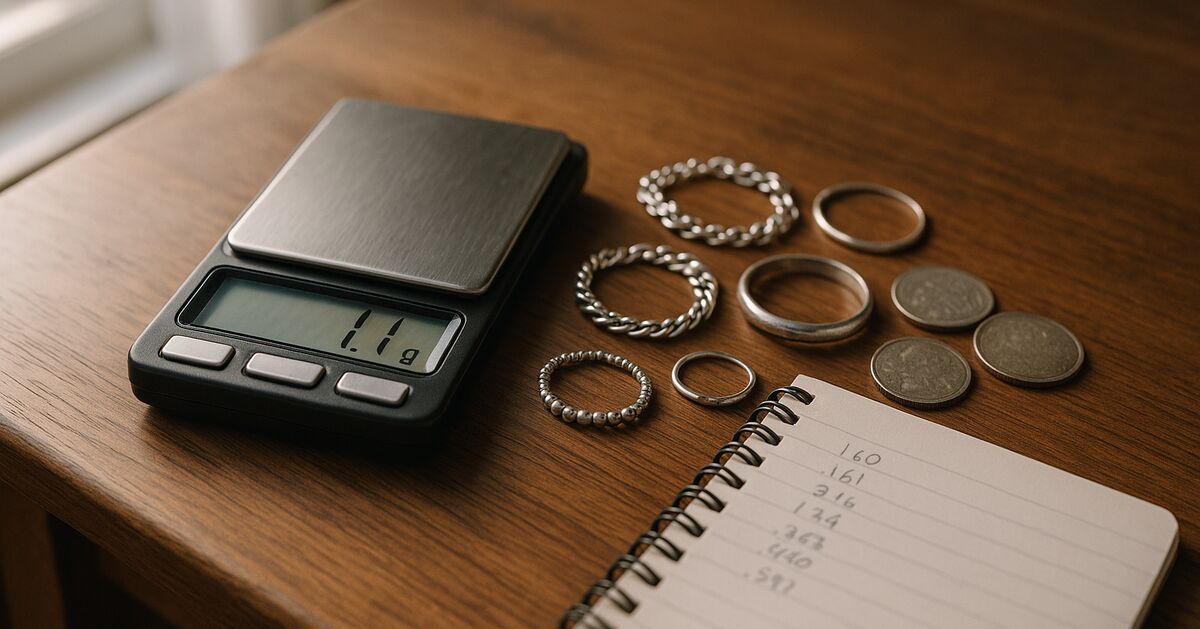
Precious metal is weighed in a system many sellers have never encountered before, and that unfamiliarity can lead to sellers losing money on a sale. Before you hand anything over a counter or post a parcel to a mail-in buyer, you need to understand the four units that come up again and again: the Troy ounce, the gram, the pennyweight, and the everyday avoirdupois ounce. Each one is legitimate. Each one is used by a different corner of the trade. And the differences between them can be large enough to meaningfully change a quote.
This guide covers all four, gives you the conversion numbers you can actually use, and explains exactly why some buyers have a habit of reaching for whichever unit makes their offer look best.
Why there are four different units at all
The short answer is history. The Troy system comes from the medieval trading town of Troyes in France and has been the standard for precious metals across Europe and North America for centuries. The avoirdupois system (the one used for kitchen scales and postal scales) developed separately for everyday commerce. Pennyweight is an old English unit that goldsmiths and jewellers adopted long before grams were a thing. Grams came in with the metric system and are now used extensively in wholesale bullion and refining.
None of them went away, so the trade ended up with all four running in parallel. Coin dealers often quote in Troy ounces. Jewellers and pawn shops tend to use pennyweight. Scrap buyers increasingly use grams because digital scales read in grams and the numbers are conveniently small. Spot prices on financial markets are always quoted in Troy ounces.
If you are working through the details of a sale alongside a broader look at selling inherited or scrap precious metal, getting the units straight is step one.
The Troy ounce: the standard that everything else measures against
Spot price - the live global market price for silver or gold - is always expressed in Troy ounces. When a financial news site says "silver is at $28 an ounce," that is a Troy ounce. When a bullion dealer advertises a one-ounce coin, that is a Troy ounce.
One Troy ounce equals:
- 31.1 grams
- 20 pennyweight (DWT)
- 1.097 avoirdupois ounces (the everyday postal-scale ounce)
That last figure is the one that catches people out. A Troy ounce is heavier than an everyday ounce, not lighter. If a buyer quotes you a per-ounce price and then weighs your silver on a postal scale, they are measuring in avoirdupois ounces and applying a Troy-ounce price to a smaller unit. That is a significant shortfall in your favor - or in theirs, depending on who is doing the arithmetic.
Grams: the most honest unit to work with
Grams are the unit least likely to cause accidental (or deliberate) confusion, because a gram is a gram everywhere in the world and any digital kitchen scale can read them directly.
One gram equals:
- 0.0322 Troy ounces
- 0.643 pennyweight (DWT)
- 0.035 avoirdupois ounces
To convert a gram weight into a Troy-ounce value, divide by 31.1. So if you have 155 grams of sterling silver, divide by 31.1 to get 4.98 Troy ounces. Multiply that by the spot price per Troy ounce, then apply the fineness (sterling is 92.5% silver, so multiply by 0.925), and you have the raw melt value before the buyer's margin.
A kitchen scale accurate to 0.1 grams costs very little and is worth every penny before you walk into any buying conversation. If you want to go further, the post on testing silver and gold at home: what actually works covers how to combine a weight reading with a basic purity check.
Pennyweight: the jeweller's unit that deserves careful attention
Pennyweight (abbreviated DWT, from the Latin denarius) is common in jewelry stores, pawn shops, and gold-buying operations that grew out of the jewelry trade. There is nothing wrong with it as a unit - but it is the one most frequently involved in the pricing sleight-of-hand worth knowing about.
One pennyweight equals:
- 0.05 Troy ounces
- 1.555 grams
- 0.055 avoirdupois ounces
There are 20 pennyweights in a Troy ounce. Here is where attention pays off: a buyer might quote you a price per pennyweight that sounds generous until you realize they are weighing your item in avoirdupois ounces and mentally converting at the wrong ratio. One avoirdupois ounce contains only 18.2 pennyweight, not 20. If a buyer weighs one avoirdupois ounce of your gold, calls it 20 pennyweight, and pays you per pennyweight accordingly, they have just quietly under-paid you by about nine percent.
This is not always deliberate - the unit confusion is genuinely easy to fall into - but it comes up often enough in seller forums and complaint threads that it is worth checking every time. The broader picture of how buyers can gain an advantage through process and presentation is covered in pressure tactics used by silver buyers and how to beat them.
The avoirdupois ounce: the everyday ounce that does not belong in precious-metal pricing
The avoirdupois ounce is the one on your kitchen scales, your postal scale, and your bathroom scales. It is the standard for almost everything in daily life - except precious metals, gemstones, and pharmaceuticals.
One avoirdupois ounce equals:
- 0.911 Troy ounces
- 28.35 grams
- 18.23 pennyweight (DWT)
Notice that an avoirdupois ounce is about 9% lighter than a Troy ounce. If spot silver is $30 per Troy ounce and a buyer pays you $30 per avoirdupois ounce while weighing in avoirdupois, they are effectively paying you $27.33 worth of silver at true Troy-ounce pricing. That nine percent gap is the buyer's gain, not yours.
The practical takeaway: if you have a postal scale at home and nothing else, weigh your silver in avoirdupois ounces, then multiply by 28.35 to get grams. From there the Troy-ounce conversion is easy (divide grams by 31.1). You now have a number you can compare to spot price and to any quote you receive.
A worked conversion example
Say you have a collection of scrap silver jewelry and an old postal scale shows 6.4 ounces (avoirdupois).
- Multiply by 28.35 to get grams: 6.4 x 28.35 = 181.4 grams
- Divide by 31.1 to get Troy ounces: 181.4 / 31.1 = 5.83 Troy ounces
- If the pieces are sterling (92.5% silver): 5.83 x 0.925 = 5.39 Troy ounces of pure silver
- Multiply by spot price (use whatever the live price is on the day): at $30 spot, raw melt value = $161.70
A scrap buyer will not pay full melt - they need a margin to cover refining, handling, and business costs. Scrap buyers generally offer less than full melt value to cover refining, handling, and business costs, so compare several quotes to judge what's reasonable. Knowing your melt value lets you judge whether any given offer is in a reasonable range or well below it.
For a broader look at how to handle an inherited collection before you start getting quotes, take a look at the post on how to sort an inherited box of silver before getting quotes.
Quick-reference conversion table
Here is the full set of conversions in one place, so you can bookmark or print it:
From Troy ounces:
- 1 Troy oz = 31.1 g
- 1 Troy oz = 20 DWT
- 1 Troy oz = 1.097 avoirdupois oz
From grams:
- 1 g = 0.0322 Troy oz
- 1 g = 0.643 DWT
- 1 g = 0.035 avoirdupois oz
From pennyweight (DWT):
- 1 DWT = 0.05 Troy oz
- 1 DWT = 1.555 g
- 1 DWT = 0.055 avoirdupois oz
From avoirdupois ounces:
- 1 avdp oz = 0.911 Troy oz
- 1 avdp oz = 28.35 g
- 1 avdp oz = 18.23 DWT
Keep this table open on your phone when you are getting quotes. If a buyer quotes in pennyweight, you can convert on the spot and compare apples to apples.
What fineness means and why it multiplies the unit confusion
Weight alone does not determine value. A piece has to be multiplied by its fineness - the proportion of actual silver or gold it contains - before you can calculate melt value.
Common silver finenesses you will encounter:
- 999 or .999 - fine silver, essentially pure (bullion bars, some modern coins)
- 925 or .925 - sterling silver (hallmarked jewelry, flatware, most British silverware)
- 800 or .800 - continental European silver, common in German and Scandinavian pieces
- 900 or .900 - US coin silver, pre-1965 US dimes, quarters, and half dollars
Common gold finenesses:
- 999 - fine gold (some bullion bars and coins)
- 916 or .9166 - 22 carat (British sovereigns, American Gold Eagles)
- 750 or .750 - 18 carat (fine jewelry)
- 585 or .585 - 14 carat (common in American jewelry)
- 375 or .375 - 9 carat (common in UK retail jewelry)
If you are not sure what fineness your pieces are, look for a hallmark. British silver typically has a clear set of marks that include the lion passant (for sterling), the assay office mark, and a date letter. For a detailed explanation of what those marks mean and how to read them, the post on sterling silver hallmarks explained: reading the four British marks walks through each one.
Gold jewelry sold in many Western markets is often expected to carry a hallmark showing its carat or fineness, though rules vary by country. If there is no mark, that does not mean the piece has no value - it means you need a test before you can price it accurately.
The unit a buyer chooses tells you something
After years of sitting on the buying side of the table, one pattern stands out: buyers who want to move fast tend to quote in whichever unit produces the largest-sounding number. Gold at $1,900 per Troy ounce becomes $95 per pennyweight, which sounds smaller and less impressive. Scrap silver at $30 per Troy ounce becomes about $0.97 per gram, which sounds almost trivial.
None of those numbers are wrong - they are all the same price in different units - but a buyer who switches units mid-conversation, or who quotes in one unit while weighing in another, deserves a pause and a check. Ask them to state the price in Troy ounces and the weight in grams. Both are unambiguous. Convert yourself. If the numbers match, fine. If they do not, ask why.
This kind of verification is exactly what the frequently asked questions section covers in terms of protecting yourself during a sale.
A note on scales and digital accuracy
A good digital scale that reads to 0.01 grams costs very little online and is one of the most useful tools a seller can own. Postal scales are accurate enough for rough estimates but rarely fine enough for small pieces. Jewelry scales that read to 0.1 grams are adequate for most purposes.
Calibration matters. A scale that is off by even 0.5 grams will cause a noticeable error on small lots. Most digital scales come with a calibration weight, or you can use a coin of known weight - a modern UK 5p coin, for example, weighs exactly 3.25 grams and is a handy check. US cents minted after 1982 are made to a known standard weight and can also serve as a rough calibration check.
Weigh your pieces before you go anywhere. Write it down. A buyer's scale should agree with yours to within a small rounding margin. If it reads significantly lower, that is a conversation worth having before the deal goes any further.
Putting it all together before you sell
The practical process, distilled:
- Weigh your items on a scale you trust, in grams.
- Identify the fineness from hallmarks or a home test.
- Calculate melt value: (weight in grams / 31.1) x fineness x spot price per Troy ounce.
- Get at least two or three quotes, all stated in the same unit (Troy ounces preferred).
- Convert every quote back to a percentage of melt value so you are comparing like with like.
- Walk away from any buyer who will not clearly state their price per Troy ounce.
If you are dealing with coins rather than scrap jewelry, note that some coins carry a premium above melt value because of collector demand, and treating them purely as scrap can leave money on the table. The post on Morgan and Peace dollars: when the coin beats the melt value covers exactly when and why that premium exists.
Understanding weight units will not make you a precious-metals expert overnight, but it will stop you from being on the wrong end of a unit conversion. That alone is worth the fifteen minutes it takes to get comfortable with the numbers.
For more practical guidance across all aspects of selling silver and gold, browse the full article archive on the blog.
Sources & further reading
- Weights and Measures: Troy and Avoirdupois systems (U.S. National Institute of Standards and Technology (NIST))
Revision history (1)
- Pre-publish editorial QA: 2 flagged, 2 softened; claim audit: 6 claims, 5 rewritten
Claim-by-claim audit (6 checked)
- “Precious metal is weighed in a system many sellers have never encountered before, and that unfamiliarity can lead to sellers losing money on a sale.” (rewritten to what the article can stand behind)
- “And the differences between them can be large enough to meaningfully change a quote.” (rewritten to what the article can stand behind)
- “Scrap buyers generally offer less than full melt value to cover refining, handling, and business costs, so compare several quotes to judge what's reasonable.” (rewritten to what the article can stand behind)
- “Gold jewelry sold in many Western markets is often expected to carry a hallmark showing its carat or fineness, though rules vary by country.” (rewritten to what the article can stand behind)
- “A modern UK 5p coin is minted to a known standard weight and can serve as a rough calibration check.” (rewritten to what the article can stand behind)
- “US cents minted after 1982 are made to a known standard weight and can also serve as a rough calibration check.” (rewritten to what the article can stand behind)