
Recycling precious metals: a practical guide to scrap and
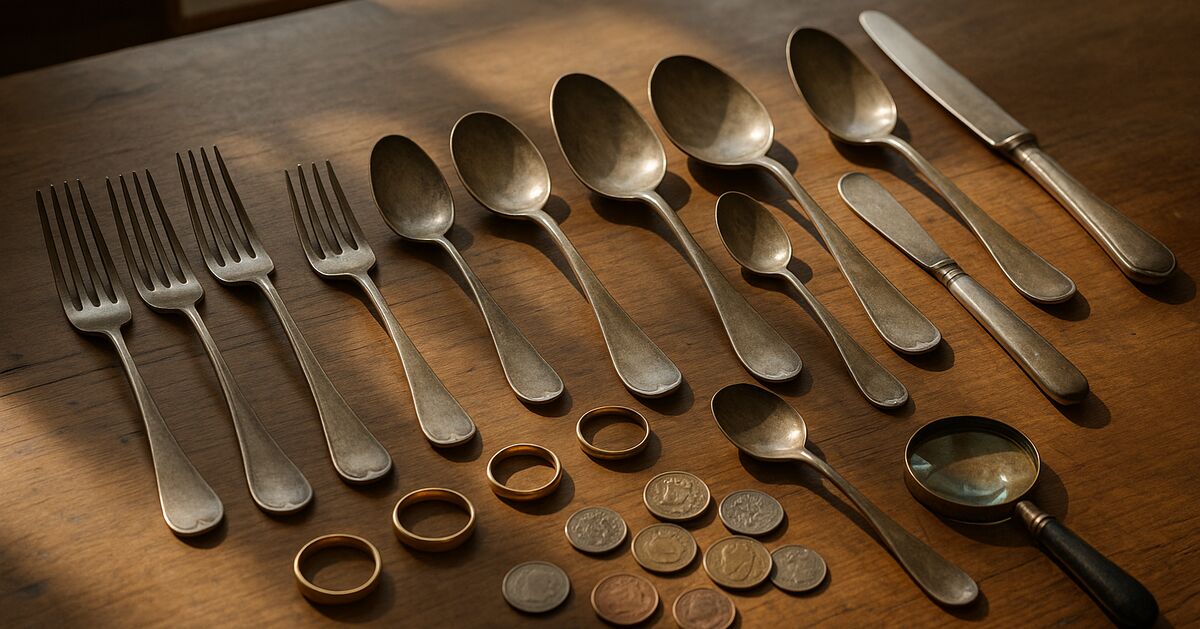
Turning a box of old silverware, a handful of broken gold chains, and a few inherited coins into real money is entirely possible - but the difference between a good outcome and a disappointing one often comes down to preparation. I ran a precious-metals buying business for eighteen years, and the sellers who walked away satisfied were not the ones with the most valuable pieces. They were the ones who showed up organized, informed, and unhurried.
This guide covers the whole journey: gathering and sorting what you have, figuring out what it is actually worth, finding trustworthy buyers, and timing your sale well. None of it is complicated, but each step matters.
Step one: gather everything before you value anything
Before you can make good decisions, you need to know what you are working with. That sounds obvious, but a surprisingly common problem in owner forums is sellers who rush to get a quote on a single item while a drawer full of related pieces sits forgotten at home.
Go through the whole house methodically. Check:
- Jewelry boxes, including items you do not recognize and things that look broken or worn out
- Cutlery drawers, sideboards, and china cabinets for flatware and serving pieces
- Attics and storage boxes for tea services, candlesticks, and presentation pieces
- Coin jars, old wallets, and shoeboxes for loose change and inherited coins
- Medicine cabinets for old dental gold (yes, it is worth selling)
- Garages and workshops for silver-bearing electrical contacts or photography chemicals (less common, but worth knowing)
Bring it all together in one place before you do anything else. You will likely find pieces you forgot about, and gathering first means you can sort and value everything in a single organized pass rather than making three separate trips to three separate buyers.
Step two: sort before you seek a quote
Sorting is not just tidiness. It changes the money you receive, because different categories of metal are valued by completely different methods.
Sort by metal type first. Silver and gold go into separate piles. Platinum, if you have any, goes on its own. Mixed pieces - a gold ring set with silver inlay, for example - get flagged for discussion.
Within silver, separate by form:
- Sterling flatware and hollowware (look for hallmarks: "925", "Sterling", or the British lion passant)
- Silver coins (pre-1965 US coins, British pre-1947 coins, and others carry a known silver content)
- Scrap and broken jewelry
- Silver-plated items (these are not the same as solid silver and are valued very differently)
Within gold, separate by karat if you can read the stamp. 10k, 14k, 18k, 22k, and 24k are all different purities and attract meaningfully different offers. A buyer will test everything anyway, but arriving with pieces roughly grouped by stamp saves time and signals that you know what you have.
Set aside anything that might have collector or antique value rather than just melt value. A complete hallmarked Victorian tea service, a coin in exceptional condition, or a piece by a named maker can be worth considerably more than its weight in metal. These deserve separate attention. For a deeper look at how coins in particular straddle the line between melt value and collector value, the guide to silver coins as a hobby and investment is worth reading before you sort yours.
Step three: understand what drives the value
This is where a lot of first-time sellers feel lost, and it is worth spending a few minutes on the fundamentals before you start getting quotes.
Spot price is your baseline. The "spot price" is the current market price per troy ounce for pure silver or pure gold, traded on commodity exchanges in real time. Every reputable buyer calculates their offer as a percentage of spot, adjusted for the actual purity and weight of your item. You can find live spot prices on financial sites and commodity exchanges.
Weight and purity together determine melt value. A piece of sterling silver is 92.5% pure silver. A 14-karat gold ring is 58.3% pure gold. A buyer's offer for scrap is essentially: (weight in troy ounces) x (purity as a decimal) x (spot price) x (their percentage of spot). The percentage of spot that a buyer offers is where their profit margin lives, and it varies significantly between buyer types. If the arithmetic behind this feels unfamiliar, the article on weight units for silver sellers walks through the troy ounce system in plain English.
Coins are a special case. US quarters, dimes, and half-dollars minted before 1965 are generally understood to contain a fixed, known amount of silver per coin, though you should verify the specific content for your coins before selling. They are often worth more than their face value but less than a premium bullion coin, and the calculation is straightforward once you know what you have. Bullion coins (American Silver Eagles, Canadian Maple Leafs, and so on) carry a premium above melt because of their recognizable purity guarantee.
Refining and handling costs come off the top. No buyer pays you 100% of spot for scrap. The margin they keep covers testing, refining or resale, business overhead, and profit. Online mail-in buyers, local coin dealers, jewellers, and pawn shops all operate at different margins. That spread is normal and expected - the question is just how wide it is.
Step four: get multiple quotes, and get them in writing
This is the single most protective thing you can do. A quote is free. Getting only one quote is the most common regret reported by sellers who later feel they left money on the table.
Aim for at least three quotes from different buyer types. A local coin dealer, a jeweller, and a reputable mail-in or online buyer will often give you genuinely different numbers for the same items, and comparing them costs you nothing but time.
A few practical rules for the quoting process:
- Never leave your items without a receipt. If you hand pieces to a local shop for appraisal, get a written description of every item, including weight if they weigh it in front of you. No receipt, no leave-behind.
- Ask what percentage of spot they are offering. A buyer who will not answer that question directly is a buyer worth being cautious about.
- Get the offer in writing before you accept. Verbal offers evaporate; written ones do not.
- Do not feel pressured to decide on the spot. A buyer who insists you must decide right now is likely using a pressure tactic. Legitimate buyers are confident enough in their offer to give you time to think. The article on common complaints when selling silver and gold covers pressure tactics and how to handle them in detail.
Step five: identify trustworthy buyers
The landscape of precious-metals buyers is wide. Here is an honest breakdown of what you are likely to encounter.
Coin dealers tend to pay well for silver and gold coins because they understand numismatic (collector) value as well as melt value. For flatware and broken jewelry, they may be less interested or offer lower percentages of spot.
Jewellers are a good option for intact jewelry they can resell rather than melt. A jeweller who thinks a piece will sell in their case may offer you considerably more than melt value. For scrap, their offers are typically in line with the market.
Pawn shops are convenient but generally offer lower percentages of spot because their business model involves holding inventory and taking liquidity risk. They are useful for quick cash in hand, but not usually for maximizing return.
Mail-in and online buyers vary widely. Some better-established mail-in buyers say they use independent third-party testing labs, which can be a meaningful safeguard if verified, since it means your items are weighed and tested by someone other than the buyer. When shipping, always use a tracked and insured service. Never ship anything without keeping a detailed written and photographic record of what you sent.
Checking a buyer's standing with the Better Business Bureau (bbb.org) is a reasonable due-diligence step for any buyer you have not used before. BBB accreditation is not a perfect guarantee, but a long history of unresolved complaints is a clear warning sign. Reading independent reviews on third-party platforms adds another layer of verification.
For a full breakdown of how different buyer types compare, the practical field guide for new sellers covers this in depth.
Step six: consider whether any pieces deserve more than melt value
Before you send anything to be melted, ask yourself whether it might be worth more intact.
A few categories worth pausing on:
Complete sets. A full canteen of silver cutlery with matching pieces in good condition is worth more to a collector or through auction than it is as scrap silver. The set premium can be meaningful.
Named makers and hallmarks. Pieces by known silversmiths - Tiffany, Georg Jensen, Paul Storr, and others - carry a maker's premium that refining destroys. If you see a name stamped on a piece, look it up before selling it as scrap.
Coins in exceptional condition. A coin that grades well can be worth multiples of its melt value to a collector. Even common-date coins in mint-state condition are worth more than spot weight. This is a reason to have coins assessed by a numismatist, not just a scrap buyer, before you decide.
Antique and decorative pieces. Age, provenance, and artistic merit can all lift value above melt. An auction house or specialist dealer can give you a more informed opinion than a scrap buyer, and most will provide an initial assessment for free.
If you are working through an estate rather than your own accumulation, the specific dynamics around inherited silver are worth understanding carefully before you start selling.
Step seven: think about timing, but do not obsess over it
Spot prices move every trading day, and it is tempting to try to time the market for a peak. In practice, short-term precious-metals price movements are hard to predict, so the choice of buyer and the percentage of spot they offer is likely to matter more than the exact day you sell.
What timing does matter for is avoiding selling into a period of unusual market volatility. When prices are swinging sharply in either direction, some buyers widen their spread or offer lower percentages of spot to protect themselves. Selling during a calmer period tends to produce more consistent offers. Keeping an eye on the spot price for a few weeks before you sell - and understanding roughly where prices have been recently - gives you useful context for evaluating the offers you receive. The article on live price charts and what they mean is a good starting point for understanding how spot prices work in a selling context.
A note on testing
If you are not certain that a piece is what it appears to be - sterling versus plate, 14k versus gold-filled, real coin silver versus a convincing forgery - it is worth doing some basic testing before you seek quotes. Hallmarks are the starting point, but they can be faked on high-value pieces, and many older pieces have no hallmarks at all. Simple at-home tests (the magnet test, the ice test, acid testing with a proper acid test kit) can give you a reasonable working answer for most pieces. The guide to testing silver and gold at home explains which methods are reliable and which are not.
The mindset that actually helps
The sellers who do best are not necessarily the ones with the most valuable items. They are the ones who treat the process like any other transaction that deserves a little homework: gather, sort, understand the basics of how value is calculated, get multiple quotes, and take their time.
Scrap and inherited precious metal is real money. It has weight, it has a verifiable market price, and there are legitimate buyers competing for it. You do not need to be an expert to get a fair price. You just need to be organized, patient, and willing to ask questions - and to walk away from any buyer who makes you feel otherwise.
For anything else that comes up along the way, the FAQ page covers a wide range of common questions from sellers at every stage of the process.
Sources & further reading
- Commodity Futures Trading Commission: understanding precious metals markets (U.S. Commodity Futures Trading Commission)
- Better Business Bureau: finding accredited precious metals buyers (Better Business Bureau)
- Royal Mint: UK coin silver content and hallmarking guidance (The Royal Mint)
- Federal Trade Commission: gold and silver dealers - what to know before you buy or sell (U.S. Federal Trade Commission)
- London Bullion Market Association: good delivery and spot price reference (London Bullion Market Association)
Revision history (1)
- Pre-publish editorial QA: 2 flagged, 2 softened; claim audit: 4 claims, 3 rewritten
Claim-by-claim audit (4 checked)
- “US quarters, dimes, and half-dollars minted before 1965 are generally understood to contain a fixed, known amount of silver per coin, though you should verify the specific content …” (rewritten to what the article can stand behind)
- “Pawn shops are convenient, but in many cases they may offer lower percentages of spot, since their business model often involves holding inventory and taking on liquidity risk.” (rewritten to what the article can stand behind)
- “Some better-established mail-in buyers say they use independent third-party testing labs, which can be a meaningful safeguard if verified, since it means your items are weighed and…” (rewritten to what the article can stand behind)
- “In practice, short-term precious-metals price movements are hard to predict, so the choice of buyer and the percentage of spot they offer is likely to matter more than the exact da…” (rewritten to what the article can stand behind)