
Why two buyers quoted different prices for the same silver
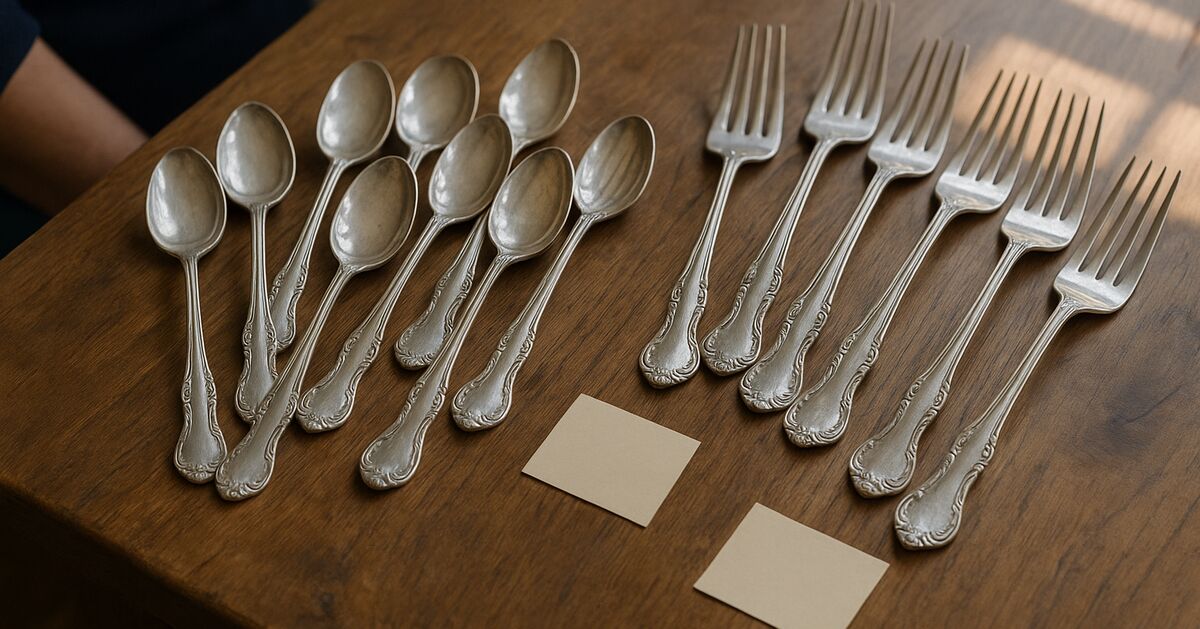
Two buyers look at the same bag of sterling flatware. One offers $180. The other offers $310. Same silver, same day, same spot price. What on earth is going on?
This kind of gap surprises sellers, but it is completely normal once you understand that buyers are not all solving the same equation. They are different businesses with different costs, different customers, and different ideas about what your silver is actually worth to them. Understanding those differences is the fastest way to stop leaving money on the table.
The starting point every buyer uses - and why it already varies
Every legitimate silver buyer starts from the same place: the current spot price of silver. Spot price is the globally traded benchmark for one troy ounce of pure silver. You can look it up on any financial site in real time. But the way each buyer applies that number to your specific item is where the paths immediately diverge.
If you have sterling flatware, the silver content is 92.5% of the total weight. A buyer converts your piece's weight in troy ounces to a "fine silver equivalent," then applies spot price. If you have coin silver (usually 90%), the multiplier is 0.90. If something is silver plate, the silver content is essentially zero for melt purposes, which is a separate conversation entirely.
So even before any margin enters the picture, two buyers can land on different numbers if they are using different equipment to weigh your items, or if they disagree about the purity. If a buyer is unsure whether a piece is sterling or plate, they may apply a conservative purity figure. Another buyer who is more confident (perhaps they recognize the hallmarks) will calculate more generously. You can read more about what spot price actually means for your transaction on our post about how silver spot price is set each day and what that means for timing your sale.
The margin: every buyer runs a different business
After calculating the fine silver value, every buyer applies a deduction to build in their profit margin. This is completely legitimate, but the size of the deduction varies enormously.
Here is why:
- A pawn shop has high street rent, staff wages, a license, and a broad customer base that expects to find everything from guitars to gold. Their overheads are high relative to silver volume, and they may turn over silver slowly. Pawn shops often pay well below melt value, though the exact percentage varies by shop.
- A coin and bullion dealer moves more silver volume, has a tighter cost structure around precious metals, and can usually offer 70% to 85% of melt for common sterling or coin silver. They know exactly what they are buying.
- A specialist refiner or smelter buys large volumes, processes silver in bulk, and can afford smaller per-ounce margins. Refiners and smelters often pay closer to melt value for large quantities, though the exact percentage varies.
- A private collector or antique dealer may pay above melt if your piece has design, maker's marks, or period appeal that attracts their customers. They can also pay well below melt if they are simply liquidating.
- An online mail-in buyer may have lower overheads than a physical shop, but they also carry more risk (fraud, disputes, postage losses) and often hold your items for days before settlement. Their rates vary from quite competitive to quite poor.
The same piece of silver can plausibly generate a wide range of offers depending on who you ask. That is not dishonesty; it is the reality of dealing with buyers who have genuinely different cost structures.
Purity uncertainty adds its own spread
A buyer who cannot verify purity with confidence will always protect themselves by assuming a lower number. If your pieces have clear, legible hallmarks (the lion passant for British sterling, or a "925" stamp for international sterling), a confident buyer will pay on 92.5% silver content. If the marks are worn, missing, or unfamiliar, a cautious buyer might assume 80% or less until they test.
Acid testing or XRF (X-ray fluorescence) scanning can reduce that uncertainty, but not all buyers have XRF equipment, and acid testing may mark or damage decorative surfaces. A buyer who has tested your item thoroughly can afford to offer more. One who is guessing is pricing in the possibility of an unpleasant surprise.
If you are curious about what a formal assay can and cannot tell buyers, our post on what a silver assay report actually tells a buyer and whether you need one walks through the mechanics.
Collectible or antique value: buyers price it very differently
Here is where the gap can get truly dramatic. A set of Georgian silver salt cellars, a Victorian cruet set, or a signed piece from a notable maker has potential value well above the weight of the metal. But whether a buyer recognizes and prices that value depends entirely on who they are and who their customers are.
A scrap or melt buyer will offer purely on weight and purity. They plan to smelt it. A specialist antique silver dealer, an auction house, or a collector might pay significantly more than melt for the same piece because they know it will sell to someone who wants it as an object, not just as metal.
This explains why sellers of antique or decorative silver can get quotes that feel worlds apart. One buyer sees metal. Another sees a Georgian condiment set that belongs in a display cabinet. Both quotes are "correct" from each buyer's perspective. If your silver has age, maker's marks, or an interesting form, always get at least one quote from a specialist before accepting any melt-based offer.
The same logic applies to sets. A complete canteen of cutlery in its original case is worth more than the sum of its parts to the right buyer. Our post on selling a silver canteen set: whole versus piece by piece covers exactly how to think through that decision.
The timing and cash-flow factor
Buyers who need to move product quickly, or who are sitting on a lot of silver inventory already, will sometimes offer less simply because they are not hungry. A buyer who has just sold a large parcel of sterling and needs to restock might offer more than usual. One who is overstocked will be more conservative.
Retail demand cycles also matter. In the weeks before Christmas and around estate sale season in spring, demand from end buyers tends to be stronger, and some dealers price accordingly. In quieter periods, offers can drift lower.
You may not be able to control this, but knowing it exists is useful. If one offer feels low, it is worth asking whether the buyer has capacity right now rather than assuming the quote reflects the true value of your silver.
What a buyer says about condition
Condition affects value differently depending on the buyer type. For a melt buyer, condition is almost irrelevant. A bent spoon and a pristine one weigh the same. But for a collector-facing dealer or an antique specialist, condition matters considerably. Cracks, repairs, monograms, and heavy polishing wear all reduce the resale premium they can charge.
This creates another fork. A scrap buyer ignores that old monogram entirely. A dealer who might otherwise pay a collectible premium may discount heavily because a monogrammed piece is harder to sell at retail. In some cases, the scrap offer actually beats the antique offer because the premium evaporates when condition is poor.
One cleaning-related trap that comes up repeatedly: sellers who polish their silver before getting quotes sometimes remove the patina that signals age and authenticity to a collector buyer, turning a piece that deserved a premium into something that looks like a reproduction. Our post on what "as-found" silver means and why cleaning costs you money explains why leaving silver alone is nearly always the right call before selling.
Mail-in buyers versus in-person buyers
Mail-in buyers introduce extra variables. They weigh and assess your silver after it arrives, meaning the quote you see upfront is conditional. The final offer may differ from the estimate. Some mail-in buyers are extremely competitive, particularly those who process large volumes and pass savings on to sellers. Others use attractive headline rates but apply aggressive deductions for "cleaning fees," "sorting fees," or conservative purity assessments once they have your items.
If you use a mail-in buyer, reading the terms carefully before you ship anything is non-negotiable. Our guide on how to read a mail-in silver buyer's terms before you ship covers the specific clauses to check.
In-person buyers have the advantage of transparency: you can watch the weighing, ask about the purity reading, and negotiate on the spot. That visibility is worth something even if the in-person rate is occasionally lower than the best mail-in rate.
How to use this knowledge as a seller
Once you understand the mechanics behind the gap, the practical implications are clear.
Get at least three quotes. One quote tells you nothing. Two quotes give you a range. Three quotes start to tell you where your silver actually sits in the market. Always go in knowing your silver's weight and approximate purity before you start, so you can sanity-check each offer against spot price yourself.
Match your silver to the right buyer type. Plain, worn flatware with no special maker is best sold to a melt or refinery buyer who will pay high on weight. A complete, marked, period piece deserves a quote from an antique specialist or auction house before any melt buyer sees it.
Ask what's behind the number. A good buyer should be able to tell you: the weight they recorded, the purity they are paying on, the spot price they are using, and the percentage of melt value they are offering. If a buyer cannot or will not explain the calculation, that itself is information.
Time matters if you have it. Accepting the first offer because you want this resolved is understandable, but it is often where the biggest losses happen. Our post on selling silver in a hurry: what you give up and how to limit the damage is worth a read if you are working against a deadline.
Do not confuse a low offer with a dishonest one. A pawn shop offering 45% of melt is not necessarily scamming you. That may simply be what their business model requires. The solution is not outrage; it is finding a buyer whose model allows them to pay more.
For a broader overview of how different buyer types compare and what each one pays across different types of silver, the home page brings together the core frameworks you need.
The bottom line
Two quotes for the same silver can differ by 50% or more and both be entirely legitimate. The gap comes from differences in buyer type and overheads, confidence in purity, recognition of collectible or antique value, current inventory needs, and the conditions attached to mail-in versus in-person transactions.
The seller who understands these variables is the one who gets three quotes, targets the right buyer for the right kind of silver, and walks away with a number that reflects what their silver is actually worth, not just what the first buyer felt like paying.
If you have more questions about how the process works from start to finish, our FAQ page covers the questions that come up most often from sellers navigating this for the first time.
Sources & further reading
- Silver commodity spot price and market data (U.S. Commodity Futures Trading Commission)
- Precious metals trading and price benchmarking (London Bullion Market Association)
- Silver purity standards and hallmarking (London Assay Office)
- Consumer guidance on selling precious metals (U.S. Federal Trade Commission)
- XRF analysis and metal testing methods (National Institute of Standards and Technology (NIST))
Revision history (1)
- Sep 16, 2026 - Pre-publish editorial QA: clean; claim audit: 6 claims, 5 rewritten
Claim-by-claim audit (6 checked)
- “Pawn shops often pay well below melt value, though the exact percentage varies by shop.” (rewritten to what the article can stand behind)
- “Coin and bullion dealers often offer a higher share of melt value than pawn shops, though the exact percentage varies.” (rewritten to what the article can stand behind)
- “Refiners and smelters often pay closer to melt value for large quantities, though the exact percentage varies.” (rewritten to what the article can stand behind)
- “The same piece of silver can plausibly generate a wide range of offers depending on who you ask.” (rewritten to what the article can stand behind)
- “A specialist antique silver dealer, an auction house, or a collector might pay significantly more than melt for the same piece because they know it will sell to someone who wants i…” (rewritten to what the article can stand behind)
- “Acid testing or XRF (X-ray fluorescence) scanning can reduce that uncertainty, but not all buyers have XRF equipment, and acid testing may mark or damage decorative surfaces.” (rewritten to what the article can stand behind)