
Selling silver jewelry: what it's worth and how to get a
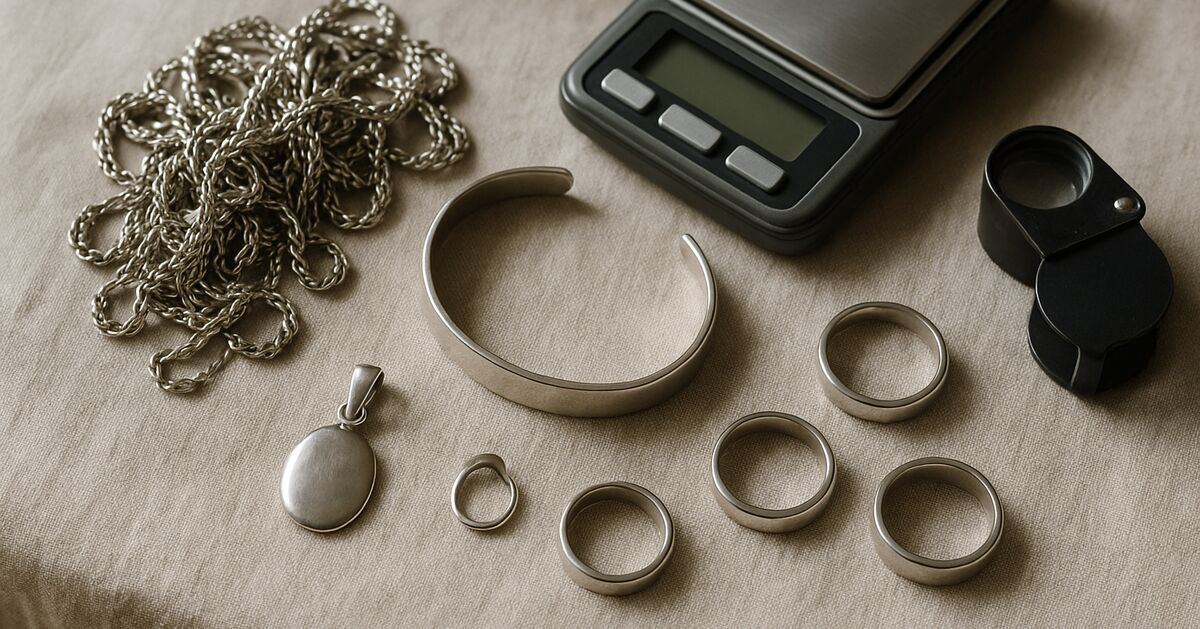
Silver jewelry sitting in a drawer is worth real money, yet it is one of the easiest categories of silver to undersell because the gap between what a piece looks like and what it is actually worth can be wide in either direction.
I ran a precious-metals buying business for eighteen years. Silver jewelry came across my desk every single week, from tangled chains in zip-lock bags to heavy Navajo cuffs to boxes inherited from grandmothers. The same mistakes showed up again and again. This guide is my attempt to save you from them.
What silver jewelry is actually made of
Not everything that looks silver is silver. That sounds obvious, but it can trip people up.
Genuine silver jewelry sold in the United States is typically sterling silver, which is 92.5% pure silver alloyed with copper or another metal for hardness. The remaining 7.5% is not silver and has no precious-metal value. When a buyer talks about "melt value," they are calculating on that 92.5% fraction only.
A smaller category of pieces are marked 999 or Fine Silver, meaning 99.9% pure. These are less common in jewelry because fine silver is soft and scratches easily, but you do see them in pendants, bead-style pieces, and some artisan work.
Then there are pieces that contain no silver at all: silver-filled, silver-plated, nickel silver, and German silver. Silver-plated pieces have a microscopic silver coat over a base metal (usually brass or copper). Nickel silver and German silver contain no silver whatsoever, only a zinc-nickel-copper alloy that has a similar color. These have no melt value to a precious-metals buyer.
The practical difference matters enormously. Depending on weight and current silver prices, a heavy sterling bracelet can carry meaningful melt value, calculable using current spot price. The identical-looking plated version is worth essentially nothing as scrap.
Reading the hallmarks
The hallmark is your first stop. On sterling silver made in or imported into the United States, look for:
- .925 - the most common modern mark
- STERLING - used on older American pieces, especially pre-1950s
- 925 without a decimal point - equally valid
- STG or STER - older abbreviations, less common today
On British pieces you will see a lion passant (a small lion striding to the left), which has indicated sterling silver since the 14th century, usually alongside a date letter and an assay office mark. If you are dealing with a piece that has those four British hallmarks, the sterling silver hallmarks guide on this site goes into that system in detail.
Mexican silver is often marked .925 or 925, but older pieces from the 1930s through 1960s may be marked .980 (98% pure, a Mexican standard of that era) or simply MEXICO without a purity mark. Navajo, Hopi, and other Native American silverwork from the same period is frequently unmarked. Reputable buyers who handle southwestern pieces regularly will know this and test accordingly.
If you cannot find a hallmark, that does not automatically mean a piece has no value. Older handmade pieces, certain ethnic jewelry, and heavily worn pieces sometimes lost their marks or were never stamped. A simple acid test or an XRF (X-ray fluorescence) scanner will tell a buyer exactly what they have within seconds.
What you should never assume: that a piece is sterling just because it looks silver, feels heavy, or was sold to you as silver years ago. And equally, do not assume an unmarked piece is worthless. Test first, conclude later.
How melt value is calculated
The calculation itself is straightforward once you know the inputs.
- Weigh the piece in troy ounces. A troy ounce is 31.1 grams, not the 28.35-gram avoirdupois ounce used for everyday weight. Buyers work in troy ounces. If your scale reads grams, divide by 31.1.
- Apply the purity factor. For sterling, multiply the troy-ounce weight by 0.925.
- Multiply by the spot price of silver. Spot price is quoted in troy ounces and changes continuously during market hours.
Example: a sterling bracelet weighs 42 grams. That is 42 / 31.1 = 1.350 troy ounces. Multiply by 0.925 = 1.249 troy ounces of pure silver. If spot silver is $28 per troy ounce, the melt value is roughly $34.97.
That is the ceiling, not what you will be paid. A buyer has refining costs, overhead, and profit margin to cover. Reputable mail-in buyers and coin dealers often offer a percentage below melt value to cover refining costs and margin; ask each buyer to state their percentage so you can compare offers. Pawn shops and some local cash-for-gold shops can run considerably lower than that. The gap is not a scandal; it reflects different business models and overhead structures.
For a broader look at how silver valuation works across different item types, the home page is a good starting point for orienting yourself before you start calling buyers.
When jewelry is worth more than its melt value
Melt value is the floor, not always the ceiling.
Certain silver jewelry carries a collectible or artistic premium that makes melting it the wrong move. Categories worth pausing on before you accept a scrap offer:
Signed designer pieces. Jewelry signed by Georg Jensen, Taxco artists like Antonio Pineda or Hector Aguilar, Tiffany, or mid-century Scandinavian designers can sell for multiples of melt on the collector market. A signed Georg Jensen bracelet can fetch well above its melt value to the right collector, so check completed sales before scrapping it.
Native American jewelry. Pieces by known Navajo, Zuni, or Hopi silversmiths, particularly older work with hallmarks or provenance documentation, belong on a specialized auction platform or with a dealer who knows that market, not at a scrap buyer.
Art Nouveau and Art Deco pieces. Enameled silver from the early 20th century, pieces with fine stone settings, or work with unusual construction details can attract collector interest well above melt.
Intact stone settings. If a piece has turquoise, coral, opals, or other stones, be cautious. A scrap buyer will typically deduct for the weight of the stones or ask you to remove them. A jewelry buyer or estate auction might value the complete piece far better.
The honest way to figure out which category your pieces fall into is to do a quick image search, check completed eBay listings (not asking prices, completed sales), and consult a local jeweler or auction house appraiser before committing to a scrap offer. That 20-minute check can be worth real money.
The buyer landscape
Knowing who buys silver jewelry, and why their offers differ, saves you from leaving money on the table.
Local jewelers. Many buy estate silver, particularly if they have a resale case. Their offers on scrap-grade pieces can be modest, but if they think a piece is resellable, they may pay above melt. Worth a call, especially for nicer or signed pieces.
Coin and precious-metals dealers. These buyers handle silver in volume and generally know their costs precisely. Offers are usually fair and transparent. A good dealer will show you the calculation. If they won't, walk out.
Pawn shops. Convenient, but offers vary widely. Some pawn shops employ people with real testing equipment and solid silver knowledge. Others do not. Always get multiple quotes.
Mail-in buyers. For larger quantities of scrap-grade sterling, established mail-in buyers can be competitive because their volume allows them to operate on tighter margins. The key is using only buyers with clear published price schedules, verified reviews, and insured shipping. The FAQ page covers the practical questions around mail-in buying in more detail.
Online auction platforms. eBay works well for pieces with collector appeal. It is slower than a direct sale, requires photography and description work, and carries fees, but the reach to motivated collectors is unmatched. For generic sterling chains and bangles, the effort rarely pays compared to a direct buyer. For signed or interesting pieces, it often does.
Estate auctions and consignment. For higher-value or designer pieces, a local auction house or an online estate auction platform can attract bidders who know what they are looking at. Auction commissions can be substantial, but competitive bidding on desirable pieces can still net more than a melt offer.
Practical steps before you contact any buyer
A little preparation makes a real difference in the experience and the outcome.
Sort your pieces by likely category. Separate obvious sterling (hallmarked, heavier pieces) from items you are uncertain about. Put plated pieces aside entirely unless a buyer offers to assess them. Mixing plated into a sterling lot creates confusion and can lower trust.
Weigh everything you can. A kitchen scale that reads in grams is fine. Write down the weights. Buyers will reweigh on their own calibrated scales, but going in with your own numbers lets you follow the math and catch errors.
Photograph signed or interesting pieces. Close-up shots of hallmarks and any maker's signatures are useful when you contact multiple buyers or post to a collector forum for opinions.
Remove non-silver attachments where practical. Leather straps, fabric cords, and plastic clasps are dead weight. Steel spring clasps on chains also add weight that is not silver.
Do not clean or polish pieces before selling them. I know this feels counterintuitive. But cleaning removes the patina that helps collectors and buyers assess age and authenticity. A cleaned piece can actually raise questions rather than settle them. For scrap-grade pieces it makes no difference to melt value whatsoever.
If you have a mixed lot that includes other types of silver, the selling scrap silver guide covers the sorting and pricing process for odds-and-ends silver in general, which complements what is here.
Getting multiple quotes and comparing them fairly
The single most reliable way to get a fair price is to get at least two or three offers before accepting any of them. This does not require a lot of time.
When you contact a buyer, give them the same information: the weight, the hallmarks you found, and a brief description of the pieces. If they quote you without asking those questions, that is a yellow flag. A buyer who eyeballs a photo and throws out a number without knowing the weight is guessing, and guesses tend to favor the buyer.
Ask each buyer to explain their offer in terms of spot price and percentage paid. A buyer paying 80% of melt on a day when spot is $28 per troy ounce is paying $22.40 per troy ounce of pure silver content. That number lets you compare apples to apples regardless of how different buyers frame their offers.
Watch for deductions that are not clearly explained: handling fees, "testing fees," or vague "processing charges." These are not inherently wrong, but they should be disclosed upfront and factored into your comparison.
If you are new to the whole process and want a broader orientation to the selling process, the how to sell silver coins guide covers buyer evaluation principles that apply just as well to jewelry as they do to coins.
A note on silver-filled and silver-plated pieces
Because this question comes up so often, it is worth addressing directly.
Silver-filled (sometimes marked GF or "Silver Filled") has a thicker silver layer than plating, bonded mechanically to a base metal core. It contains a small but real amount of silver. A few specialist buyers purchase silver-filled material for refining, but the value per gram is a small fraction of sterling and many buyers will simply decline it.
Silver-plated pieces have no recovery value as precious metal scrap. The coating is genuinely microscopic. If a piece is clearly plated (look for worn spots that reveal a yellow or reddish base metal underneath), no honest precious-metals buyer will make a meaningful offer on it. That does not mean it has no value at all: plated Victorian-era pieces, complete sets, or things with artistic merit can still sell well in antique markets or on eBay to people who want them for decorative use rather than silver content.
Realistic expectations
Sterling silver jewelry is worth real money, calculated honestly, at real-world buyer margins. If a piece weighs 30 grams of sterling, it has melt value. A fair buyer will pay you a clear percentage of that, explain the math, and not make you feel rushed or confused.
What it is not worth is the retail price you or someone else paid for it. Retail jewelry pricing covers design, labor, retail markup, and store overhead. The precious-metal content is only one component of what you paid new. Selling silver back into the market means selling the metal content, and sometimes the collector value, but not the retail markup.
Going in with that understanding, doing your homework on hallmarks and weights, sorting interesting pieces from plain scrap, and getting a few competitive quotes: those are the steps that reliably get people a fair outcome. There is no shortcut, but the process genuinely is not complicated once you understand what drives the numbers.
For more guidance on related items you might have alongside your jewelry, the selling silver flatware guide and the selling junk silver coins guide cover two of the other categories that show up most often alongside a jewelry lot in an estate or drawer cleanout.
Sources & further reading
- Silver commodity spot price data and market reference (Kitco Metals Inc.)
- Troy weight and precious metals measurement standards (National Institute of Standards and Technology (NIST))
- XRF analysis for precious metal identification in consumer goods (U.S. Environmental Protection Agency)
- Weights and measures for precious metal transactions (National Institute of Standards and Technology (NIST))
Revision history (1)
- Pre-publish editorial QA: 2 flagged, 2 softened; claim audit: 7 claims, 4 rewritten
Claim-by-claim audit (7 checked)
- “Genuine silver jewelry sold in the United States is typically **sterling silver**, which is 92.5% pure silver alloyed with copper or another metal for hardness.” (cited → nist.gov)
- “Depending on weight and current silver prices, a heavy sterling bracelet can carry meaningful melt value, calculable using current spot price.” (rewritten to what the article can stand behind)
- “A simple acid test or an XRF (X-ray fluorescence) scanner will tell a buyer exactly what they have within seconds.” (cited → epa.gov)
- “A troy ounce is 31.1 grams, not the 28.35-gram avoirdupois ounce used for everyday weight.” (cited → nist.gov)
- “Reputable mail-in buyers and coin dealers often offer a percentage below melt value to cover refining costs and margin; ask each buyer to state their percentage so you can compare …” (rewritten to what the article can stand behind)
- “A signed Georg Jensen bracelet can fetch well above its melt value to the right collector, so check completed sales before scrapping it.” (rewritten to what the article can stand behind)
- “Auction commissions can be substantial, but competitive bidding on desirable pieces can still net more than a melt offer.” (rewritten to what the article can stand behind)