
Selling scrap silver: what it's worth and how to get a fair
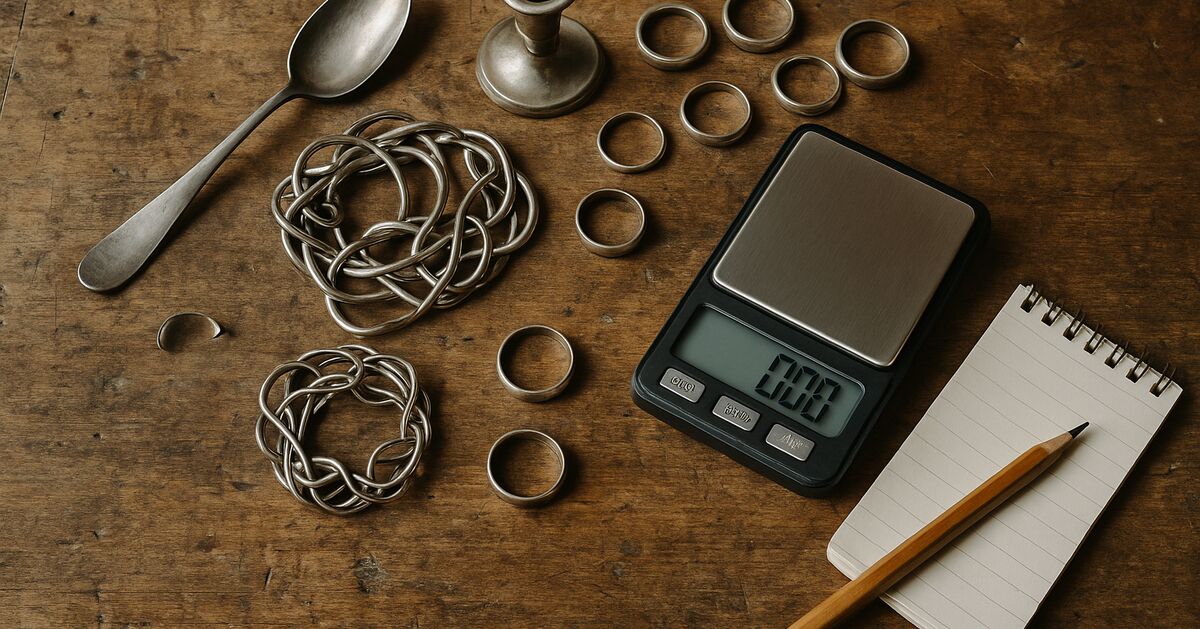
Scrap silver sitting in a drawer is liquid cash waiting to happen - but only if you understand the gap between the number you see on a price chart and the number that lands in your bank account. That gap is not a scam. It is the economics of the trade, and once you understand it, you can work with it instead of being blindsided by it.
This guide covers every practical layer of selling scrap silver: what the term actually means, how buyers calculate an offer, which hallmarks matter, what moves the price up or down on any given day, and how to walk away with a fair result.
What "scrap silver" actually means
The word "scrap" does not mean trash. In the precious-metals trade it means silver that is being sold for its metal content rather than for any collector, artistic, or antique premium. A bent sterling teaspoon, a broken chain, a mismatched candlestick, a tangle of old jewelry - all of these are scrap in the eyes of a buyer whose job is to weigh, test, and resell the metal.
The category is broad. Scrap silver can include:
- Sterling silver jewelry (rings, bracelets, chains, earrings)
- Sterling flatware and serving pieces
- Damaged or incomplete silver tableware
- Decorative objects with no meaningful collector market
- Industrial silver items and photographic materials
- Old dental silver (amalgam has a complex resale path; ask a specialist)
- Coins being sold purely for metal content (though some coins carry a premium above melt - worth checking before you assume scrap status)
The one category that trips people up most often is silver plate. Plated items have a thin layer of silver bonded to a base metal like copper or brass. They are not scrap silver in the precious-metals sense, because the recoverable silver content is negligible. If you are unsure which category your items fall into, the how to figure out what your silver is actually worth guide walks through the identification process in detail.
How buyers calculate a scrap silver offer
Every legitimate offer is built from three numbers multiplied together, then discounted. Understanding each component prevents surprises.
1. Gross weight
A buyer starts by weighing your items. They will weigh in troy ounces (1 troy oz = 31.1 grams) because silver is always priced per troy ounce. If your kitchen scale reads in grams, divide by 31.1 to get a rough troy-ounce figure for your own reference.
2. Purity (fineness)
Not everything that looks silver is the same purity. A buyer applies the appropriate fineness to extract the pure silver weight from the gross weight. Common purities and their decimal equivalents:
- .999 fine silver - essentially pure silver, found in bullion bars and rounds
- .925 sterling - 92.5% silver, the standard for jewelry and flatware in the US and UK
- .900 - 90% silver, the standard for pre-1965 US coins
- .800 - 80% silver, common in Continental European flatware and some Scandinavian pieces
- .835 - found in some German and Dutch items
Multiply gross weight by fineness to get the fine silver weight. That is what a buyer is actually buying.
3. Spot price
Spot is the live interbank price for one troy ounce of pure silver. It shifts throughout every trading day based on futures markets, currency movements, and global demand. For a plain-English explanation of what spot really means when you are on the selling side, see the post on live price charts and what they really mean when you're selling silver.
The buyer's discount
A buyer cannot pay you 100% of spot. They need to cover testing, shipping insurance, refining fees, overhead, and profit margin. In a healthy competitive market, reputable buyers vary in what they offer for common sterling scrap, so it's worth comparing quotes to see where you land. The range is wide because it depends on the buyer type, the volume you are selling, current market volatility, and the form your silver is in. Larger, cleaner lots tend to attract better percentages. Tiny, mixed, or awkward lots attract lower ones.
Reading hallmarks: the shortcut to knowing what you have
Hallmarks are stamped identifiers that tell you the purity of a piece without any testing. In the United States and United Kingdom, hallmarking silver has been a legal requirement for manufactured pieces for a very long time, which means most sterling you encounter is already labeled.
US hallmarks to look for:
- STERLING - the word itself is the most common US mark
- .925 or 925 - the numeric equivalent
- COIN - indicates coin silver, typically .900 purity, used on older American pieces
UK hallmarks:
British silver carries a system of up to five separate marks, but the two most important for purity are:
- The lion passant - a walking lion, indicating .925 sterling, the standard for English silver
- The numeric fineness - modern UK pieces often show 925 alongside the lion
European silver commonly carries 800 or 835 stamps. Scandinavian pieces often show 830S. If you see numbers like 18/10 or similar, that is stainless steel grading, not silver content.
If a piece has no hallmark at all, that does not automatically mean it is not silver - older American handmade pieces and some antique items were never stamped. But it does mean a buyer will need to test it before making an offer, which is entirely standard practice.
What moves the price you actually receive
The spot price gets the headlines, but several other factors quietly shape your final offer.
Market volatility
When silver prices are swinging sharply, buyers widen their margins to protect themselves from price movements between the time they make an offer and the time they sell to a refiner. A calmer, trending market usually means buyers are willing to narrow the gap.
Volume and form
A large lot of clean, sorted, stamped sterling flatware is a buyer's ideal scenario. It is easy to verify, straightforward to weigh, and quick to process. A small bag of mixed, unmarked, tangled jewelry with non-silver components (stones, base-metal clasps) requires more work and attracts a lower percentage. Separating and sorting your items before getting quotes is one of the most effective things you can do to improve your offers.
Buyer type
Different buyers have different cost structures. Local coin dealers and pawn shops have storefront overhead. Dedicated online/mail-in precious metals buyers operate higher volume and sometimes offer better rates. Refiners may offer excellent rates but usually require minimum lot sizes. The pawn shop, coin dealer, or mail-in buyer comparison post covers this trade-off in depth.
Non-silver components
Stones, enamel fills, weighted bases (hollow sterling pieces filled with pitch or plaster), and base-metal parts all reduce the net silver content. A buyer accounts for these when making an offer. If you are selling hollow candlesticks or handles that feel heavier than they should, be aware that weighted sterling is a specific category with its own valuation complexity.
Getting the math right before you walk in the door
Doing your own rough calculation before approaching any buyer is one of the best ways to protect yourself. You do not need a professional scale or acid testing kit.
A basic kitchen scale accurate to 1 gram is enough for a ballpark figure. Weigh your items, note the stamps, convert grams to troy ounces (divide by 31.1), multiply by the fineness decimal, and then multiply by the current spot price. The result is the melt value at 100% of spot. Any legitimate buyer will pay a percentage of that number.
For a thorough walkthrough of purity conversions and unit math, the weight and purity conversions guide has worked examples you can follow step by step.
Where to sell: matching your silver to the right buyer
There is no single best channel for every seller. The right venue depends on how much silver you have, how quickly you want payment, and how much effort you want to invest.
Local coin and precious-metals dealers
Fast. You get a quote in person and cash (or a check) the same day. The trade-off is that local dealers typically pay a lower percentage of melt than mail-in specialists, partly because of their overhead and partly because their volume is lower. That said, a reputable local dealer is a completely reasonable choice if speed and simplicity matter to you.
Pawn shops
Convenient, but pawn shops vary enormously. Some employ knowledgeable buyers who pay fair rates on silver; others do not specialize in precious metals and may undervalue what you bring. Always compare a pawn offer against at least one other quote.
Mail-in buyers specializing in precious metals
These buyers operate at scale, which lets them offer competitive rates. The process typically involves requesting a shipping kit, sending your items with insured postage, receiving a quote, and then accepting or declining. Reputable mail-in buyers will return your items at no charge if you decline. The main requirement is patience - the process takes several days.
Online marketplaces (eBay and similar)
Selling directly to collectors or the public can sometimes net you a higher return on recognizable pieces, but scrap silver is usually not the right candidate unless it is in a form buyers actively search for (complete flatware sets, named maker's pieces). For true scrap, the overhead of listing, photographing, packing, and shipping rarely beats a straightforward metal buyer quote.
Practical steps for getting a fair offer
These are the habits that consistently produce better results:
- Check spot price the morning you plan to get quotes. Silver can move several percent in a day. Knowing where it is anchors every conversation.
- Sort before you go. Group items by purity stamp. Keep sterling together, coin silver together, unmarked pieces together. Buyers appreciate the organization and it signals that you know what you have.
- Get at least two quotes. The difference between buyers can be meaningful. Two quotes take an extra hour and can add real money to the result.
- Ask how the buyer tests. Legitimate buyers use acid testing or XRF (X-ray fluorescence) machines. Both are standard and non-destructive for practical purposes. An XRF machine gives an instant, non-damaging purity reading without even marking the piece. If a buyer cannot explain their testing method, that is a flag.
- Do not clean or polish the items. Cleaning does nothing to improve melt value and can actually mask identifying marks. Leave pieces as they are.
- Understand the offer structure. Ask what percentage of melt they are paying and what spot price they are using. A transparent buyer will tell you both numbers without hesitation.
For a broader overview of the selling process from start to finish, the practical end-to-end guide to selling silver at the best price is a good companion read.
A note on coins before you treat them as scrap
Before you hand over any coins as scrap, take a moment to check whether they carry a collector premium above their melt value. Pre-1965 US dimes, quarters, and half-dollars contain 90% silver, and many of them are worth more than melt to a collector. Certain Morgan and Peace dollars can also be worth significantly more than their silver content, so check before selling them as scrap. The selling silver coins guide covers this in detail. Selling a collectible coin as scrap is the one mistake that is genuinely hard to undo.
The honest truth about expectations
Scrap silver will not make you rich, but it is not pocket change either. A complete sterling flatware service for twelve can weigh 40 to 60 troy ounces, and its value will depend on current spot price and the percentage a buyer offers. A collection of sterling jewelry might yield less, or more, depending on weight.
The sellers who come away most satisfied are the ones who walked in knowing the spot price, had a rough sense of what their silver weighed, and got more than one quote. That is genuinely all it takes to avoid leaving money on the table.
If you are just starting to think through what you might have and what it could be worth, the home page has a clear overview of how the selling process works, and the FAQ covers the questions that come up again and again from first-time sellers.
Scrap silver is honest, uncomplicated value. The metal is real, the market is liquid, and the math is straightforward. Take the time to understand your own numbers, and you will be in a strong position from the first conversation to the final payment.
Sources & further reading
- Silver hallmarking standards and fineness requirements (London Assay Office)
- Precious metals spot price and market data (Kitco Metals Inc.)
- Troy weight and precious metals measurement standards (U.S. National Institute of Standards and Technology (NIST))
- XRF technology overview for materials analysis (U.S. Environmental Protection Agency)
Revision history (1)
- Pre-publish editorial QA: clean; claim audit: 6 claims, 3 rewritten
Claim-by-claim audit (6 checked)
- “In a healthy competitive market, reputable buyers vary in what they offer for common sterling scrap, so it's worth comparing quotes to see where you land.” (rewritten to what the article can stand behind)
- “In the United States and United Kingdom, hallmarking silver has been a legal requirement for manufactured pieces for a very long time, which means most sterling you encounter is al…” (cited → assayofficelondon.co.uk)
- “Pre-1965 US dimes, quarters, and half-dollars contain 90% silver, and many of them are worth more than melt to a collector.” (reasoning shown in the article)
- “Certain Morgan and Peace dollars can also be worth significantly more than their silver content, so check before selling them as scrap.” (rewritten to what the article can stand behind)
- “A complete sterling flatware service for twelve can weigh 40 to 60 troy ounces, and its value will depend on current spot price and the percentage a buyer offers.” (rewritten to what the article can stand behind)
- “An XRF machine gives an instant, non-damaging purity reading without even marking the piece.” (cited → epa.gov)