
Selling silver at the best price: a practical end-to-end
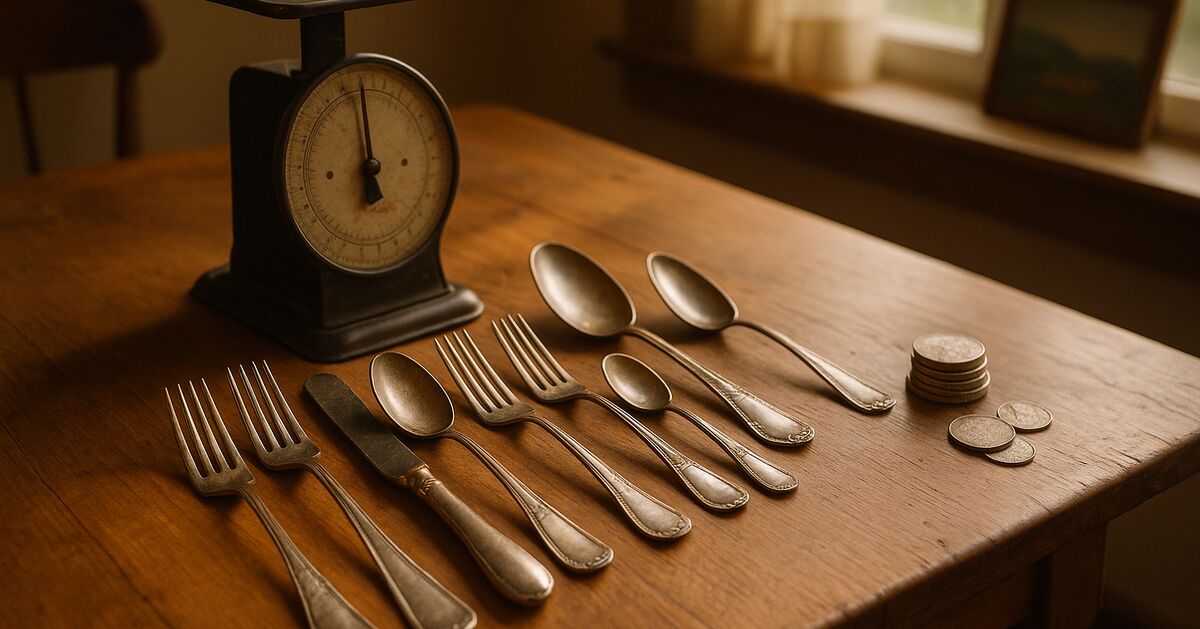
Silver does not sell itself at the right price - knowing what you have, who wants it, and how the process works is what separates a fair deal from a regrettable one.
This guide pulls together eighteen years of experience buying silver from the public, distilled into practical steps you can actually use. No jargon, no hype, just the trade knowledge that makes the difference.
Start with what silver actually is (and is not)
The first thing to settle is whether your item contains any silver at all. This sounds obvious, but it is one of the most common sticking points sellers run into.
Silver plate is a base metal object with a thin coating of silver applied by electroplating or a Sheffield-style bonding process. It looks identical to solid silver from across a room, and some pieces are genuinely beautiful. But the silver content is so thin that it has almost no melt value. If you are not sure whether something is plated or solid, our guide on where scrap gold and silver hides in an ordinary house covers the hallmarks and tests that reveal which category your item falls into.
Sterling silver is an alloy of 92.5% pure silver and 7.5% other metals (usually copper). In the United States, Britain, and most of Europe, sterling is stamped with a mark: "925", "STERLING", or the British lion passant, among others. Sterling is the backbone of the flatware and hollowware market.
Coin silver is typically 90% pure (the standard for pre-1965 US silver coins) or, in some older American pieces, 80% or 89.2%. The purity varies by country and era.
Fine silver and bullion run at 99.9% purity. Bars, rounds, and some government-issued coins fall here.
Industrial silver - wire, contacts, slab stock - is real silver, often at high purity, but finding a buyer who handles it comfortably takes a little more searching than selling coins or flatware.
Understanding which category your item falls into determines which buyers are relevant and what price ceiling is realistic. Everything downstream flows from purity and weight.
How the price is actually calculated
Silver has a spot price, quoted per troy ounce, that moves continuously during market hours. That number is the ceiling, not the offer. Every buyer subtracts a margin to cover their costs, risk, and profit. The realistic question is not "will I get spot?" but "how close to spot is a fair offer for my type of silver?"
A few things move that number:
Purity. A sterling piece (92.5%) contains less silver per gram than a fine silver bar (99.9%). Buyers calculate the silver content by multiplying the item's weight by its purity percentage, then by the spot price. Our weight and purity conversions guide walks through this arithmetic in detail so you can check any offer before accepting it.
Form. Bullion bars and recognized government coins are the easiest for a buyer to verify and resell or refine, so they tend to command the highest percentage of spot. Flatware and hollowware require more handling: testing, weighing, sorting, and either resale to the antique market or delivery to a refiner. Coins that carry numismatic premium (collector value above melt) are a different conversation entirely and should be evaluated by a coin specialist, not a scrap buyer.
Condition and completeness. A complete twelve-piece sterling flatware service in its original canteen sells for more per ounce of silver content than a jumbled box of mismatched pieces, because the complete service has retail re-sale value beyond scrap. Conversely, bent, broken, or badly worn pieces typically go straight to the refiner.
Volume. Bringing ten pounds of sterling flatware in one transaction is more attractive to a buyer than a single spoon. Margins compress slightly on larger lots because the handling cost per ounce drops.
Market volatility. When silver's spot price is swinging sharply, buyers widen their margins to protect against the price moving against them before they can process your metal. This is a legitimate trade reality, not an excuse.
For a grounded sense of what your specific items might yield, spend a few minutes with our page on how to figure out what your silver is actually worth before you approach any buyer.
Know your silver before the conversation starts
Walking into a negotiation without knowing what you have puts the buyer in the driver's seat. Here is the pre-sale homework worth doing.
Identify the hallmarks. On flatware, look on the back of a spoon bowl or the handle. On hollowware, check the underside. British pieces carry up to four separate marks (date letter, assay office, maker, and standard). American sterling is usually stamped "STERLING" or "925". Pieces made for international export sometimes carry both.
Weigh everything. A kitchen scale accurate to one gram is close enough for a rough calculation. For anything valuable, a jeweller's scale reading to 0.1 g is better. Remember that silver is measured in troy ounces (31.1 g), not avoirdupois ounces (28.35 g). A buyer working in troy and a seller weighing in standard ounces will get different numbers from the same pile of spoons.
Separate plate from sterling. Mixing them together leads to either a lower blanket offer (the buyer prices for the worst case) or an awkward sorting session at the counter. Do this yourself first.
Check for coins. Old change jars and estate boxes sometimes contain silver coins that have been sitting alongside copper and nickel pieces for decades. Our guide on which coins in a jar of old change are actually silver is a quick reference for identifying them by date, mint mark, and denomination.
Look for weighted pieces. Some sterling candlesticks, trophy bases, and knife handles are filled with pitch, plaster, or cement to add weight and stability. The silver content of a weighted candlestick can be a small fraction of its total weight. A buyer who weighs the piece without flagging the fill is not necessarily being dishonest, but you should flag it yourself and ask how they are accounting for it.
The main types of buyer and what they are good for
There is no single "best" buyer for all silver. The right channel depends on what you have.
Coin dealers specialize in coinage and will pay close attention to date, mintmark, and condition. If you have pre-1965 US coins or any piece with potential numismatic value, a coin dealer is worth visiting first. They have no interest in flatware, though.
Antique silver dealers and auction houses are the right outlet for complete sterling services, significant hollowware, and hallmarked pieces with genuine collector appeal. They sell to a retail or collector audience and can therefore pay more than melt for the right items. The trade-off is time: auction takes weeks or months, and the house takes a seller's commission.
Scrap/metal buyers and refiners pay on melt value. They are efficient and fast for plain sterling flatware, broken jewelry, and damaged pieces that have no re-sale market. Do not expect a premium above melt here, but do expect a straightforward transaction.
Mail-in precious metals buyers (the online model) allow you to ship your silver to a buyer who tests and weighs it, then emails an offer. The best of these are transparent about their testing process and will return your items at no cost if you decline. The worst are opaque about methods and slow to pay. Read reviews carefully and look for buyers who use an independent third-party testing laboratory rather than testing in-house, because that arrangement gives you a cleaner audit trail.
Pawnbrokers are convenient but tend to price silver conservatively, because they need a wide margin to cover loans that are never redeemed. They are a reasonable option for a quick transaction on a small lot, but rarely the highest offer.
Getting multiple offers is not rude, it is sensible
A buyer who is offended that you are getting a second opinion is not a buyer you want to work with. Getting two or three offers is the single most reliable way to understand what your silver is actually worth on the open market, and it costs you nothing but a little time.
When comparing offers, make sure you are comparing apples to apples. One buyer might quote "85% of spot on sterling" while another quotes a flat per-gram rate. Convert everything to the same terms - percent of silver melt value - and the comparison becomes straightforward. Our plain-English glossary of silver and gold trade terms explains the vocabulary buyers use so you can decode any offer sheet without guesswork.
What to watch for in the transaction itself
A few things that come up again and again in seller experiences:
The test is on the buyer. Any reputable buyer will test your silver before making a final offer. The standard methods are acid testing (a small scratch is rubbed on a test stone and a drop of nitric acid applied), XRF (X-ray fluorescence, a non-destructive scan), and fire assay (the gold standard for refinery work, rarely used at point of sale). Ask what method is being used. If a buyer refuses to tell you or skips testing entirely, that is a signal worth heeding.
Weight and moisture. Hollow items can trap water. Some buyers weigh wet silver at face value; others deduct an estimated moisture weight. If you are shipping flatware that has been washed recently, let it dry thoroughly first.
Do not clean your coins. Cleaning silver coins removes the natural toning that collectors value and can destroy numismatic premium. Read our post on why you should never clean silver coins before selling before doing anything to your coins. This applies even if they look dull or spotted.
Get the offer in writing before committing. With mail-in buyers, a reputable operation will email a formal offer before processing payment. You should have the option to decline and have your items returned. Confirm this policy before you ship.
Insurance covers the replacement value, not just the silver content. When shipping, insure for what it would cost to replace the items, not just the melt value. The USPS, UPS, and FedEx each have their own rules about insuring precious metals; check current policies before you package anything.
Estate silver deserves special care
Inherited silver carries an extra layer of complexity because you may not know its history, its completeness, or whether any piece has unusual collector value. Rushing to sell a complete Victorian tea service as scrap because you needed cash quickly is a mistake that cannot be undone.
If you are working through an estate, our guide on clearing an estate and handling silver you did not choose covers the sensible sequence: sort first, identify second, get specialist eyes on anything that looks significant, then sell. The extra week or two that process takes can be worth considerably more than the time cost.
The seller's mindset that actually works
After years of working with sellers, the ones who did best shared a few habits. They had done their homework on weight and purity before walking in. They were not emotionally attached to a number they had read on a forum. They understood that spot price is the ceiling, not the floor, and they were comparing offers rather than accepting the first one.
They also understood what they were selling. Sterling flatware is not bullion. An incomplete coin set is not worth the same as a complete one. A damaged piece is priced differently from an undamaged one. Silver selling is not complicated, but it rewards the seller who pays attention to detail.
The starting point for all of that is the How To Sell Silver home page, where you will find the full library of guides covering every part of this process in depth. Pick the articles that match what you have, read them before you start calling buyers, and you will negotiate from a position of real knowledge rather than hope.
That is, honestly, the best advantage any seller can have.
Sources & further reading
- Silver spot price and precious metals market data (Kitco Metals Inc.)
- Troy weight and measurement standards for precious metals (U.S. National Institute of Standards and Technology (NIST))
- Shipping and insuring valuables: USPS guidelines (United States Postal Service)
- UK hallmarking standards for precious metals (British Hallmarking Council)
Revision history (1)
- Pre-publish editorial QA: clean; claim audit: 7 claims, 0 rewritten
Claim-by-claim audit (7 checked)
- “Sterling silver is an alloy of 92.5% pure silver and 7.5% other metals (usually copper).” (cited → bma.org.uk)
- “Coin silver is generally understood to be around 90% pure, the standard used for pre-1965 US silver coins, with some older American pieces at other purities like 80% or 89.2%.” (rewritten to what the article can stand behind)
- “Fine silver and bullion run at 99.9% purity.” (cited → nist.gov)
- “Remember that silver is measured in troy ounces (31.1 g), not avoirdupois ounces (28.35 g).” (cited → nist.gov)
- “Cleaning silver coins removes the natural toning that collectors value and can destroy numismatic premium.” (reasoning shown in the article)
- “Insurance covers the replacement value, not just the silver content.” (cited → usps.com)
- “British pieces carry up to four separate marks (date letter, assay office, maker, and standard).” (cited → bma.org.uk)