
Which coins in a jar of old change are actually silver?
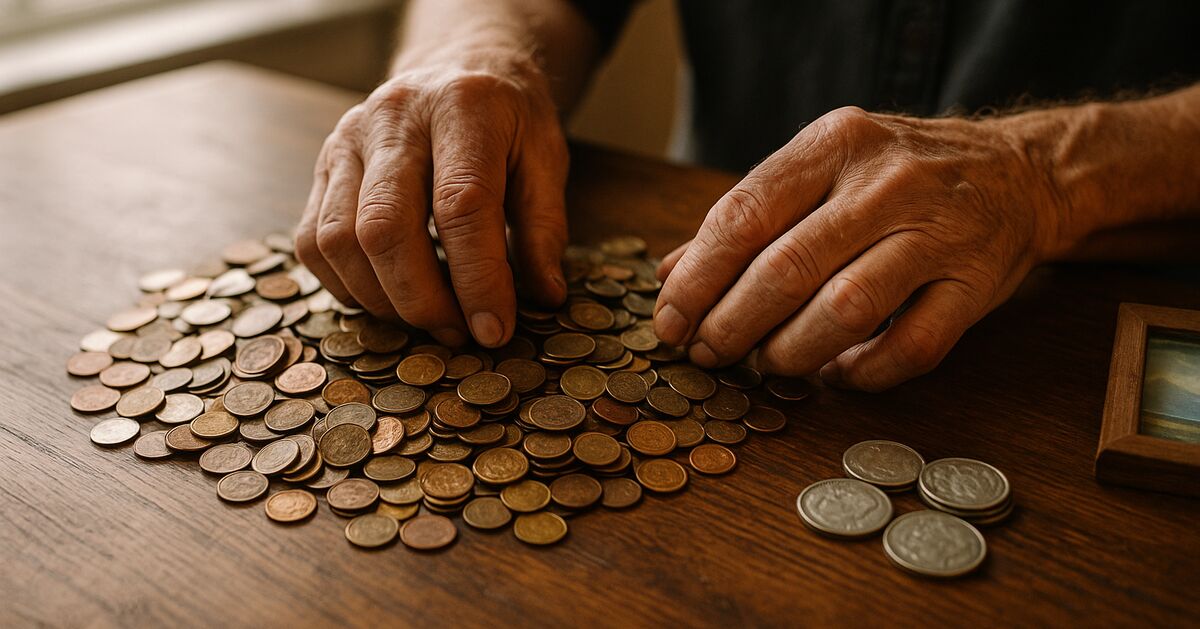
Silver turns up in the most ordinary places. A jam jar full of old change sitting on a dresser, a zip-lock bag of coins tucked inside an estate box, a coffee tin rattling around in a garage, and any of them could contain real silver coins worth separating from the rest. The trick is knowing what to look for, because silver coins don't announce themselves. They look, at first glance, a lot like everything else in that jar.
This guide walks through the whole process: the date cutoffs that matter, the quick visual checks that work, the handful of coins that trip people up, and the ones that look promising but aren't. I spent eighteen years buying precious metals, and the jar-of-change question came up constantly. Let me share what actually works.
Why date is the single most useful starting point
Before you touch a loupe or a scale, dates alone will let you eliminate most coins quickly. The United States stopped using silver in most circulating coins after 1964. That one fact does most of the heavy lifting.
Here is the practical breakdown for the common US denominations you'll find in circulation:
Dimes: Roosevelt dimes dated 1964 or earlier are generally understood to be 90% silver, based on the US Mint's official composition standards for that era. From 1965 onward, they are clad (copper core, nickel outer layers). Mercury dimes, which were minted from 1916 through 1945, are also 90% silver. Barber dimes are older still and equally silver. If a dime's date is 1964 or earlier, set it aside.
Quarters: Any Washington quarter dated 1964 or earlier is 90% silver. Standing Liberty quarters (1916-1930) and Barber quarters are the same. From 1965 onward, quarters went clad. No exceptions in circulation.
Half dollars: This is where it gets slightly more nuanced. Kennedy half dollars dated 1964 are 90% silver. Half dollars from 1965 through 1970 are commonly cited as 40% silver, a composition set by the US Mint during that transition period. From 1971 onward, Kennedy halves went fully clad with no silver at all. Franklin halves (1948-1963) and earlier Walking Liberty halves are all 90% silver.
Silver dollars: Any Morgan dollar (1878-1921) or Peace dollar (1921-1935) is 90% silver. Eisenhower dollars (1971-1978) circulating versions contain no silver, though some proof and collector editions do. The same goes for later dollar coins. If you find a large old dollar coin, it almost certainly has silver in it.
Nickels: Regular Jefferson nickels contain no silver at all, with one exception. War nickels from mid-1942 through 1945 are typically described as containing 35% silver, per US Mint wartime composition records. The way to spot them is the large mint mark on the reverse, positioned above the dome of Monticello. The mint mark (P, D, or S) appears there specifically because the US Mint needed a way to identify the silver composition for post-war reclamation. No other Jefferson nickels carry silver. A nickel dated 1943, 1944, or 1945 with a large letter above Monticello is worth pulling out. A 1943 steel cent, by contrast, is not silver at all, it's steel, but we'll come back to common confusions below.
Pennies: No circulating US penny ever contained silver. Some people think the 1943 steel penny looks silver-colored. It is steel with zinc coating, not silver. Skip all pennies.
The rim check: one of the fastest visual tests
Once you have a candidate coin based on date, the rim check is your first physical test, and it takes about two seconds per coin.
Pick up the coin and look at its edge directly. A genuine 90% silver coin has a uniform, solid silver-gray color all the way around the rim. There is no stripe, no band, no visible layering. The edge looks like a single material because it is.
A modern clad coin, made of copper bonded between two nickel-facing layers, shows a telltale reddish-brown or orange stripe running around the middle of the edge. It is faint but visible in decent light. On a worn coin it can be subtle, but it is usually there. If you see that stripe, the coin is clad and contains no silver.
The 40% silver Kennedy halves (1965-1970) are worth knowing separately here. They also show a layered edge, but their stripe is silver-gray rather than copper-orange, because the core itself is a silver-copper alloy. So a 1968 Kennedy half has a stripe, but it's a light-colored stripe, not a copper one. That coin still contains silver and is worth keeping.
The sound test: silver rings differently
This one is harder to learn reliably and should be used as a supporting check rather than a primary one, but it is real. Silver has different acoustic properties than base metals. If you balance a 90% silver coin on a fingertip and tap it lightly with another coin, it produces a clear, sustained ring. A clad coin produces a dull, shorter thump.
Coin collectors sometimes call this the "ping test." It works best when you have a known silver coin to compare against. Once you've heard the difference side by side, it becomes useful. Without a comparison coin, it's easy to be fooled, especially with worn pieces where the difference is less pronounced.
Weight can help, but only if you know what to expect
A digital scale accurate to 0.01 grams is a useful tool when you're processing a large batch. Coins have known target weights that haven't changed over the decades. A Roosevelt or Mercury dime is generally listed at 2.50 grams by US Mint specifications. A silver Washington quarter is generally listed at 6.25 grams by US Mint specifications. A 90% silver Kennedy half dollar is generally listed at 12.50 grams by US Mint specifications.
Weight works as a confirming check. A coin that passes the date test and the rim check and hits the expected weight is almost certainly what it appears to be. A coin that is dramatically off weight, either much lighter or much heavier, might be damaged, a foreign coin, or a token of some kind.
Weight alone, though, is not conclusive. A clad quarter weighs close to 5.67 grams versus 6.25 grams for a silver quarter, though a cheap scale or worn coin can make the difference hard to read. Use weight as a tiebreaker, not a primary test.
Coins that confuse people most often
Eisenhower dollars: Large, impressive-looking, silver-gray in color. The circulating versions (1971-1978) contain no silver. If you have one and want to verify, check the rim for that copper stripe. It will be there on a base-metal Ike dollar.
1943 steel pennies: The zinc-coated steel penny from 1943 is silver-colored and often makes people think they have something valuable. It's not silver. You can test it with a magnet: steel pennies stick strongly. A silver coin is not magnetic.
Proof and collector coins: Modern US Mint proof sets and commemorative coins sometimes do contain silver, and their packaging usually says so. These should not be in a jar of change, but they can turn up in estate boxes. If you find a coin in a plastic holder or presentation case, check the case for composition information before assuming it is or isn't silver.
Foreign coins: Old Canadian dimes, quarters, and half dollars minted before 1968 are generally understood to contain about 80% silver, with some earlier issues slightly higher. A Canadian dime looks almost identical to a US dime and is about the same size. Check for the maple leaf or the word "Canada." Pre-1968 Canadian silver is worth pulling out. Post-1968 Canadian dimes and quarters are nickel with no silver.
Old Mexican pesos, British pre-decimal coins, and various European coins from before the 1940s or 1950s often contain silver too, though the specific cutoff dates vary by country and denomination. If you encounter foreign coins and aren't sure, keep them separate and research them individually rather than tossing them back.
Setting up an efficient sorting process
If you have a large jar, which can hold hundreds of coins, working through them systematically saves time and reduces errors.
Start by sorting by denomination. Separate all dimes, quarters, halves, and dollars into their own piles first. Then work through each pile by date. Any coin dated 1964 or earlier goes into a "check further" pile. Any coin dated 1965 or later goes back unless it is a Kennedy half from 1965-1970 or a war nickel.
Then do the rim check on your "check further" pile. At this point you should have very high confidence in what you're holding. You can do the weight check as a final confirmation on anything you're still uncertain about.
The whole process for a typical jar of change, say 200 to 400 coins, takes around 30 to 45 minutes once you have the date cutoffs memorized. It's genuinely satisfying work, not least because even a small number of silver coins in a jar represents real value at current spot prices.
If you want more context on what happens after you've sorted the coins and are ready to move them on, the post on the questions to ask before you accept an offer on silver covers what to expect from buyers and how to evaluate the offers you receive. And if the jar of change is part of a larger estate situation, the guide on how to sort an inherited box of silver before getting quotes gives a broader picture of the process.
What silver coins are realistically worth
Without getting into specific price figures that date the moment you set them down, here is the framework. Silver coins trade in two ways: at melt value, based on their actual silver content times the current spot price of silver, and at numismatic (collector) premium, based on rarity, condition, and collector demand.
For common "junk silver" coins, meaning 90% silver dimes, quarters, and halves in circulated condition with no special rarity, the price you'll receive from many buyers will track closely to melt value with a small buyer margin. The home page of this site carries background on how spot price affects those payouts.
Rarer coins, particularly older Barber-era coins in decent condition, certain low-mintage dates, and Morgan or Peace dollars in high grades, can trade well above melt. If you come across a coin that looks unusual or early, photograph it before selling it to any generic buyer, and consider showing it to a coin dealer who specializes in numismatics.
War nickels are their own category. At 35% silver and a small total weight, each individual war nickel holds modest silver value. But they accumulate. A roll of 40 war nickels adds up. Don't throw them back in the change jar.
The magnet test for quick elimination
A strong rare-earth magnet is a useful tool when sorting a large batch. Silver is not magnetic. If a coin sticks to a magnet, it is not silver. This is primarily useful for quickly eliminating 1943 steel pennies and any foreign base-metal coins that might look unusual. It won't positively confirm silver, since many non-silver coins are also non-magnetic, but it is a fast first-pass elimination step.
A word on cleaning and handling
If you find coins that appear to be silver, please resist the urge to clean them. It is a natural impulse, especially if a coin looks dark or grimy, but cleaning reduces the coin's value to collectors, sometimes dramatically. A patina that has built up over decades is considered authentic by numismatists, and removing it is irreversible. The post on why you should never clean silver coins before selling goes into exactly what cleaning does and why buyers penalize it.
Handle candidate coins by the edges, not the faces. Fingerprints can affect the surface appearance, and on coins with collector value, surface condition matters.
Putting it all together
Sorting a jar of change for silver is genuinely accessible, you don't need expensive equipment or years of experience. You need the date cutoffs (memorized or written on a card in your pocket), a decent light source, and a little patience. The rim check is fast and reliable. The magnet and scale add confidence for uncertain cases.
For anyone who wants a deeper grounding in the terminology buyers and dealers use, the plain-English glossary of silver and gold trade terms is worth a read before you start talking to buyers. And if the coin finds are part of a broader search around a house or estate, the post on where scrap gold and silver hides in an ordinary house covers the other hiding spots that are easy to overlook.
The whole point of doing this sorting carefully is simple: the difference between a silver dime and a clad dime is face value versus real precious-metal value. In a jar of a few hundred coins, that gap can add up to a genuinely meaningful sum. It is worth the 45 minutes to find out.
Sources & further reading
- ANA Coin Grading and numismatic standards (American Numismatic Association)
- Silver spot price and precious metals market data (Kitco Metals)
Revision history (1)
- Pre-publish editorial QA: 4 flagged, 3 softened; claim audit: 10 claims, 8 rewritten
Claim-by-claim audit (10 checked)
- “Roosevelt dimes dated 1964 or earlier are generally understood to be 90% silver, based on the US Mint's official composition standards for that era.” (rewritten to what the article can stand behind)
- “Half dollars from 1965 through 1970 are commonly cited as 40% silver, a composition set by the US Mint during that transition period.” (rewritten to what the article can stand behind)
- “War nickels from mid-1942 through 1945 are typically described as containing 35% silver, per US Mint wartime composition records.” (rewritten to what the article can stand behind)
- “A Roosevelt or Mercury dime is generally listed at 2.50 grams by US Mint specifications.” (rewritten to what the article can stand behind)
- “A silver Washington quarter is generally listed at 6.25 grams by US Mint specifications.” (rewritten to what the article can stand behind)
- “A 90% silver Kennedy half dollar is generally listed at 12.50 grams by US Mint specifications.” (rewritten to what the article can stand behind)
- “A clad quarter weighs close to 5.67 grams versus 6.25 grams for a silver quarter, though a cheap scale or worn coin can make the difference hard to read.” (rewritten to what the article can stand behind)
- “Old Canadian dimes, quarters, and half dollars minted before 1968 are generally understood to contain about 80% silver, with some earlier issues slightly higher.” (rewritten to what the article can stand behind)
- “A patina that has built up over decades is considered authentic by numismatists, and removing it is irreversible.” (reasoning shown in the article)
- “cleaning reduces the coin's value to collectors, sometimes dramatically.” (reasoning shown in the article)