
Selling junk silver coins: what they're worth and how to
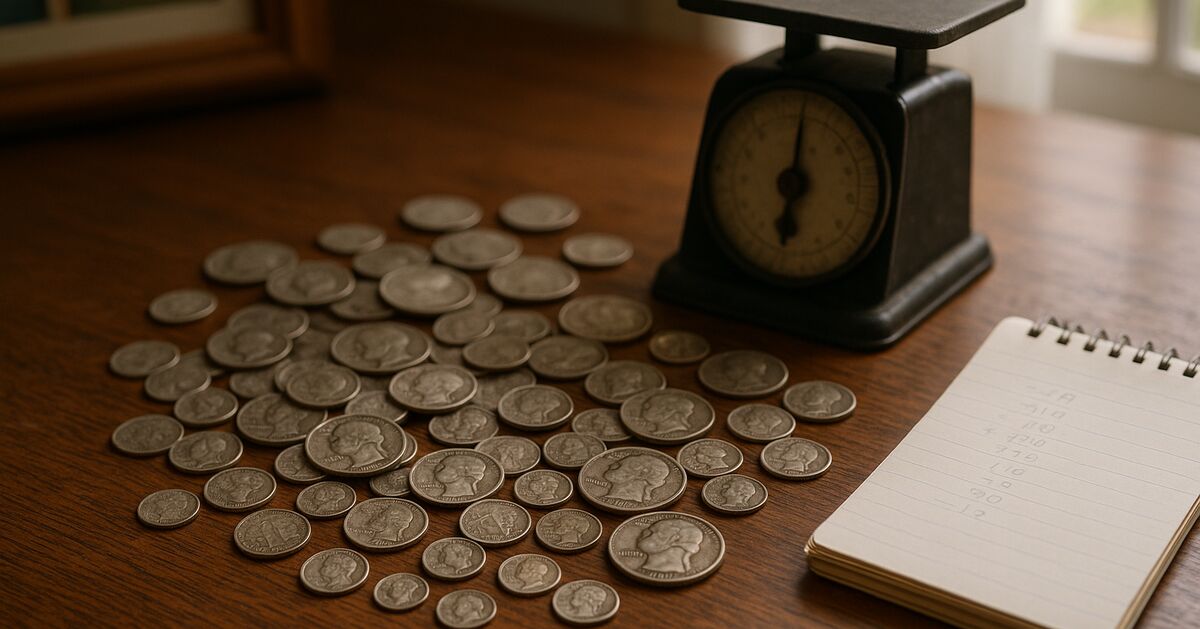
Junk silver coins are sitting in kitchen drawers and shoeboxes more often than you'd expect, and the good news is that they are genuinely easy to sell once you understand how the pricing works. The phrase "junk silver" sounds dismissive, but all it really means is that the coin has no meaningful collector value above its silver content. That silver content is real, measurable, and worth real money.
This guide covers every step: what counts as junk silver, how to calculate a realistic value, what drives buyers' offers up or down, where to sell, and what to watch out for. It draws on nearly two decades of hands-on buying experience, so the details here come from the trade floor, not theory.
What exactly is "junk silver"?
The term is a coin dealer's shorthand, not an insult. A coin earns the label when its numismatic premium (the collector markup above melt value) has effectively disappeared. That happens when:
- The coin is worn to the point where date, mintmark, and design details are faint or gone.
- The surface has been cleaned, polished, or treated with chemicals, destroying the original "skin" that collectors prize.
- The coin has been damaged physically: bent, holed, scratched, or corroded.
- The coin is simply common enough in circulated condition that no collector is willing to pay above melt for it.
None of those problems affect the silver content. A heavily worn 1923 Peace Dollar still contains 0.7734 troy ounces of 90 percent fine silver. A silver buyer pays for the metal, and the metal does not care about the coin's cosmetic condition.
The coins that typically end up in this category are US issues minted before 1965 (dimes, quarters, half dollars, and dollars struck in 90 percent silver), certain Kennedy half dollars from 1965 to 1970 (40 percent silver), and the five-cent "War Nickels" struck from 1942 to 1945 (35 percent silver). You may also encounter some older issues from Canada, Mexico, and various European countries, which have their own silver contents and deserve individual research.
For a broader look at the full universe of silver coins and what separates junk from numismatic pieces, the selling silver coins guide on this site walks through the distinction in useful detail.
The silver content of common US junk silver coins
Getting the math right starts with knowing exactly how much silver is in each coin. Here are the figures for the coins you are most likely to encounter. All weights are in troy ounces of pure silver per coin.
90 percent silver coins (pre-1965)
- Roosevelt Dime (1946-1964): 0.07234 troy oz
- Mercury Dime (1916-1945): 0.07234 troy oz
- Barber Dime (1892-1916): 0.07234 troy oz
- Washington Quarter (1932-1964): 0.18084 troy oz
- Standing Liberty Quarter (1916-1930): 0.18084 troy oz
- Barber Quarter (1892-1916): 0.18084 troy oz
- Walking Liberty Half Dollar (1916-1947): 0.36169 troy oz
- Franklin Half Dollar (1948-1963): 0.36169 troy oz
- Kennedy Half Dollar (1964 only): 0.36169 troy oz
- Morgan Dollar (1878-1921): 0.77344 troy oz
- Peace Dollar (1921-1935): 0.77344 troy oz
40 percent silver coins
- Kennedy Half Dollar (1965-1970): 0.14792 troy oz
- Eisenhower Dollar (1971-1976, proof or uncirculated only): 0.31610 troy oz
35 percent silver coins
- War Nickel (1942-1945, identified by large mint mark on reverse): 0.05626 troy oz
These figures are based on the standard published specifications for each series. When you run the math, use the troy ounce silver spot price (not the gram price, not the avoirdupois ounce price). One troy ounce equals 31.1035 grams. The London Bullion Market Association (LBMA) publishes daily spot prices that are the industry reference point.
How to calculate a realistic melt value
The formula is simple:
Melt value = silver content (troy oz) x spot price
So if you have a roll of 40 pre-1965 Roosevelt Dimes and spot silver is trading at $29.00 per troy ounce:
40 dimes x 0.07234 troy oz = 2.8936 troy oz 2.8936 x $29.00 = approximately $83.91 melt value
That is the theoretical 100 percent of melt. No buyer pays 100 percent of melt because they need to cover the cost of refining, their operating expenses, and a margin. In practice, buyers commonly offer somewhere in the range of 70 to 95 percent of melt for junk silver, though the exact percentage depends on several factors covered below. Knowing this range tells you what a fair offer looks like and lets you walk away from a lowball.
The LBMA publishes the silver spot price openly. Kitco and the CME Group also carry live spot data. Check it fresh on the day you are comparing offers, because silver prices move daily.
What moves a junk silver offer up or down
Understanding why buyers offer different percentages of melt is the most useful thing you can learn before you start shopping your coins around.
Volume. A single dime is genuinely costly to process relative to its value. A bag of face-value $1,000 in 90 percent silver (a standard trade unit containing about 715 troy ounces of pure silver) is much more attractive to a buyer, and the offer percentage will reflect that. If you have a small quantity, grouping it with other silver before you sell can improve your rate. The selling scrap silver guide covers this consolidation strategy in more detail.
Coin type and sorting. A buyer who can see at a glance that your lot is all 90 percent coins, cleanly sorted by denomination, can process it faster and with less risk. Unsorted mixed lots take more labor to verify, and some buyers discount for that. Sorting your coins before you get quotes costs you nothing and may improve your offer.
Market volatility. When silver prices are swinging sharply, buyers widen their spread to protect against the metal moving against them between the time they make an offer and the time they actually refine or resell. A stable, trending market tends to produce tighter spreads and better percentages for sellers.
The buyer's business model. A refiner melts the metal and sells it as bullion. A coin dealer or bullion dealer may repackage and resell junk silver to retail investors who want it for its own sake, without refining. Dealers who resell rather than refine can sometimes pay more because their margins come from the resale premium, not just the melt. This is why it pays to shop more than one type of buyer.
Condition within junk. Even within the junk category, condition varies. A coin that is merely worn but intact and un-cleaned is easier to resell retail than a coin that has been chemically treated or bent. Some buyers will pay a small premium for "better junk," especially for complete rolls of the same coin and date.
Shipping and insurance costs. If you are mailing coins to a mail-in buyer, the cost of insured shipping comes out of someone's margin. Reputable mail-in buyers cover this with prepaid labels, but factor it into your net if you are comparing a local buyer (zero shipping cost) with a remote one.
Where to sell junk silver coins
There is no single best venue for everyone. The right choice depends on how much you have, how quickly you need payment, and how much effort you want to invest.
Local coin dealers. The advantage is speed and simplicity. You walk in, they weigh and check the coins, you walk out with cash or a check. The disadvantage is that many local shops operate on thin margins and serve a general retail customer base; their buy prices for junk silver are not always competitive with specialist buyers. Get at least two local quotes before accepting.
Precious metals dealers and bullion shops. These specialists deal in exactly this product day in and day out. They know the current spot price, they have scales calibrated for troy weight, and they understand the difference between 90 percent and 40 percent silver without having to be educated. Their offers tend to be closer to melt than a general coin shop's.
Online and mail-in buyers. The reach of the internet means you can access buyers who specialize in volume junk silver purchases and operate with lower overhead than a retail storefront. The process is straightforward: you request a quote, ship the coins in insured packaging, and receive payment after the buyer confirms the contents. The key is choosing a buyer with a transparent process, a clear return policy if you decline the offer, and verifiable reviews. Never ship without confirmed insurance. The guide to safely posting silver to a mail-in buyer on this site explains the process step by step.
Auction platforms. eBay and similar platforms let you sell directly to retail buyers who may pay above melt, especially for complete rolls or nicer junk pieces. The trade-off is fees (eBay takes a percentage), the effort of listing and packing individual lots, and the risk of a buyer dispute. For large quantities, the fees can eat significantly into the premium.
Pawn shops. Generally not recommended for silver coins. Pawn shops are generalists who deal in everything from guitars to power tools; they have no particular expertise in silver pricing and typically offer well below what a specialist buyer pays.
Common mistakes to avoid
A mistake that comes up again and again among first-time sellers is cleaning the coins before getting quotes. It seems intuitive that a shinier coin would be worth more, but cleaning destroys the original surface and, in the rare case where a coin does have numismatic value above melt, it eliminates that premium entirely. Leave the coins exactly as you found them. For a full explanation of why, the why you should never clean silver coins before selling article covers the chemistry and the consequences clearly.
Another common problem is confusing silver-clad coins with silver coins. After 1964, US dimes and quarters contain no silver at all; they are copper-nickel clad. Kennedy halves from 1971 onward are also clad. The 40 percent Kennedy halves run from 1965 to 1970 only. The Eisenhower dollars struck for general circulation (1971-1978) are clad; only the special collector issues contain silver. If you are unsure, a magnet test helps: silver is not magnetic, and a strong magnet will ignore a silver coin. A clad coin will also show a copper core at the edge if you look closely.
A third trap is accepting the first offer you receive. The spread between buyers is real and sometimes significant. Getting two or three quotes takes an hour or two and can translate to meaningfully more money, especially on larger lots.
What to do if some coins might have collector value
Before you lump everything together as junk, it is worth spending a few minutes checking whether any coin in your lot might be worth more than melt. Key dates (low-mintage issues that collectors prize) exist in nearly every US silver series. A 1916-D Mercury Dime, a 1921 Peace Dollar in decent condition, or a 1932-D or 1932-S Washington Quarter could be worth multiples of melt value to the right collector buyer.
The process is simple: look up the date and mintmark on each coin in a free online database like the NGC coin price guide or the PCGS price guide. If a coin shows a value significantly above melt, have it evaluated by a numismatist rather than a bulk buyer before selling. A bulk buyer prices everything at melt; they have no reason to flag key dates in your favor.
This is the same principle covered in the Morgan and Peace dollars guide, which explains in practical terms when those large silver dollars cross from junk territory into genuine collector pieces.
Getting the best price: a practical checklist
- Know the spot price on the day you are comparing offers.
- Calculate your theoretical melt value before any conversation with a buyer.
- Sort coins by silver content (90 percent, 40 percent, 35 percent) before presenting them.
- Check each coin for potential key dates before treating the lot as bulk junk.
- Get at least two or three quotes, mixing local and online buyers.
- Do not clean the coins.
- Confirm that any mail-in buyer offers insured shipping and a clear return policy.
- Treat 70 to 95 percent of melt as a reasonable range to expect; consider questioning offers below that.
The frequently asked questions page on this site covers a range of practical questions about selling silver if you run into anything this guide does not address.
One final thought
Junk silver coins are about as straightforward a silver-selling transaction as you can have. The silver content is fixed and published. The spot price is public. The math is simple arithmetic. The only real variables are which buyer you choose and whether you have done the basic preparation: sorting, identifying key dates, and knowing your melt value before you walk in the door or hit send on that shipping label.
That preparation takes an hour at most, and it is the difference between accepting whatever someone offers and knowing whether the offer is fair. If you want to dig deeper into the broader world of selling silver, the home page and blog index have guides covering everything from sterling flatware to bullion bars, all written with the same practical approach.
The metal you are holding is real and valuable. Take the time to understand what it is worth, and you will sell it for a fair price.
Sources & further reading
- LBMA silver price benchmark and daily spot price data (London Bullion Market Association)
Revision history (1)
- Pre-publish editorial QA: 1 flagged, 1 softened; claim audit: 6 claims, 3 rewritten
Claim-by-claim audit (6 checked)
- “These figures are based on the standard published specifications for each series.” (rewritten to what the article can stand behind)
- “In practice, buyers commonly offer somewhere in the range of 70 to 95 percent of melt for junk silver, though the exact percentage depends on several factors covered below.” (rewritten to what the article can stand behind)
- “Treat 70 to 95 percent of melt as a reasonable range to expect; consider questioning offers below that.” (rewritten to what the article can stand behind)
- “Dealers who resell rather than refine can sometimes pay more because their margins come from the resale premium, not just the melt.” (reasoning shown in the article)
- “A bag of face-value $1,000 in 90 percent silver (a standard trade unit containing about 715 troy ounces of pure silver) is much more attractive to a buyer, and the offer percentage…” (reasoning shown in the article)
- “Pawn shops often offer less than a specialist buyer would, since silver pricing is not their focus.” (rewritten to what the article can stand behind)