
Selling gold at the best price: a practical guide
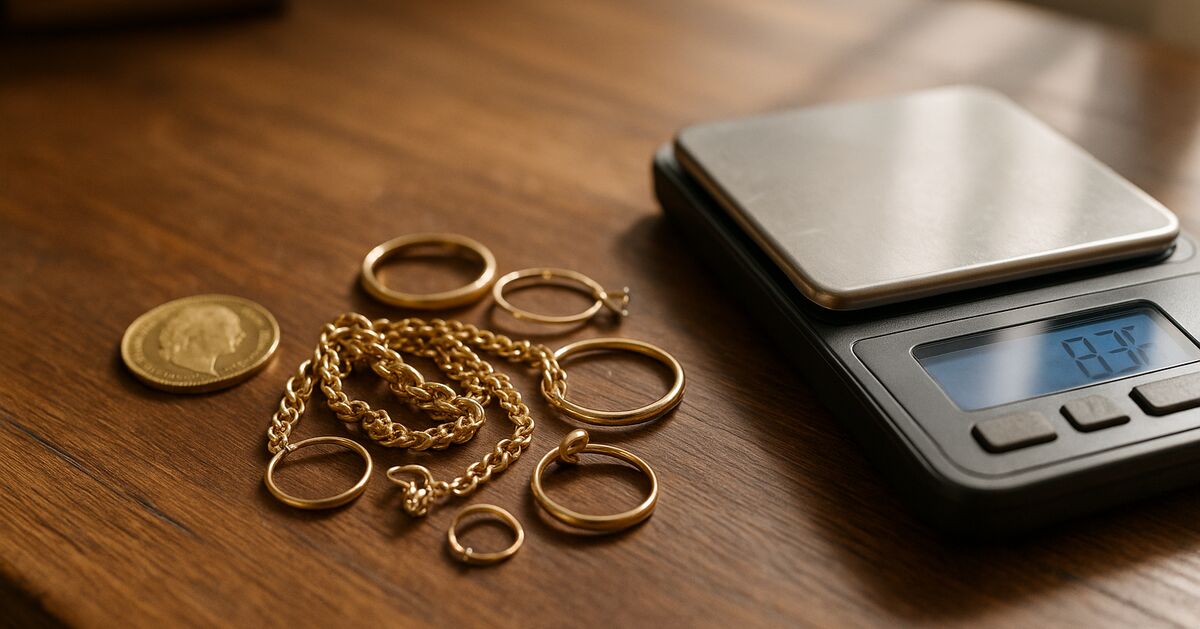
Gold sitting in a drawer is not an investment - it is a missed opportunity. Whether you inherited a tangle of chains, bought coins years ago, or just found a bag of mismatched jewelry at an estate sale, the process of turning gold into cash is straightforward once you understand how the market actually works.
This guide walks through every step: knowing what you have, understanding what drives the price, identifying the right kind of buyer, and protecting yourself from the mistakes that cost sellers real money.
Start with what you actually own
Before you talk to a single buyer, spend twenty minutes getting organized. Gold comes in several forms, and each one has a different market.
Jewelry is the form sellers encounter most often. It ranges from thin-rolled fashion pieces with almost no gold content to solid heavy items worth hundreds. The key variables are karat (purity) and weight.
Coins fall into two groups. Bullion coins - American Gold Eagles, Canadian Maple Leafs, South African Krugerrands - are priced almost entirely on their gold content, with a modest premium for their recognizable, trusted form. Numismatic or collectible coins can be worth far more than their melt value, or they can be obscure pieces worth exactly melt. Knowing which you have before you sell matters enormously.
Bars and rounds are straightforward: weight and purity, nothing more.
Dental gold (old crowns, bridges) is real gold, usually around 16 karat, and is absolutely worth selling. Buyers accept it routinely.
Gold-filled and gold-plated items are a different story. Gold-filled pieces carry a thin mechanical bond of gold over a base metal core. They are not worthless, but they are not scrap gold either, and many buyers will not purchase them. Knowing the difference before you walk in saves time and disappointment. The markings to look for are "GF," "1/20 14K GF," or similar stampings. If you need help reading markings, the plain-English glossary of silver and gold trade terms is a useful starting point.
Understanding karat and why it matters so much
Karat is the unit that describes gold purity. Pure gold is 24 karat. Everything below that is an alloy, and the karat number tells you what fraction of the item is actually gold.
- 24K = 99.9% gold (essentially pure)
- 22K = 91.7% gold (common in British sovereigns and some Asian jewelry)
- 18K = 75% gold (fine European jewelry)
- 14K = 58.3% gold (the standard for most American jewelry)
- 10K = 41.7% gold, generally treated as the minimum standard for jewelry sold as gold in the US.
- 9K = 37.5% gold (common in UK jewelry)
A 14K chain and an 18K chain of identical weight have very different gold values. The 18K piece carries nearly 30% more gold by weight. That gap is not trivial when you multiply it across several grams.
You will find karat stamps on most jewelry: look inside ring shanks, on the clasp of a necklace, or on the back of a pendant. Stamps can be tiny, so use a loupe or strong reading glasses. Common US stamps are "14K," "585" (the European equivalent of 14K expressed as parts per thousand), "750" for 18K, and "417" for 10K.
If you want to work through the math yourself - converting weight and purity into a dollar value - the weight and purity conversions guide covers the exact formulas, using silver examples that translate directly to gold.
How spot price connects to what you get paid
The spot price of gold is the current market price for one troy ounce of pure gold, set continuously by commodity markets. When you check a finance site and see a gold price, that is the spot price.
Here is the part sellers often find confusing: you will never receive spot price when you sell scrap gold. The buyer has to melt, refine, and resell your metal. They carry risk while they hold it and pay for the refining process. Their margin is the spread between what they pay you and what they eventually recover from a refiner.
Reputable buyers will tell you exactly what percentage of spot they are offering. For jewelry-grade scrap, ask several buyers what percentage of spot they offer, since rates vary by buyer and market conditions. The exact figure depends on the buyer's volume, their refining arrangement, and how liquid the market is when you sell.
Coin buyers often pay closer to spot for recognized bullion coins because the coins are easy to authenticate, do not need refining, and can be resold directly to collectors or other dealers.
The practical takeaway: always calculate what your gold is theoretically worth at spot before you talk to any buyer. That number is your benchmark. Any offer you receive is a percentage of it, and you should know that percentage explicitly.
What moves the gold price - and when timing matters
Several forces drive spot gold prices up or down, and understanding them helps you decide whether to sell now or wait.
Currency weakness. Gold is priced in US dollars globally. When the dollar weakens against other currencies, gold tends to rise in dollar terms because overseas buyers can afford more of it.
Inflation expectations. Investors have historically treated gold as a store of value when they expect the purchasing power of paper money to fall. Periods of elevated inflation concern often push gold prices higher.
Geopolitical uncertainty. Conflict, financial crises, and political instability push investors toward assets they consider safe. Gold benefits from that flight.
Interest rates. Gold pays no interest or dividend. When interest rates are high, bonds and savings accounts become more attractive relative to gold, which can put downward pressure on gold prices. When rates fall, gold becomes relatively more appealing.
None of this means you should try to time the market perfectly. If you need the money now, sell now. If you have flexibility, keep an eye on prices over a few weeks and observe whether you are in a high or low period relative to recent history. Selling during a meaningful dip is avoidable if you have the patience to wait.
The forms of buyer - and who is best for what
Not every buyer is right for every type of gold. Matching your material to the right buyer is one of the most important moves you can make.
Local coin and precious-metals dealers are a good first stop for coins and recognizable bullion. They can assess a coin's numismatic value on the spot - something a scrap buyer will never do. If you have a coin that might be worth more than melt, a knowledgeable dealer is the right place to start. The guide to selling silver at the best price covers the logic of comparing buyer types in detail, and the same principles apply to gold.
Jewelry stores occasionally buy scrap gold, but their primary business is retail sales. Their buy price tends to be lower than a specialist precious-metals buyer's.
Pawn shops offer convenience and immediate cash, but their margins are wider than specialist buyers. They are buying uncertainty - they do not always know exactly what they have - and they price that uncertainty into what they pay.
Mail-in buyers are worth considering for scrap jewelry and dental gold once you have done your homework. Reputable ones publish their pay rates, use independent third-party labs to test and weigh material, and return items if you reject the offer. The convenience is real, but you should read their terms carefully: look for a clear return policy, insurance coverage during shipping, and transparency about how they calculate their offer.
Refiners accept gold directly from the public in some cases, and their margins are thinner because they are the end of the chain. However, they usually have minimum quantities and are not set up to assess collectible value.
Online auction platforms are worth considering for coins with collector appeal, where a competitive bidding environment can push the price above what any single dealer will offer.
The mistakes that cost sellers money
A problem that comes up again and again when sellers recount their experiences: accepting the first offer without checking anything else. Gold buying is a competitive market. A single phone call or walk-in to a second buyer often reveals a meaningful difference in what they will pay.
Here are the other errors worth avoiding.
Not separating by karat before you go. If you hand a buyer a mixed pile of 10K, 14K, and 18K pieces, some buyers will offer you a blended rate based on the lowest karat present. Sort by karat stamp before you go, and present them as separate groups.
Selling coins as scrap without checking collector value first. Some coins can be worth significantly more than their gold content to the right collector. Selling a rare date coin as scrap is a loss that cannot be recovered. If you find coins in a collection or estate, identify them before you sell anything. The same principle is explored in the context of silver coins in which coins in a jar of old change are actually silver, but the lesson applies equally to gold coinage.
Letting a buyer weigh your gold on a scale you cannot see. Always ask to watch the weighing. Reputable buyers will have no objection whatsoever.
Confusing troy weight with avoirdupois weight. Gold is weighed in troy ounces, not the ounces used for groceries. One troy ounce equals 31.1 grams. One avoirdupois ounce equals 28.35 grams. A buyer who quotes per ounce without clarifying troy is worth pressing on the point.
Selling gold-filled items as gold. Buyers who discover they have been given gold-filled pieces when they expected solid gold will reject the lot or significantly reduce their offer. Know what you have before it becomes an awkward conversation.
Cleaning jewelry before selling. This is a point covered in depth for silver coins in why you should never clean silver coins before selling, but the principle applies to gold coins too - cleaning can destroy collector value permanently.
Practical steps before you talk to any buyer
- Gather everything first. Do a proper sweep of drawers, boxes, and old jewelry rolls. Items you forgot you owned add up quickly. For inspiration on where gold hides in a house, the post on where scrap gold and silver hides in an ordinary house is worth a read.
- Sort by karat. Group pieces by their stamp. Put unknowns in a separate pile; a buyer can test them, but you should not assume.
- Weigh what you have. A basic digital jewelry scale (accurate to 0.1 gram) costs very little and tells you a great deal. Weigh each karat group and note the weight in grams.
- Calculate a benchmark value. Multiply grams by the purity fraction, then multiply by today's spot price per gram (spot per troy ounce divided by 31.1). That gives you the refined gold value. A fair offer will be a stated percentage of that number.
- Get at least three offers. Local dealers, one mail-in buyer, and one more local option is a reasonable minimum. The spread between offers is often surprising.
- Ask explicitly what percentage of spot they are offering. A buyer who cannot or will not answer that question clearly is a buyer worth walking away from.
- Read the return policy if using a mail-in buyer. You should be able to get your items back at no cost if you reject the offer. This is industry standard among reputable buyers.
What to expect when you actually sell
Most transactions with reputable buyers are unremarkable: you present the gold, they weigh and test it in front of you (or a lab does it), they make an offer, and you accept or decline. There is no pressure to decide on the spot from a good buyer. If anyone pushes you to accept immediately, that is a signal to slow down.
For mail-in sales, expect the process to take roughly one to two weeks from shipping to payment, depending on the buyer. Reputable buyers use insured shipping with tracking, so your items are covered in transit.
If you are clearing an estate and gold is only part of a larger task, the broader guidance in clearing an estate: handling silver when you did not choose it covers the emotional and logistical reality of that situation honestly.
A word on the market right now
Gold prices fluctuate continuously. Whatever the price is as you read this, the principles here do not change: know your karat, know your weight, know the spot price, and compare offers. Those three inputs give you control that most sellers never exercise. Sellers who do the homework are generally better positioned to negotiate than those who walk in blind, and the homework takes less than an hour.
Gold is not complicated. The buyers who benefit from sellers being uninformed have a strong interest in keeping it that way. You now have enough to make sure that does not happen to you.
For any questions about terminology along the way, the FAQ page covers a wide range of common seller questions in plain language.
Sources & further reading
- Gold and Precious Metals market data and commodity information (U.S. Commodity Futures Trading Commission)
- Troy Weight and Precious Metals Measurement Standards (National Institute of Standards and Technology (NIST))
- Gold as a commodity: market structure and price formation (Bank for International Settlements)
Revision history (1)
- Pre-publish editorial QA: clean; claim audit: 6 claims, 5 rewritten
Claim-by-claim audit (6 checked)
- “For jewelry-grade scrap, ask several buyers what percentage of spot they offer, since rates vary by buyer and market conditions.” (rewritten to what the article can stand behind)
- “Coin buyers often pay closer to spot for recognized bullion coins because the coins are easy to authenticate, do not need refining, and can be resold directly to collectors or othe…” (reasoning shown in the article)
- “10K = 41.7% gold, generally treated as the minimum standard for jewelry sold as gold in the US.” (rewritten to what the article can stand behind)
- “Some coins can be worth significantly more than their gold content to the right collector.” (rewritten to what the article can stand behind)
- “Sellers who do the homework are generally better positioned to negotiate than those who walk in blind, and the homework takes less than an hour.” (rewritten to what the article can stand behind)
- “For mail-in sales, expect the process to take roughly one to two weeks from shipping to payment, depending on the buyer.” (rewritten to what the article can stand behind)