
Selling antique silver: what it's worth and how to get a
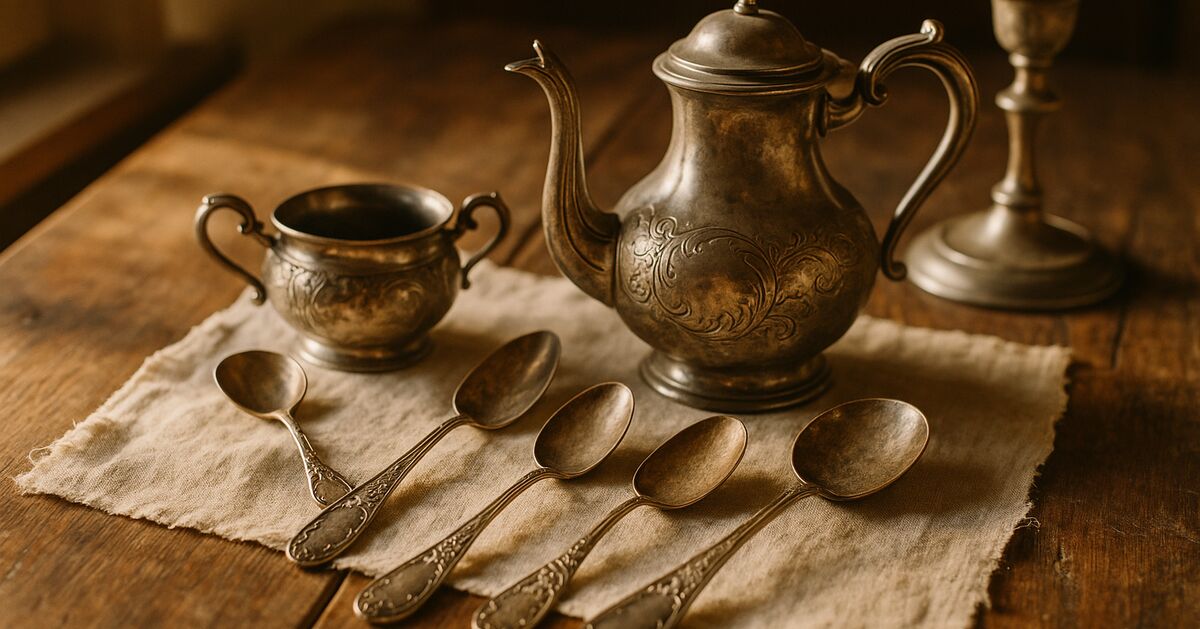
Antique silver sits in a strange, wonderful middle ground: sometimes it's worth a multiple of its melt value, and sometimes it's worth almost exactly spot. Knowing which situation you're in before you walk into a buyer's shop is the single most valuable thing you can do.
I ran a precious metals buying business for eighteen years. Antique silver was the category that caused the most confusion on both sides of the counter. Sellers often expected far more than the metal was worth, because the piece was old and beautiful. Occasionally, sellers expected far less, because they assumed "old silver stuff" was only worth melting. Both assumptions cost people money. This guide is about getting that number right.
What "antique silver" actually means
The word "antique" gets used loosely, but in the trade it carries a specific implication: the piece is old enough that its age, maker, and condition may add collectible value on top of the raw metal content.
In the United States, an item is generally considered antique once it is more than 100 years old, a threshold commonly used by customs authorities and most serious buyers. Most serious buyers use that same threshold, though some will extend the term loosely to pieces from the early-to-mid twentieth century that have clear period character. A Victorian-era sterling tea service from 1890 is genuinely antique. A silverplate bread basket from 1975 is not, no matter how much it looks the part.
The practical implication is this: before you let anyone put a price on your piece based purely on weight, you need to know whether age and craftsmanship might matter to the right buyer. A piece with no maker's mark and a corroded surface is probably going to be priced on metal content alone. A piece with a clear hallmark from a recognized silversmith, in good condition, is a candidate for a premium above melt.
The two price layers: melt value and collector value
Every piece of genuine silver has a melt value. That's simply its weight in troy ounces of fine silver, multiplied by the current spot price. For sterling silver, which is 92.5% pure, you multiply the weight by 0.925 to get the fine silver content, then multiply by spot. If you want to work through that arithmetic yourself, the weight and purity conversions guide walks through every step.
Collector value is a separate layer that sits on top of melt. It depends on several things:
- The maker. Pieces from recognized silversmiths - Tiffany, Georg Jensen, Paul Storr, Hester Bateman, and others - routinely sell for multiples of their metal content. A hallmarked Paul Storr piece might fetch ten or twenty times melt at a specialist auction. An unmarked piece of comparable age and style might fetch 1.1 times melt, if that.
- The pattern. For flatware especially, discontinued patterns from major manufacturers like Gorham, Reed and Barton, or Wallace have active replacement markets. Buyers who need to fill out a set will pay well above melt for matching pieces.
- The form. Unusual or elaborate forms attract collectors. A plain sterling sugar bowl is likely to sell near melt. A figural centerpiece by a named maker is a different animal entirely.
- The condition. Dents, cracks, missing components, and heavy polishing wear all reduce collector value. Honest, undisturbed patina does not. Original engraving is generally neutral to mildly positive. Amateur repairs or monograms that a future owner would want removed are negative factors.
- The completeness of a set. A canteen of twelve place settings, complete with serving pieces and original case, is worth significantly more per piece than the same pattern sold as odd lots.
The honest truth is that the large majority of antique silver that passes through the secondary market sells at or close to melt value, because it lacks the maker, the rarity, or the condition to command a premium. That's not a tragedy - silver has real intrinsic value - but it's important to know going in. The full guide to figuring out what your silver is actually worth covers the methodology in detail.
How to read a hallmark before you get a quote
Identifying the marks on your piece is step one, because the marks tell you whether collector value is even possible. British silver is the most systematically marked in the world: the four-mark system includes the maker's mark, the standard mark (a lion passant for sterling), the assay office mark, and a date letter. Continental European silver uses its own national systems. American silver, frustratingly, was never subject to mandatory assay marking, so American pieces are identified mainly by the maker's mark and the word "STERLING" or "COIN."
Spend twenty minutes with a good online reference such as the online database at Antique Cupboard or a copy of Tardy's "International Hallmarks on Silver" before you speak to any buyer. If you can tell a buyer "this is a London assay, 1847 date letter, maker's mark EB for Edward Barnard," you signal that you've done your homework. Buyers offer better terms to informed sellers.
If you find no marks at all, the piece may be silver plate, base metal, or a foreign piece with unfamiliar marks. Telling sterling from silver plate is worth doing before you go further, because plate has almost no melt value and the approach to selling it is completely different.
Caring for antique silver you plan to sell
Condition matters, and how you store and clean a piece affects the price you'll be offered. A few practical points that came up constantly when I was buying:
Polish carefully, or not at all. A soft, lint-free polishing cloth is the right tool for light surface tarnish. Commercial dip cleaners are fast, but repeated use strips the fine surface patina that many collectors actively value. For a piece you think has collector potential, less intervention is usually better. Let a specialist decide what the piece needs.
Never use abrasives. Toothpaste is a persistent piece of folk wisdom that does real damage. It's mildly abrasive and will leave micro-scratches visible under raking light. Same goes for baking-soda pastes applied with a brush. These reduce the surface quality in ways that are immediately visible to an experienced buyer.
Store in a dry environment. Silver tarnishes faster in humid conditions and in proximity to certain woods, rubber, and wool. Acid-free tissue or tarnish-inhibiting cloth storage bags work well for smaller pieces. Sealed plastic bags trap moisture, so they're not ideal for long-term storage.
Handle engraved or chased surfaces with care. Crisp surface detail is part of what a collector pays for. Knocking pieces together or stacking them carelessly flattens that detail over time.
One clear exception to the "do less" rule: if a piece has genuine verdigris (green corrosion) or active surface damage, a conservator rather than a polishing cloth is the right answer. Irreversible damage done in a moment of optimism with a cleaning product is the kind of thing that visibly costs money at the point of sale.
For silver coins in particular, cleaning is often the wrong call. That subject is covered in depth in why you should never clean silver coins before selling.
Getting a realistic appraisal
An appraisal and a buyer's offer are two different things, and it's worth keeping them separate in your mind.
A formal appraisal from a certified appraiser (look for ASA or AAA credentials) gives you a documented opinion of value for insurance, estate, or legal purposes. It typically costs a flat fee or an hourly rate, and a reputable appraiser has no financial stake in the number they give you. If you want a genuine independent opinion of what a piece might bring at auction or in the retail antiques market, this is the route.
When you're approaching a buyer to get an offer, the dynamic is different. The buyer will assess the piece and offer you a price they can pay and still profit on resale or refining. That price will always be below retail or auction value, because the buyer is taking on the risk and cost of finding the next buyer. That's not dishonest - it's how every secondary market works, from used cars to antique furniture.
A useful middle path: get a verbal opinion from a specialist dealer or auction house before you approach a buyer. Many auction houses will give a free, no-obligation estimate at a walk-in valuation day. That gives you a realistic ceiling for what the piece might achieve. Armed with that number, you can assess whether a buyer's offer is reasonable or whether the piece deserves to go to auction instead.
One tip from years of watching this go wrong: don't mention that you're thinking of selling when you approach an appraiser for a formal valuation. An appraiser's job is to give you an independent number; that job is cleaner if they're not simultaneously thinking about making you an offer.
Where to sell antique silver: matching the piece to the right market
The channel you choose has a bigger effect on your final return than almost anything else, and the right answer depends on what you have.
Specialist auction houses are the right route for pieces with genuine collector value. Houses like Bonhams, Christie's, Skinner, and Doyle New York all handle silver regularly. Regional auction houses with dedicated decorative arts sales are also worth considering for mid-tier pieces. Auction gives you access to the widest possible pool of motivated buyers, which is where real premiums come from. The trade-off is time (a sale may be weeks or months away) and seller's commission (typically 15-25% of the hammer price).
Antiques dealers who specialize in silver are the right route for pieces that are clearly collectible but not quite at the level where major auction makes sense. A good dealer knows their customers and can move the right piece quickly. Their offer will be below what they expect to sell it for, but for the right piece it can be meaningfully above melt.
Online marketplaces (eBay, Ruby Lane, Etsy for vintage) work well for flatware patterns with active replacement markets. If someone is searching for twelve matching salad forks in the Gorham Chantilly pattern, they'll find them wherever they're listed. The downside is the effort of listing, photographing, and shipping, plus platform fees.
Mail-in silver buyers and local coin dealers are the right route for pieces that, honestly, are going to sell at or close to melt. These buyers are efficient, they test and weigh quickly, and for straightforward scrap-grade silver they often pay a better percentage of spot than an antiques dealer would bother to work out. The full practical guide to selling silver covers how to compare offers across these channels.
For a broader look at how buyers are structured and what drives the difference in what they pay, the overview of selling silver is worth reading before you commit to any route.
Mistakes that cost sellers money
A few patterns came up again and again over eighteen years of buying:
Selling to the first buyer without comparison shopping. Getting at least two or three offers costs you an afternoon and can easily be worth hundreds of dollars on a significant piece. Any buyer who pressures you to decide immediately is a buyer worth walking away from.
Assuming age equals value. A heavily worn, unmarked piece of late Victorian electroplate is old, but it has little metal value and modest collector appeal. Age alone does not make a piece valuable.
Over-cleaning before sale. This comes up so frequently it deserves repeating. Heavy polishing before presenting a piece to a buyer can actually reduce the offer, because it signals to the buyer that a layer of surface detail may have been removed. Present pieces as you found them if you're uncertain.
Conflating insurance value with resale value. Insurance appraisals are typically written at retail replacement cost, which is the highest number in the chain. Resale value in the secondary market is always lower. A piece insured for a given retail replacement figure will often realistically sell for a fraction of that amount, depending on the channel. This gap surprises sellers who haven't thought it through.
Not knowing the spot price on the day. Silver moves every trading day. Checking a live chart before any conversation with a buyer takes two minutes and means you can sanity-check any offer against the underlying metal value. The post on reading live price charts explains what you're looking at and how to use it.
A realistic sense of what antique silver brings
Without quoting specific current prices (spot changes daily and any figure I write here will date quickly), here's a framework that holds up regardless of where spot sits:
Generic sterling with no maker's mark and modest condition will often bring somewhat less than full melt value from a dealer or mail-in buyer, reflecting their margin and testing costs. Well-maintained, clearly marked sterling from a known American or European maker might bring close to or slightly above melt from a general silver buyer, more if they can identify the pattern. Pieces with genuine collector appeal, such as a named maker, good condition, and desirable form, can bring well above melt value through the right auction or specialist dealer. The very top tier (major named silversmiths, exceptional pieces) is effectively unlimited by melt and priced entirely on collector demand.
For more worked examples of how the arithmetic plays out on specific types of pieces, the guide to selling silver coins uses a similar framework applied to coins, which is useful context for anyone new to precious metals valuation.
The bottom line
Antique silver rewards the seller who takes a little time to understand what they have. Learn to read the marks, understand whether your piece has collector potential or is priced on metal, pick the right channel for that piece, and get more than one offer. None of that is complicated, but each step protects money that would otherwise stay in someone else's pocket.
If you have questions about a specific piece or want to think through the process further, the FAQ page covers a wide range of situations that come up when selling silver and gold.
Sources & further reading
- Hallmarking and assay of precious metals (World Gold Council)
- American Society of Appraisers professional standards (American Society of Appraisers)
Revision history (1)
- Pre-publish editorial QA: 1 flagged, 1 softened; claim audit: 6 claims, 5 rewritten
Claim-by-claim audit (6 checked)
- “In the United States, an item is generally considered antique once it is more than 100 years old, a threshold commonly used by customs authorities and most serious buyers.” (rewritten to what the article can stand behind)
- “Seller's commission varies by house but is often a meaningful percentage of the hammer price, so ask about fees before consigning.” (rewritten to what the article can stand behind)
- “Generic sterling with no maker's mark and modest condition will often bring somewhat less than full melt value from a dealer or mail-in buyer, reflecting their margin and testing c…” (rewritten to what the article can stand behind)
- “Well-maintained, clearly marked sterling from a known American or European maker might bring close to or slightly above melt from a general silver buyer, more if they can identify …” (rewritten to what the article can stand behind)
- “Pieces with genuine collector appeal, such as a named maker, good condition, and desirable form, can bring well above melt value through the right auction or specialist dealer.” (rewritten to what the article can stand behind)
- “A piece insured for a given retail replacement figure will often realistically sell for a fraction of that amount, depending on the channel.” (rewritten to what the article can stand behind)