
How to get cash for gold: a practical seller's guide
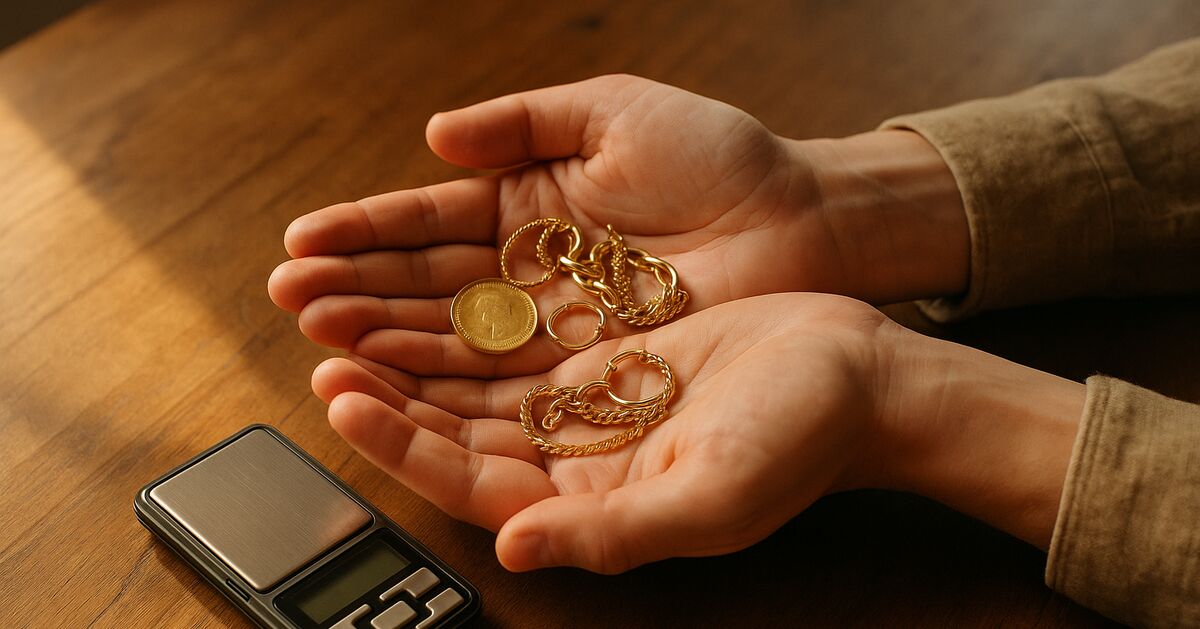
Inherited a box of old jewelry and wondering what it is actually worth? You are not alone, and the good news is that converting gold into cash is one of the more straightforward transactions in the precious-metals world, once you understand what drives the price and how buyers operate.
This guide walks through every practical step: sorting your items, understanding weight and purity, finding the right type of buyer, comparing offers honestly, and avoiding the mistakes that cost sellers real money. It draws on eighteen years of buying gold from the public, seeing the same questions and the same avoidable errors come up again and again.
Start by understanding what you are actually selling
Before anything else, you need to know what you have. Gold comes in two broad categories for a cash seller: items with melt value (the metal itself is what a buyer wants) and items with collectible or antique value on top of the melt. Most scrap jewelry, broken chains, single earrings, and dental gold falls into the first category. Certain coins, signed pieces by known makers, and intact vintage sets can fall into the second.
Getting this distinction right matters because it changes who you should sell to. Sending a signed Art Deco brooch to a scrap buyer is a legitimate way to leave money behind. On the other hand, assuming a plain 14-karat chain has collector value wastes everyone's time.
For a broader look at how gold buyer types compare and what each one typically pays, the guide to comparing gold buyer types and what each pays covers this in detail.
Sort your gold before you do anything else
Lay everything out on a clean, light-colored cloth. Group items by what they appear to be:
- Jewelry that is stamped with a karat mark (10K, 14K, 18K, 22K, 24K)
- Coins (keep these separate and do not clean them)
- Dental gold (crowns, bridges)
- Items that might be gold-filled or gold-plated rather than solid gold
- Anything broken, tangled, or incomplete
That last group, gold-filled and gold-plated items, is important to identify early. Gold-filled pieces have a thick layer of real gold bonded to a base metal core. They contain some recoverable gold but far less than a solid piece of the same weight, so buyers pay proportionally less and some scrap buyers do not accept them at all. Gold-plated items have only a microscopic coating and carry almost no melt value whatsoever. Mixing them in with solid gold and expecting full melt prices is a common source of disappointment.
A straightforward test at home: look for stamps. Solid gold is marked with a karat number (10K, 14K, etc.) or a millesimal fineness number (417, 585, 750). Gold-filled pieces are often stamped "GF", "1/20 12K GF", or similar. Gold plate may say "GP", "HGE" (heavy gold electroplate), or carry no stamp at all. If there is no stamp and a magnet pulls at the piece, it is almost certainly base metal with a surface coating.
Weigh everything properly
Weight is the single biggest variable in what a buyer will pay, so measuring it accurately matters. A digital pocket scale that reads in grams is the tool to use. Kitchen scales lack the precision needed for small jewelry items. Scales sold for jewelry use or for reloading ammunition are inexpensive (typically under twenty dollars) and accurate to 0.01 grams, which is more than sufficient.
Weigh each purity group separately. Ten-karat pieces go in one pile, fourteen-karat in another, and so on. Mixing them together and asking a buyer for a blended price often results in the buyer pricing everything at the lowest purity in the batch, because verifying purity takes time and mixing creates uncertainty.
Gold is traditionally measured in troy ounces and pennyweights (dwt) in the jewelry trade, but grams are what most digital scales display and most online buyers use. One troy ounce equals 31.1 grams. One pennyweight equals 1.555 grams. Write down your weights before you contact any buyer.
Understand how purity affects the price
A gram of 24-karat gold is pure metal. A gram of 14-karat gold is 58.5% pure gold and 41.5% other metals. A gram of 10-karat gold is 41.7% pure gold. Buyers calculate what your piece is worth by multiplying its weight by its purity percentage by the current spot price of gold, then subtracting their margin.
That margin covers refining costs, assaying, shipping, insurance, and profit. It is not a scam; it is the cost of doing business. What varies enormously between buyers is how large that margin is. A pawn shop working in a high-rent location with slow inventory turnover needs a much bigger spread than a mail-in refiner moving high volume. Understanding this is why comparing offers from more than one type of buyer is always worth the small effort involved.
The practical guide to selling gold online goes deep on how spot price translates into the offer you actually receive, including what percentage of melt value is realistic to expect from different channel types.
Know your buyer types and what each one pays
Local jewelers and coin shops are convenient and pay on the spot. The tradeoff is that margins at walk-in buyers tend to be wider, partly because of overhead and partly because they can only compete with the buyers you have personally visited that day. Getting quotes from two or three local shops before accepting anything is straightforward and costs nothing.
Pawn shops are fast and easy but consistently pay at the low end of the market. If speed matters more than price, that is a reasonable tradeoff to make consciously. If you have even a few days, you can almost certainly do better elsewhere.
Online mail-in buyers and refiners typically offer the highest percentage of melt value for straightforward scrap because their overhead is lower and their volume is higher. The process involves shipping your gold (insured and tracked) to the buyer, receiving an offer after assay, and then either accepting payment or requesting your items back. Reputable operators make the return option easy and low-cost. Sketchy ones make it difficult or charge for it. Ask about the return policy before you send anything.
Auction houses and estate sale specialists make sense when you have pieces with genuine antique or collectible value. They charge seller's commissions (a percentage of the hammer price) and take time, but they reach buyers who will pay for craftsmanship and provenance, not just metal weight.
Private sales through platforms like eBay or Craigslist can yield strong prices for coins and recognizable jewelry, but they require effort, carry risk of non-payment or fraud, and are not well-suited to plain scrap.
The comparison of buyer types for silver and gold has a useful framework for deciding which channel fits your specific situation.
Get more than one offer, always
This is the single step that makes the biggest practical difference to what sellers walk away with. Gold buyers operate with real discretion in setting their margins, and the gap between the lowest and highest offer for the same item from legitimate buyers can be significant.
Getting multiple quotes does not require days of effort. You can walk two or three pieces to local shops in an afternoon. You can request online estimates from mail-in buyers using your weight and purity figures before you commit to shipping anything. Some mail-in buyers provide estimates based on your description; others require you to send the items first and then give you the option to decline and have everything returned.
Write down every offer you receive, including who made it, when, and what purity and weight they are basing it on. A lower stated price based on a lower assumed purity is not necessarily a worse deal than a higher stated price based on inflated weight. The math has to compare apples to apples.
The spot price is your reference point, not your target
You will see gold spot prices quoted everywhere, and it is natural to use them as a baseline. But no secondary-market buyer pays spot for scrap. They cannot, because they have to sell or refine the metal themselves and need margin to do so profitably.
What you can reasonably expect varies by buyer type and current market conditions, but as a general orientation: well-run mail-in refiners working at scale often pay 70 to 90 percent of melt value for clean, clearly hallmarked scrap gold. Walk-in buyers at pawn shops tend to pay noticeably less relative to melt value, given their higher overhead and lower volume. Those are ranges from general industry knowledge, not guarantees, and they shift with volume, market volatility, and the individual buyer's current needs.
Checking the live gold spot price on any financial data site the day you are getting quotes lets you calculate what percentage of melt value each offer represents, so you are comparing real numbers rather than hoping one buyer is honest and another is not.
For more on reading and using live price data when you are on the selling side of a transaction, the guide to getting cash for silver walks through the same logic applied to silver, and the mechanics translate directly.
What to expect when you ship gold to a mail-in buyer
If you decide to use a mail-in buyer, the process is more predictable and secure than many first-time sellers expect. Here is what a well-run transaction looks like:
- You request a prepaid, insured shipping label from the buyer. Reputable companies provide this at no cost.
- You package your items carefully (a padded envelope inside a plain outer box, nothing rattling loose) and drop the package at the post office or carrier location.
- The buyer receives and logs your package, then tests and weighs the contents independently.
- You receive an offer by email, typically within one to three business days of delivery.
- You accept or decline. If you decline, the items are returned to you, ideally at no charge or low cost.
- Payment follows by check, bank transfer, or sometimes PayPal, depending on the buyer.
The key protections to verify before you ship: Is the label insured for full replacement value? Does the buyer use independent third-party testing, or do they test in-house? What is the exact return policy if you decline the offer? Are there any fees subtracted before payment?
A buyer who is cagey about any of those questions deserves caution.
Common mistakes that cost sellers money
Not separating by purity before getting quotes. If you hand a buyer a mixed bag, they will price the whole lot conservatively. Sort first.
Cleaning or polishing items before selling. Cleaning does not add value to scrap gold and can remove patina that matters to a collector. Leave pieces as they are.
Accepting the first offer out of impatience. The process of getting a second or third quote is genuinely quick once you have done it once, and the price difference often justifies the time.
Confusing gold-filled and gold-plated items with solid gold. Check stamps and manage expectations accordingly before approaching buyers.
Assuming antique equals valuable. Age alone does not add value to a plain scrap piece. What adds value is craftsmanship, a known maker, original condition, and a buyer who specializes in antiques.
Not insuring shipments fully. If you are mailing gold, the insurance value on the package should reflect what you expect to receive. Carriers' default liability limits are very low.
A note on inherited gold specifically
Inheriting jewelry or a coin collection from a family member adds an emotional layer to what is otherwise a practical transaction. A few things worth keeping in mind.
You are under no obligation to sell quickly. Gold does not spoil. If you want time to identify pieces, have sentimental items photographed, or simply decide what to keep, take it.
If the estate is being administered formally through an executor, confirm whether the gold is considered a distributable asset and whether you have authority to sell it before you do. In most straightforward family situations this is not an issue, but it is worth knowing.
For collections that include a mix of gold, silver, coins, and jewelry, the end-to-end guide to selling gold and silver together covers how to handle different asset types in a single process without leaving value behind.
And if any of the inherited pieces turn out to be watches, know that certain watch brands carry significant collector premiums that have nothing to do with metal content. The guide to selling watches online is worth a read before you treat a watch as plain scrap.
The short version
Weigh your gold, sort it by purity, verify that what you have is solid gold rather than plated or filled, check today's spot price, and get offers from at least two buyer types before you accept anything. Those five steps, done in that order, are what separate sellers who feel good about the transaction from sellers who wonder afterward whether they left money on the table.
If you want to explore the broader landscape of selling precious metals in more depth, the How To Sell Silver home page has a full index of practical guides covering everything from identifying what you have to completing a sale safely.
Sources & further reading
- Gold and silver commodity pricing and spot rate data (Kitco Metals Inc.)
- Postal regulations and insurance for mailing valuables (U.S. Postal Service)
Revision history (1)
- Pre-publish editorial QA: 1 flagged, 1 softened; claim audit: 3 claims, 1 rewritten
Claim-by-claim audit (3 checked)
- “Well-run mail-in refiners working at scale are generally known in the trade to pay a high percentage of melt value for clean, clearly hallmarked scrap gold, though exact figures va…” (rewritten to what the article can stand behind)
- “Walk-in buyers at pawn shops tend to pay noticeably less relative to melt value, given their higher overhead and lower volume.” (rewritten to what the article can stand behind)
- “Carriers' default liability limits are very low.” (cited → usps.com)