
Selling watches online: what yours is worth and how to get
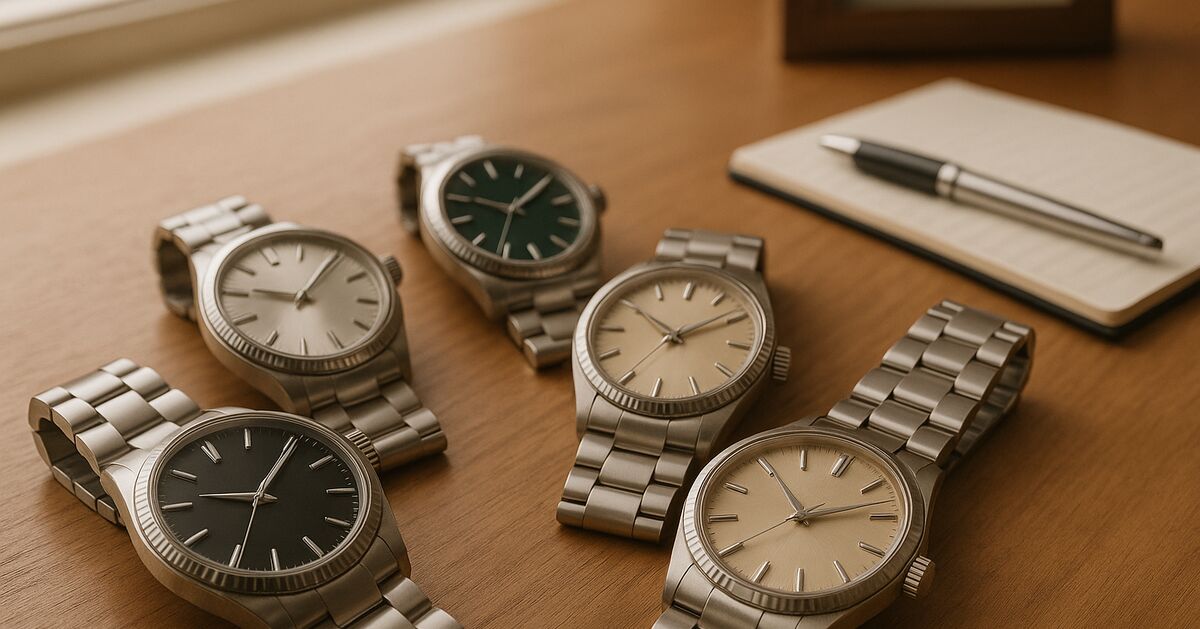
Selling a watch online feels straightforward until you actually try it. You post a few photos, get a lowball offer, wonder if you should accept it, and end up more confused than when you started. Having spent nearly two decades buying and appraising watches alongside precious metals, I can tell you the confusion is often rooted in the same thing: sellers do not know which factors actually move the price, so they cannot tell a fair offer from a bad one.
This guide covers exactly that. It explains how watches are valued, what hurts or helps your price, where to sell, and how to protect yourself along the way. No hype, no hand-waving about "up to" percentages. Just the practical reality of what the market will and will not pay.
Why watches are harder to value than gold or silver
When you sell a silver bracelet, the calculation is relatively mechanical: you weigh it, check its purity, look up the spot price, and apply a reasonable buyer's margin. A watch does not work that way at all.
A watch has a melt value (the metal in the case and bracelet), but that figure is rarely what drives the offer. What actually matters is the secondary market - the pool of buyers and collectors willing to pay for that specific model in that specific condition. For some watches, the secondary market price is multiples of anything you could recover from the metal alone. For others, the metal is the only value left.
This is why getting a watch appraisal from a general jewelry store can lead you astray. Many jewelers are skilled with diamonds and gold, but a Rolex Submariner or a vintage Omega Seamaster is a different discipline entirely. Watch valuation requires familiarity with reference numbers, production years, dial variations, movement service history, and current collector demand. Getting that wrong by even one model variant can mean a difference of hundreds or thousands of dollars.
Selling online gives you access to a wider pool of specialists. That is not marketing language - it is just geography. A watch dealer who focuses on Patek Philippe or vintage Seiko is unlikely to have a shop in your town, but they are absolutely reachable online.
What actually determines what your watch is worth
Brand and model
Brand name alone does not set the price. Model matters just as much. Within Rolex, a vintage Daytona with the right dial is worth dramatically more than a more recent entry-level model. Within Omega, a Speedmaster Professional carries a premium that an Omega De Ville from the same era simply does not. Learn your exact reference number (usually engraved between the lugs or on the caseback) before you start talking to buyers.
Condition
Condition is the single most consequential factor after brand and model. "Condition" in the watch world means:
- Case sharpness. Lugs that have been polished repeatedly lose their crisp edges and drop in value with collectors who care about originality. An unpolished case with honest wear is often preferable to a freshly buffed one.
- Dial integrity. Faded, repainted, or "restored" dials devastate value on collectable references. Original dials, even with age-appropriate patina, are prized.
- Crystal. Scratched crystals are an easy fix; a cracked crystal is a negotiating point.
- Movement. A watch that runs accurately and has a documented service history is worth more than one that keeps poor time or has unknown internals.
Sellers sometimes assume that polishing a watch before selling it will help. With commodity fashion watches, it probably does not hurt. With anything collectable, it can meaningfully reduce what a knowledgeable buyer will pay.
Completeness: box, papers, and bracelet
"Full set" is the shorthand collectors use for a watch that comes with its original box, warranty card or papers, and the original bracelet. A complete set with box and papers typically sells for noticeably more than the watch alone on sought-after references, though the exact premium varies by model and market. Even partial documentation (a swing tag, a service receipt from the manufacturer, the original box only) adds something. Keep everything you found with the watch.
Age and reference variants
With certain brands, age is an asset. A 1960s Rolex GMT-Master in original condition commands collector interest that a 1990s model of the same general type may not, even though the 1990s watch is newer and the movement is arguably more refined. Reference variants within a model line also matter: dial colors, indices, bezel inserts, and case materials create meaningful price differences that only someone who knows the model well will catch.
The metal content question
Gold-cased watches add a floor to the value. If the case and bracelet are 18-karat gold, there is a melt value underneath everything else that provides a baseline. This matters mainly when the secondary market interest is low - a quartz watch from an unfashionable brand in a solid gold case may be worth more melted than sold as a timepiece. You can read more about how precious metal content is valued in the context of selling gold and silver jewelry together, which covers the same calculation for mixed-metal pieces.
Steel sport watches from desirable brands, on the other hand, routinely sell for far more than their metal content, because the secondary market demand outweighs the intrinsic material value by a wide margin.
The condition traps sellers fall into
A few patterns come up again and again when sellers are disappointed by offers.
Believing an insurance appraisal reflects resale value. Insurance appraisals are written to cover replacement cost at retail, which is often well above what the secondary market actually pays. If your Rolex was appraised at $12,000 for insurance purposes, do not expect to sell it for that. Expect the secondary market price, which is what a buyer will actually pay, not what it would cost to replace it new at a boutique.
Assuming serviced means more valuable. A recent full service from a qualified watchmaker does protect the movement and may help it sell, but buyers factor the cost of a service into their offer anyway. A service receipt helps; it rarely adds dollar-for-dollar what it cost you.
Not knowing the reference number. Without the exact reference, you are guessing at value and so is any buyer who gives you a quote sight-unseen. The reference number (sometimes combined with a serial number) is your watch's identity card. Look it up before you approach anyone.
Where to sell a watch online
Specialist watch dealers and mail-in buyers
For luxury and collectable watches, a specialist dealer will typically offer more than a pawnbroker or a general gold buyer. They have a customer base for the piece and they know how to price it accurately. Many operate online and accept watches by mail after a preliminary quote based on photos.
The process typically works like this: you submit photos (more on that in a moment), they give a preliminary offer, you ship the watch insured and tracked, they confirm condition and revise or confirm the offer, and you accept or decline. If you decline, the watch comes back to you. This is the same model we used when running a precious metals buying business, and it is a reasonable one as long as the company commits to paying return shipping if you say no.
Auction houses
Established watch auction houses (Christie's, Sotheby's, Bonhams, Phillips in Association with Bacs & Russo) are the right venue for genuinely rare or historically significant pieces. Their buyer's pool is deep and global. The trade-off is time (auctions run on a schedule, estimates take weeks), fees (buyer's premiums and seller's commissions can be substantial), and the risk that an estimate turns out to be optimistic. Do not start here unless you have reason to believe the watch belongs in that league.
Online platforms
Platforms like Chrono24, WatchBox, and eBay allow direct sales to collectors and dealers. eBay in particular has a large completed-auction database that is genuinely useful for researching what your model actually sold for (not just listed for - sold for). The risks are managing listings yourself, dealing with returns, and the possibility of fraud. Selling to a vetted dealer is simpler if speed and certainty matter more to you than extracting the last dollar.
How to photograph a watch for an online quote
The quality of your photos directly affects the quality and accuracy of a preliminary offer. Buyers who cannot see the dial, case, and caseback clearly will either decline to quote or quote conservatively to protect themselves.
Here is what to shoot:
- Dial straight on, in natural diffuse light (not direct sunlight, which blows out reflections). Fill the frame.
- Case side profile, showing lug condition and case thickness.
- Caseback, both engraved and solid. If there is a display caseback, photograph the movement.
- Crown and pushers, if any, showing any chips or corrosion.
- Bracelet or strap, showing the clasp, any stretch in the links, and overall wear.
- Reference and serial numbers between the lugs (you may need to remove the bracelet or strap temporarily to see them clearly).
- Any documentation you have: box, papers, hang tags, service receipts.
Ten clear photos are worth more than twenty blurry ones. Use a clean, neutral background. A white piece of paper or a gray cloth works well.
What to expect from the offer process
A reasonable preliminary quote, given by an experienced buyer based on photos, will be a real number or a range, not a vague percentage of "market value." It will be conditional on physical inspection confirming that condition matches what the photos show.
Be wary of:
- Quotes that arrive instantly with no reference to your specific model or condition
- Offers described only as a percentage of "appraised value" without stating what that appraised value is
- Buyers who will not commit to returning the watch at their expense if you decline the final offer
The final offer after inspection should be close to the preliminary quote if your photos were honest and complete. A meaningful gap between the two usually means either the photos misrepresented condition, or the buyer is using the inspection as an opportunity to renegotiate downward. Either of those outcomes is a signal worth paying attention to.
Shipping a watch safely
A watch going to a buyer should travel insured for its full value, in a rigid box, wrapped in bubble wrap inside a plain exterior shipping box. Do not use the manufacturer's watch box as the outer shipping container - it advertises the contents. Keep the outer packaging anonymous.
Use a tracked, insured shipping service and retain every receipt and tracking number until the transaction is fully complete and payment is in your hands. The same care applies whether you are shipping a watch or any other valuable - if you have not done this before, the guidance in our post on how to safely post silver to a mail-in buyer covers the mindset and logistics well.
A note on fashion and mid-market watches
Not every watch that comes through a sale is a Rolex or a Patek. A great deal of what people have sitting in drawers falls into the category of fashion watches (Michael Kors, Fossil, Bulova, Seiko mid-range) or vintage mechanical watches from brands that no longer carry collector premiums.
For these, honesty is the kindest approach: secondary market demand is modest, and what you will receive reflects that. A Seiko 5 from the 1970s might be a lovely piece but it is also plentiful, which keeps prices modest. A fashion watch with a quartz movement and steel case from a lifestyle brand has limited resale depth regardless of its original retail price.
If the watch has a precious metal case, the metal content may be the most practical floor. If it does not, comparing completed sales on eBay or Chrono24 will tell you quickly what the realistic range is. This research is time well spent before you approach any buyer.
How this fits into a broader sale
Watches sometimes come up as part of a larger estate or collection sale that also includes silver, gold, or jewelry. If that describes your situation, it is worth thinking about whether all of those pieces belong with the same buyer or whether each category is best handled separately.
A precious metals specialist is the right call for sterling flatware or coin silver. A watch specialist is the right call for timepieces. The home page for this site, along with the frequently asked questions page, can help you think through which category applies to other items you are considering selling.
If you have inherited jewelry alongside the watches, the guide on selling inherited or scrap gold is worth reading before you approach any buyer - the principles around documentation, condition, and realistic expectations translate directly. And if diamonds are part of the picture, the post on selling diamonds online walks through what makes that particular category behave differently from metal.
The short version
Watches are valued on secondary market demand first, condition second, and metal content third. Brand and model are the starting point; the reference number is the key that unlocks the specific price. Condition means originality and honesty about wear, not a fresh polish. Complete sets with box and papers sell for meaningfully more than bare watches. Photos drive the preliminary quote, so take them seriously.
Choose a buyer who knows the specific category your watch belongs to, who gives you a real number (not a vague promise), and who commits to returning the piece at their expense if you decline the final offer. That combination is not hard to find online, and it is the reasonable baseline for any transaction worth your time.
The blog index has additional guides on related topics if you are sorting through a broader collection. Start there if you need help figuring out where each category of item fits.
Sources & further reading
- Jewelry and Watch Appraisal Standards (American Gem Society)
- Uniform Standards of Professional Appraisal Practice (USPAP) (The Appraisal Foundation)
Revision history (1)
- Pre-publish editorial QA: 3 flagged, 3 softened; claim audit: 4 claims, 2 rewritten
Claim-by-claim audit (4 checked)
- “A complete set with box and papers typically sells for noticeably more than the watch alone on sought-after references, though the exact premium varies by model and market.” (rewritten to what the article can stand behind)
- “Insurance appraisals are written to cover replacement cost at retail, which is often well above what the secondary market actually pays.” (rewritten to what the article can stand behind)
- “If your Rolex was appraised at $12,000 for insurance purposes, do not expect to sell it for that.” (reasoning shown in the article)
- “eBay in particular has a large completed-auction database that is genuinely useful for researching what your model actually sold for (not just listed for - sold for).” (cited)