
Where to sell gold: comparing buyer types and what each pays
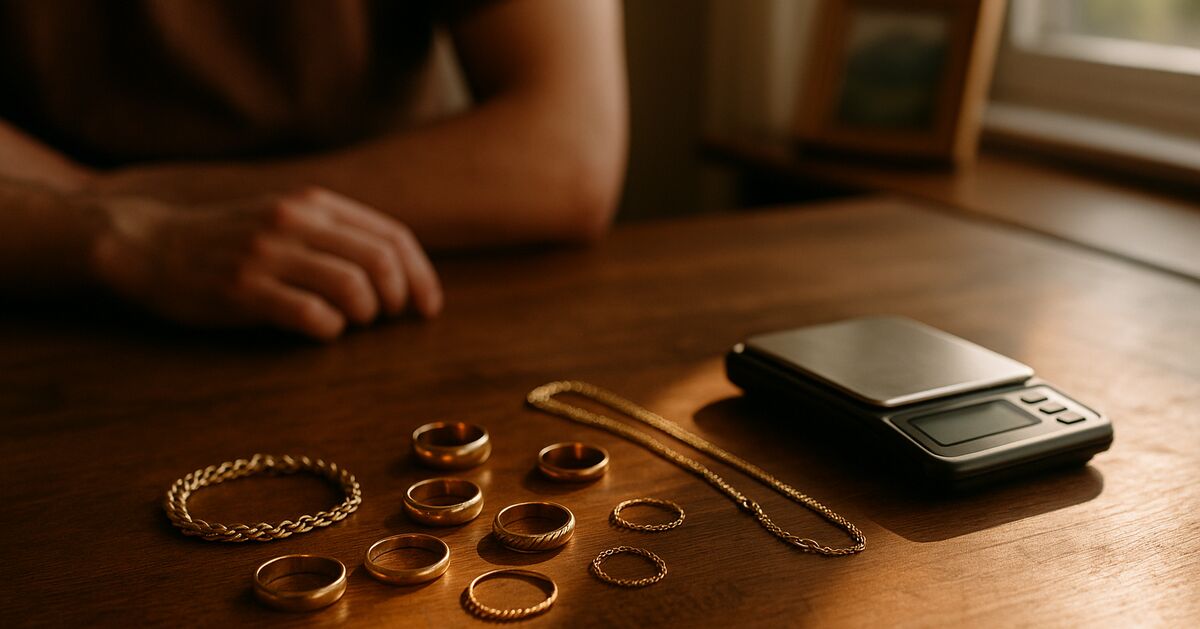
Gold sitting in a drawer is not an investment - it is a decision you keep postponing. When you finally decide to turn it into cash, the single biggest variable is not the gold itself; it is who you sell it to. Different buyer types operate under completely different cost structures, and those costs come directly out of your offer.
I ran a precious-metals buying business for eighteen years. I have sat on the buying side of that transaction thousands of times, and I have watched sellers leave serious money on the table simply because they did not understand how the market works. This guide is my attempt to fix that.
Why the buyer type matters more than you might expect
The gold market has one universal anchor: the spot price. That is the per-troy-ounce price published on commodity exchanges, updated in real time, and freely visible on any financial site. Every buyer in the world starts there.
What changes between buyer types is how much of that spot price they actually pass on to you. A buyer with low overhead, fast inventory turnover, and a direct relationship with a refiner can afford to pay closer to spot. A buyer with a retail shopfront, showcase staff, and slow-moving inventory cannot. Neither is dishonest - they are just operating different businesses. Knowing the difference lets you route your gold to the buyer who fits your piece and your timeline.
For a detailed look at how spot prices, purity, and weight interact to set your baseline, the [practical guide to selling silver online]((/blog/a-practical-guide-to-selling-silver-online-what-it-is-worth-what-affects-the)) covers the underlying math in a way that translates directly to gold as well.
Pawn shops
Pawn shops are everywhere, they pay cash on the spot, and they ask no questions beyond a photo ID. For someone who needs money in the next hour, that convenience has real value.
The trade-off is the offer itself. A pawn shop is not primarily a gold business - it is a short-term lender that happens to buy gold when no one redeems a loan. The shop needs to cover its storefront, staff, potential holding time, and the margin it will earn when it eventually resells or refines your piece. Anecdotally, that stack of costs often pushes offers well below melt value, though the range varies widely by shop.
A mistake that comes up repeatedly in seller forums is accepting the first pawn-shop offer without asking a competitor. Even within the same town, offers on the same ring can vary noticeably from shop to shop. If you are going the pawn route, visit two or three before you commit.
Coin and bullion dealers
A coin or bullion dealer is a more specialized buyer, and specialization usually translates to better offers on the right material.
For gold coins specifically - American Gold Eagles, Krugerrands, Maple Leafs, pre-1933 U.S. coins - a good dealer is usually the right first call. They maintain a retail customer base who will pay a premium for recognizable coins, which means the dealer can afford to pay you more than a refiner would. A coin that gets melted down loses its numismatic premium forever; a dealer who sells it intact earns that premium and shares a slice of it with you.
For scrap jewelry or broken chains, the picture is more mixed. Dealers vary considerably in what they pay for scrap, and some are primarily interested in coins and bullion. Call ahead and describe what you have before making a trip.
One honest warning: coin dealers who work out of small shops or flea-market tables sometimes make very low offers on scrap gold, knowing that many sellers will not bother comparison shopping. The solution is the same as with pawn shops - get more than one offer. You can read more about how to compare quotes effectively in our guide to getting cash for silver: what buyers pay and how to compare quotes, which covers the comparison process in practical detail.
Jewelry stores buying secondhand gold
A retail jeweler who buys secondhand gold is in an awkward position. Their primary business is selling new jewelry at retail margins. When they buy your old gold, they are either reselling it as estate jewelry (which requires the right customer at the right time) or sending it to a refiner.
Either way, their offer tends to land in the same territory as a pawn shop, sometimes lower. The retail environment creates overhead that has to be covered, and buying old gold is not their core business. Where a jeweler can shine is if your piece has genuine antique or designer value - a jeweler who specializes in estate pieces will recognize that value where a generalist will not.
If your gold is a plain broken chain or a dated setting, a jeweler is rarely your best option for melt value. If it is a signed Art Deco brooch or a piece from a recognized designer, it might be worth a conversation. Our guide to selling designer jewelry online goes into detail about how to identify and capture that kind of premium.
Gold-buying events and "we buy gold" pop-up shops
These operations set up in hotel conference rooms, shopping mall kiosks, or temporary retail spaces and advertise heavily for a short window. The business model is built on volume and low offers: they need to buy a lot of gold quickly, at prices that leave plenty of margin after shipping to a refiner.
That is not automatically predatory - it is just a business with thin time and a lot of overhead packed into a few days. From what I've heard reported, these events generally offer at the low end of the market, well under melt value. The sellers who do well at these events are usually people who simply would never have gotten around to selling otherwise, which is a real benefit of convenience.
If you have time to do a little homework, you will almost certainly do better through other channels. If the event is the thing that finally gets you to sell gold you have been ignoring for a decade, that has its own value.
Online mail-in buyers
This is the channel that, in my experience, consistently produced the most competitive offers for average scrap gold and jewelry. The economics explain why.
An online buyer has no retail shopfront. Overhead is low. They process large volumes and have direct relationships with refiners, which means their cost to convert your gold into cash is minimal. Those savings show up in the offer. In my experience, reputable mail-in buyers tend to pay closer to melt value than other channels for plain gold jewelry, especially on higher-purity items.
The process works like this: you request a free, prepaid, insured shipping label; you pack your gold carefully and mail it in; the buyer weighs and tests the metal at a processing facility; and they send you an offer, usually within a day or two of receipt. If you accept, payment follows by check or bank transfer. If you decline, a well-run operation will return your gold at no cost to you.
The "return if you decline" policy is non-negotiable. Any buyer who won't commit to free returns in writing is one to avoid.
The main concern sellers have is trust, which is fair. You are mailing something valuable to a company you cannot see. The mitigation steps are straightforward: look for established businesses with verifiable track records, read independent reviews (not just testimonials on their own site), confirm the insurance coverage on the shipping label, and verify the return policy before you send anything.
Refiners (direct)
A refiner is the endpoint for most scrap gold. They melt it down, separate the pure metal, and sell it back into the market. In theory, going directly to a refiner sounds like the best deal because you are cutting out the middleman.
In practice, many refiners prefer working with commercial accounts or sellers who can bring in substantial weight, rather than small individual amounts. If you have a single ring or even a small box of jewelry, most refiners will not deal with you directly, and the ones who will often have high processing fees that cancel out any advantage.
For large volumes - say, an estate with a substantial collection, or a jeweler clearing old inventory - a direct refiner relationship is worth exploring. For an individual seller with a typical amount of gold, it is usually not practical.
Selling gold as part of a mixed lot
Many people have gold and silver together, or gold alongside other valuables. Selling everything to the same buyer is convenient, but it is not always the best strategy. A buyer who specializes in gold may not be the right home for your silver coins, and vice versa. Our guide to selling gold and silver together works through the decisions involved when you have a mixed collection and need to figure out where each piece belongs.
Local buyers vs. online buyers: the practical trade-offs
Local buyers offer immediacy. You walk out with cash or a check the same day, you can ask questions face to face, and you never have to worry about a package getting lost in the mail. For sellers who are uncomfortable with the mail-in process, or who have a single item they want to deal with quickly, local is a reasonable choice - just be realistic that you will likely pay for that convenience in the form of a lower offer.
Online buyers offer price. The combination of low overhead and high volume means they can and do outpay local options on straightforward scrap gold and jewelry. The trade-off is a few days of waiting and the mild anxiety of mailing something valuable. Good packing technique and confirmed insurance coverage address most of that anxiety.
The smart move for anything beyond a tiny amount is to get at least one online offer before accepting a local one. If the local buyer matches it, great - sell locally and enjoy the immediacy. If the online offer is materially higher, that gap tells you exactly what your convenience is costing you, and you can decide whether it is worth it.
Red flags across all buyer types
Regardless of which channel you choose, a few warning signs appear consistently:
- No written offer. A verbal offer in a shop is not binding. Ask for anything you're comparing in writing, even if it's just a note on the buyer's letterhead.
- No return policy for mail-in buyers. Walk away from any online buyer who will not return your gold free of charge if you decline their offer.
- Pressure to decide immediately. A fair offer does not expire in five minutes. Urgency is a sales tactic.
- Untested or estimated weights. Your gold should be weighed on a calibrated scale in front of you (for local buyers) or at a certified lab (for mail-in buyers). Estimates are not acceptable.
- Fees deducted after the offer. Some buyers quote a percentage of melt value, then apply "handling" or "assay" fees that reduce the actual payout. Get the net figure, not the gross.
For a broader look at the questions worth asking before you commit to any buyer, the FAQ on this site covers a number of the scenarios that trip sellers up.
Putting it together: a simple decision framework
Here is how I would think about it, based on years of watching sellers navigate this:
- If you have recognizable gold coins with numismatic value, start with a reputable coin dealer.
- If you have plain scrap jewelry or broken gold, get at least one online quote from an established mail-in buyer before accepting anything locally.
- If you have a mix of gold, silver, and other valuables, consider sorting by type and routing each to the buyer who specializes in it.
- If you genuinely need cash today and cannot wait, a local buyer is fine - just visit more than one and know you are paying a premium for speed.
- If you have a very large volume, look into whether a direct refiner relationship makes sense.
The home page of this site has additional resources for understanding value and finding reputable buyers across different categories, and the blog index covers specific item types in more depth if you want to go further on any of these threads.
One last thought
The gold market is not a mystery, but it rewards people who take a little time to understand it. The difference between the worst offer you might accept and the best offer available for the same piece of gold can be substantial. That is not a small number. An hour of comparison shopping can be worth more per hour than almost anything else you might do with your time.
Sell with clear eyes, know your baseline, get more than one offer, and you will do fine.
Sources & further reading
- Gold and Silver Commodity Spot Prices (U.S. Commodity Futures Trading Commission)
- BBB Tips for Selling Gold and Precious Metals (Better Business Bureau)
- USGS Mineral Resources Program: Gold (U.S. Geological Survey)
Revision history (1)
- Pre-publish editorial QA: 2 flagged, 2 softened; claim audit: 6 claims, 6 rewritten
Claim-by-claim audit (6 checked)
- “Anecdotally, that stack of costs often pushes offers well below melt value, though the range varies widely by shop.” (rewritten to what the article can stand behind)
- “Even within the same town, offers on the same ring can vary noticeably from shop to shop.” (rewritten to what the article can stand behind)
- “From what I've heard reported, these events generally offer at the low end of the market, well under melt value.” (rewritten to what the article can stand behind)
- “In my experience, reputable mail-in buyers tend to pay closer to melt value than other channels for plain gold jewelry, especially on higher-purity items.” (rewritten to what the article can stand behind)
- “In practice, many refiners prefer working with commercial accounts or sellers who can bring in substantial weight, rather than small individual amounts.” (rewritten to what the article can stand behind)
- “The difference between the worst offer you might accept and the best offer available for the same piece of gold can be substantial.” (rewritten to what the article can stand behind)