
A practical guide to selling gold online: what it is worth
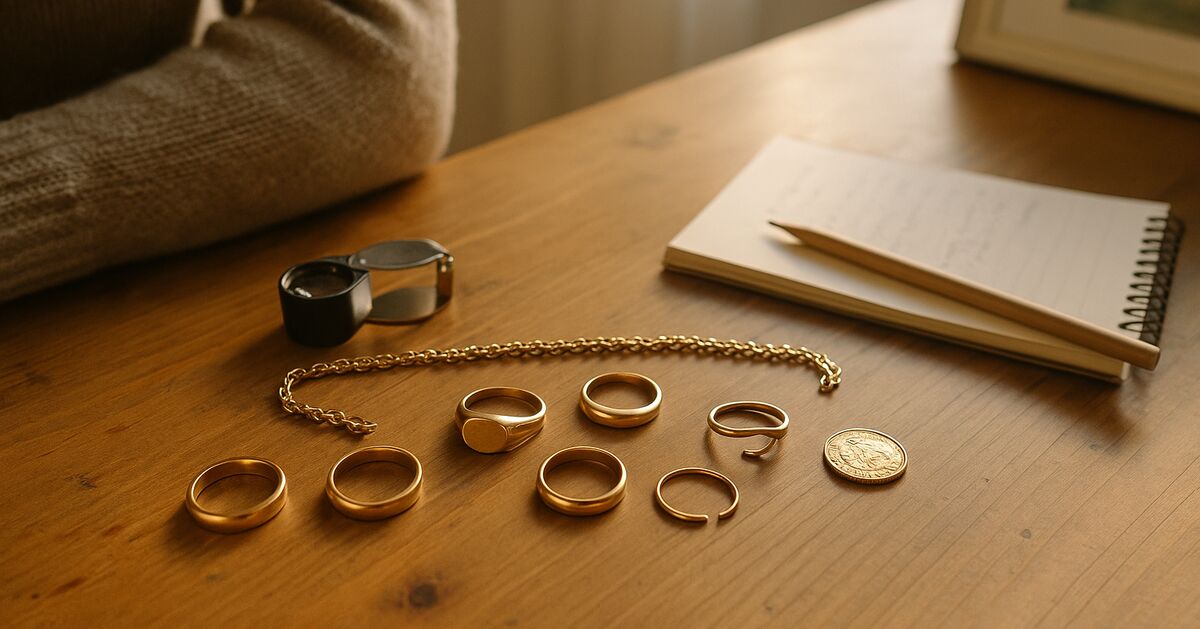
Gold sitting in a drawer earning nothing is still real money, and the online market for selling it has matured to the point where a careful seller can do genuinely well without ever leaving the house. The catch is that "online gold buyer" covers an enormous range, from scrupulously fair operations to outfits that count on you not knowing the math. Knowing that math yourself is the only real protection.
This guide walks through how gold is actually priced, what moves that price up or down, how the different buyer types compare, and what a safe, well-documented sale looks like from start to finish. It draws on nearly two decades of experience buying gold and silver from sellers across the country before that business closed, so the trade detail here is the real kind.
Start with the spot price, not the sticker price
Gold has a live market price called the spot price, quoted in troy ounces, that changes throughout every trading day. You can look it up on any financial data site in seconds. That number is the foundation of every calculation a buyer makes, and it is the number you need to anchor your own expectations.
One troy ounce equals 31.1 grams. That matters because kitchen scales measure in grams and jewelry is described in grams, so you will be doing conversions regularly. A quick way to check yourself: divide the grams of your item by 31.1 to get troy ounces, then multiply by the spot price and then by the purity fraction. That gives you the theoretical melt value, which is the ceiling, not the offer.
No buyer pays 100 percent of melt value. They need margin to cover refining costs, operating expenses, and market risk. In general, a reputable buyer tends to pay a majority of melt value, often somewhere between roughly two-thirds and nearly all of it, depending on the item type, quantity, and their own cost structure. Knowing this range in advance tells you whether an offer is in the ballpark or an insult.
Purity is everything: understanding gold karats
The karat mark on a piece of gold tells you what fraction of the metal is actually gold. The math is straightforward: divide the karat number by 24.
- 24k is essentially pure gold, 99.9 percent.
- 18k is 75 percent gold.
- 14k is 58.3 percent gold.
- 10k is 41.7 percent gold, generally considered the minimum karat commonly sold as gold jewelry in the United States.
- 9k is common in British and European jewelry and is 37.5 percent gold.
A piece stamped "GF" (gold-filled), "GP" (gold-plated), or "GE" (gold electroplated) contains very little actual gold and has essentially no melt value. Buyers will not pay gold prices for plated items, and a legitimate buyer will tell you that upfront rather than quietly weigh them in with everything else.
Stamps can be wrong or missing on older pieces, which is why professional buyers test every item rather than trusting the hallmark. The standard field test uses acid solutions: a drop of nitric acid on a small scratch will react differently depending on purity. More precise buyers use X-ray fluorescence (XRF) analyzers, which read elemental composition without destroying any metal. If a buyer does not mention testing at all, that is worth questioning.
Weight and the troy ounce system
Gold is sold by the troy ounce, a unit that predates the modern imperial system and remains the global standard for precious metals. One troy ounce is 31.1035 grams, noticeably heavier than an avoirdupois ounce (28.35 grams), the kind used to weigh food and parcels. Confusing the two introduces a significant error, so always confirm which unit a buyer's scale or quote is using.
Pennyweight (dwt) is another unit that comes up, especially with jewelers. There are 20 pennyweights in a troy ounce, so one pennyweight equals 1.555 grams. Some buyers quote prices per pennyweight rather than per gram or per troy ounce. Neither is more honest than the other, but you need to convert everything to one unit before comparing offers. A buyer quoting a high price per gram on 10k gold may actually be offering less than a competitor quoting a lower price per gram on a consistent basis. Do the full melt-value math on every offer before deciding.
What actually moves a gold offer up or down
Spot price is the biggest variable, but several other factors shift what you will realistically receive.
Karat and purity. Higher purity means a higher percentage of the weight is recoverable gold. 18k jewelry will fetch a better percentage return on weight than 10k, all else being equal, because the refiner recovers more per gram.
Item type. Bullion coins and bars trade close to spot because their purity is guaranteed by a government mint or recognized assayer, and refining costs are low. Jewelry involves solders, alloys, stones, and more variable purity, so buyers build in a slightly larger margin. Dental gold (crowns, bridges) is often high karat but may contain porcelain or base-metal posts, which requires more careful separation.
Quantity. Sending a larger parcel in a single shipment reduces per-unit overhead for the buyer. Many will reflect that in a slightly better percentage offered. If you have multiple items from different family members or estate sources, consolidating them in one submission often makes sense.
Market volatility. When gold prices are swinging sharply, buyers widen their margin to protect against the risk that the price drops between the day they receive your metal and the day they sell it to a refiner. A calm, steadily rising market generally produces better offers than a chaotic one. You can read more about this dynamic in the context of silver in our post on selling silver online: what it is worth, what affects the price, and how to get a fair offer, where the same principle applies to gold.
Stones and settings. Gemstones set in gold add weight but zero melt value. A buyer weighing a diamond ring is paying only for the gold content; the stone's value, if any, is a separate question entirely. If you have significant stones worth appraising, consider having them evaluated independently before selling the piece as scrap. Our separate guide to selling diamonds online covers that process in detail.
The main types of online gold buyers
Mail-in refiners and precious-metals buyers. You ship your gold to them, they weigh and test it, and they send an offer by email. If you accept, they pay; if you decline, they return your items. This model works well when the buyer is transparent about their testing method, quotes a clear percentage of spot, has a documented return policy, and uses insured shipping. Red flags include vague pricing, pressure to accept quickly, and no clear return process.
Online auction platforms. Selling gold coins or bullion on a general auction platform can sometimes yield prices above melt value if the item has numismatic appeal or collector demand, but the fees (listing, final value, payment processing) erode the net significantly, and the logistics of packing and shipping add effort and risk. It works better for coins with clear collector value than for scrap jewelry.
Local coin dealers and jewelers. Not strictly "online," but many now post buy prices on their websites so you can compare before walking in. For high-karat, easy-to-verify pieces, a local dealer who posts transparent prices can be competitive, and you get paid immediately. The trade-off is that you are limited to whoever operates in your area.
Pawn shops. Pawn shops serve a different purpose: they lend money against collateral and happen to buy gold as a side function. Their buy prices tend to be lower, which is not a criticism, just a reflection of their business model and the higher overhead of a retail storefront. If speed matters more than price, pawn shops deliver; if price matters most, they are rarely the answer.
If you are also selling silver alongside your gold, the practical end-to-end guide to selling gold and silver together covers how to organize a mixed submission effectively.
How to prepare your gold before you ship or show it
Sort by karat first. Keep 24k, 18k, 14k, and 10k pieces in separate bags or envelopes labeled clearly. Do not mix them. A buyer who finds mixed karats in one bag has to either test everything individually (time-consuming) or grade to the lowest purity in the batch (costly to you).
Weigh everything yourself on a digital scale accurate to 0.1 grams. Write the weight down. This is not about catching anyone cheating; it is about having a reference point so that if the buyer's weight differs significantly from yours, you can ask why before accepting the offer. Shipping and handling can cause small differences, but a large discrepancy deserves an explanation.
Remove obvious non-gold attachments if you can do so without damaging the piece. Clasps on chains are often base metal. Earring backs are frequently surgical steel. These add weight but no gold value, and some buyers will subtract for them; others will just weigh the whole item and pay for the gold fraction. Ask about their policy in advance.
Photograph everything. Lay out your items on a neutral background, photograph them as a group and then individually, and note any hallmarks or stamps. This protects you in the event of a dispute and is simply good record-keeping for an irreversible transaction.
Shipping safely
Declared value insurance is non-negotiable. USPS Priority Mail allows declared value coverage, and reputable mail-in buyers either provide a prepaid insured label or reimburse you for the declared value postage. Never ship gold in a plain padded envelope without declared value coverage; if it is lost or stolen in transit, you have no recourse.
Use a rigid box, not just a padded envelope. Wrap items in bubble wrap or tissue and put them in a small zip-lock bag before boxing. Tape the box thoroughly. The goal is to prevent any rattling or shifting that might wear through the packaging or, in extreme cases, attract attention by making noise.
Do not write "gold" or "jewelry" anywhere on the outside of the package. The address label and return address are all you need externally.
Keep the USPS tracking number and hold onto it until the buyer confirms receipt and you have either accepted an offer or received your items back.
Reading and comparing offers
When an offer arrives, the number you want to see is the percentage of melt value being offered, not just the dollar amount in isolation. To calculate it yourself:
- Look up the current spot price for gold.
- Convert your item's weight to troy ounces.
- Multiply by the purity fraction (karat divided by 24).
- That gives you melt value.
- Divide the buyer's offer by the melt value and multiply by 100. That is the percentage offered.
A reputable buyer will usually tell you this percentage directly. If an offer arrives with only a dollar figure and no breakdown, ask for the weight used, the purity assessed, and the spot price applied. Any honest buyer will provide all three without hesitation.
Get at least two offers if the total value is significant. The process takes a few extra days but is often worth the time for a parcel worth several hundred dollars or more. Some buyers will match or beat a competitor's written offer if you share it with them.
Timing: does it matter when you sell?
Gold prices move with macroeconomic forces, currency movements, inflation expectations, and geopolitical uncertainty. Trying to time the market precisely is generally a losing game for occasional sellers. What matters more is not selling in a panic, comparing offers methodically, and understanding what you have before you ship it.
That said, if you are not under financial pressure, watching the spot price for a few weeks before submitting your items costs nothing and might tell you whether the market is trending higher or lower. A slow, steady uptrend is a reasonable environment to sell in. A sharp spike followed by uncertainty is a moment to wait if you can.
Common mistakes that cost sellers money
A mistake that comes up again and again among first-time sellers is accepting the first offer received without knowing whether it is fair. The math in this guide exists specifically to prevent that.
Another common issue is sending mixed-karat items without sorting them. Buyers who receive an unsorted parcel either test individually (fine, but slower) or make a conservative assumption about average karat. Sorting takes ten minutes and removes the ambiguity entirely.
Selling plated items to a gold buyer expecting gold prices is another avoidable loss. Check for "GF," "GP," or "RGP" stamps and set those items aside. They are not worthless, but they are not scrap gold either.
Finally, some sellers fixate on the nominal dollar price without accounting for the spot price on the day of the offer. If gold has moved significantly since you got your first quote, a lower nominal offer from a second buyer might actually represent a better percentage of melt. Always anchor to spot, not to the number in isolation.
Other valuables in the same box
If you are clearing an estate or a jewelry box, you may find items that go beyond gold: silver chains, watches, designer pieces, or coins. Each of these has its own buyer and its own valuation logic. Our guides on selling designer jewelry online and selling inherited or scrap gold cover those adjacent situations in detail and are worth reading before you bundle everything into one shipment.
For answers to the questions that come up repeatedly, the FAQ page is a good first stop, and the blog index has additional guides covering specific item types, buyer comparisons, and market mechanics.
Selling gold online is not complicated once you know how the pricing works. The sellers who do best are simply the ones who take thirty minutes to learn the math, sort their items carefully, photograph everything, and compare at least two offers before deciding. That is the whole game.
Sources & further reading
- Gold spot price and historical data (Kitco Metals)
- USPS Priority Mail service and insurance options (U.S. Postal Service)
Revision history (1)
- Pre-publish editorial QA: 1 flagged, 1 softened; claim audit: 4 claims, 2 rewritten
Claim-by-claim audit (4 checked)
- “In general, a reputable buyer tends to pay a majority of melt value, often somewhere between roughly two-thirds and nearly all of it, depending on the item type, quantity, and thei…” (rewritten to what the article can stand behind)
- “10k is 41.7 percent gold, generally considered the minimum karat commonly sold as gold jewelry in the United States.” (rewritten to what the article can stand behind)
- “One troy ounce is 31.1035 grams, noticeably heavier than an avoirdupois ounce (28.35 grams), the kind used to weigh food and parcels.” (cited → kitco.com)
- “USPS Priority Mail allows declared value coverage, and reputable mail-in buyers either provide a prepaid insured label or reimburse you for the declared value postage.” (cited → usps.com)