
Where to sell silver: comparing buyer types and what each
Every silver seller eventually hits the same wall: you know the spot price, you know roughly what you have, but you have no idea which kind of buyer will treat you fairly. The answer depends on what you are selling, how much patience you have, and whether you want the fastest exit or the best return.
After eighteen years of running a precious-metals buying business, I saw thousands of transactions go well and a fair number go badly. The outcomes often came down to one thing: the seller picked the wrong type of buyer for what they were selling. This guide lays out each buyer category honestly, including where each one earns its margin and what that means for your check.
Why buyer type matters more than you might expect
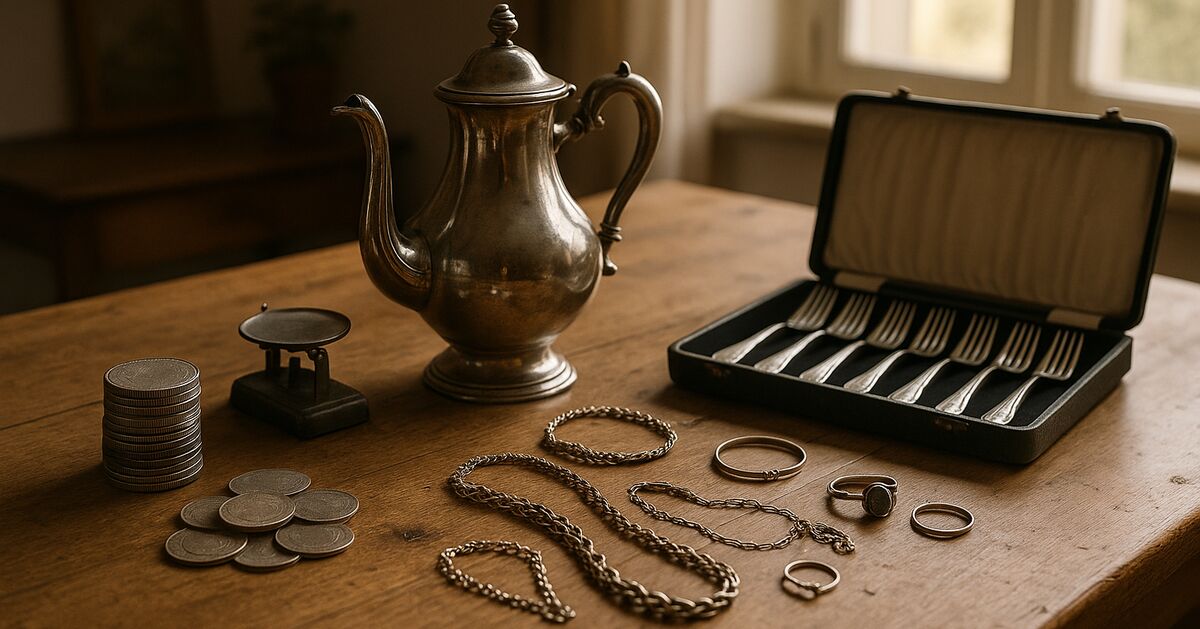
Silver is not one product. A bag of pre-1965 junk coins, a Victorian tea service, a tube of American Silver Eagles, and a handful of scrap jewelry all have silver content in common, but they appeal to completely different buyers for completely different reasons. A buyer who is brilliant at pricing bullion coins may have no idea what to do with antique flatware, and vice versa. Matching your item to the right buyer category is the single biggest lever you can pull before you even start comparing quotes.
If you want a broader view of how this dynamic plays out across both metals, the post on selling gold and silver together covers the same principle in more detail.
Pawn shops: convenient, but priced for risk
Pawn shops are everywhere, they are open late, and they will give you cash on the spot. Those are real advantages worth acknowledging. The trade-off is that a pawn shop is not primarily a precious-metals business. It is a short-term lending business that also buys things. The owner needs to price every purchase conservatively enough to survive if the item sits in a case for six months and silver drops ten percent.
That built-in caution means pawn shops routinely offer well below what a specialist buyer would pay. Many also lack proper XRF (X-ray fluorescence) testing equipment, and may rely on acid tests or simple scratch tests, which can be less precise for alloyed or unusual items. A complex piece of sterling flatware is especially vulnerable to being assessed on the low end because a pawn shop has no easy retail market for it.
When does a pawn shop make sense? When you genuinely need cash today, the amount is small, and you have no appetite for the back-and-forth of getting competing quotes. Just go in with realistic expectations.
Coin shops and coin dealers: the right fit for numismatic silver
A dedicated coin dealer is a very different proposition from a pawn shop. They have price guides, grading expertise, and, critically, a customer base that will pay premiums for condition and rarity. If you have silver dollars, pre-1965 U.S. coinage, or any silver coin that might carry collector value above its melt weight, a coin dealer is one of the first places you should check.
The caveat is that coin dealers are also running a retail business. Their buy price has to leave room for their sell price. On common bullion coins (Silver Eagles, Maples, generic rounds), a coin dealer's offer will be a percentage below spot, just as any other buyer's will be. Where they genuinely shine is on coins with numismatic premium: a well-preserved Morgan dollar, for instance, may be worth multiples of its silver melt value to a collector, and a good coin dealer will both recognize that and have a buyer for it.
A mistake that comes up again and again in owner forums is selling a potentially numismatic coin to a scrap buyer because it looked worn. Even worn examples of certain dates can carry collector premiums. Always run a coin by a dealer before treating it as pure melt.
Antique dealers and estate shops: silver with a story
Victorian canteens, Georgian tea sets, and signed pieces from known silversmiths occupy an interesting space. Their value can sit well above melt because a collector or interior designer will pay for the craftsmanship, the hallmark, and the provenance. But antique dealers are also cautious buyers. They need to be confident they can sell the piece on, and they are paying for storage, display, and insurance in the meantime.
What this means in practice: an antique dealer will make an attractive offer on a piece that fits their inventory and clientele, and a below-melt offer (or a polite no) on anything that does not. If you have a full canteen in original condition from a recognized maker, shopping it to antique dealers and specialist silver auction houses is worth the extra time. If you have a partial set with missing pieces and heavy wear, melt value is probably the ceiling regardless of where you sell it.
Scrap and refinery buyers: the floor, but also the honest floor
Scrap buyers - whether they are local metal merchants or mail-in refinery programs - are paying close to the metal value and little else. They are going to melt your silver, so they price it accordingly. The margin they keep covers their operational costs and the small financial risk they carry between buying and refining.
This sounds unappealing, but there is a genuine place for scrap buyers in your strategy. When you have silver-plate items (which have essentially no melt value), broken jewelry with no collector appeal, or sterling pieces that are too common to attract a premium, a scrap buyer gives you an honest price for what the material is actually worth. They are not going to pretend a bent sterling fork is a collectible.
The thing to verify with any scrap buyer is how they test. A reputable buyer uses XRF analysis or fire assay, not guesswork. Ask directly. If they are vague, keep walking.
Online specialist buyers: often the strongest offer for melt-value silver
Mail-in or online precious-metals buyers have become more common in recent years, likely due to lower overhead and competitive pricing. They operate at scale, their overhead per transaction is lower than a retail shop, and they compete aggressively for inventory. For silver that is going to be sold at or near melt (bullion, common flatware, scrap jewelry), this category of buyer consistently produces stronger offers than local alternatives.
The process involves shipping your silver to the buyer, who weighs and tests it independently, then makes an offer. You can accept or request your items back. A reputable buyer will insure your shipment and use a third-party lab for testing so there is no conflict of interest in the assay.
The practical guide to selling silver online goes deep on how to vet online buyers, what to expect from the shipping and testing process, and how to compare offers properly. It is worth reading before you choose a buyer in this category.
A common concern people have is about security. Registered, insured, trackable shipping addresses that risk. The real risk is choosing a buyer with no verifiable track record. Check how long they have been operating, look for independent reviews, and confirm they have a clear return policy if you decline their offer.
Auction houses: the highest ceiling, the least predictable floor
For genuinely exceptional pieces, a specialist auction house is worth serious consideration. A signed Georg Jensen piece, a complete and rare canteen from a notable silversmiths, or a piece with documented provenance can sell at auction for multiples of melt value. The auction format lets collectors bid against each other, which is the one scenario where the seller captures most of the upside.
The downsides are real. Auction houses typically charge a seller's commission, which can be substantial, the process takes weeks or months, and there is no guaranteed outcome. A piece can also pass (fail to meet its reserve), leaving you with nothing but a storage fee.
Use auction for the cream of an estate or collection. For everything else, the time and fee structure work against you.
Online marketplaces (eBay and equivalents): high ceiling, high effort
Selling directly to collectors through a platform like eBay puts you in the same position as a dealer: you can capture the full retail premium. For coins with collector value, signed jewelry, or desirable holloware, this can mean a significantly better outcome than any trade buyer.
The effort involved is not trivial. You need to photograph well, write accurate descriptions (including hallmarks and weight), price competitively, pack securely, and handle returns if a buyer disputes the listing. Platform fees and payment processing typically take a meaningful cut of the sale price, so factor that in when comparing the net result against a trade offer.
A pattern that comes up among experienced sellers is to list the desirable pieces individually on eBay and sell the rest in a single lot to a specialist buyer. This hybrid approach captures the premium where it exists without consuming endless hours on routine items.
Refiners direct: only practical at volume
Going directly to a silver refiner cuts out the middleman but only tends to make economic sense if you have a substantial volume to sell. Refiners are processing operations. The administrative cost of setting up a new account and running an assay is fixed regardless of how much silver you send, so small quantities do not produce a better net return than a well-chosen specialist buyer.
If you have a genuinely large quantity to sell, it is worth making calls. If you have a few hundred grams of scrap and a dozen coins, a direct refinery relationship will not help you.
How to compare offers fairly
Whatever mix of buyer types you approach, make sure you are comparing like for like. An offer expressed as "80 percent of spot" is only meaningful if you know what spot they are using and whether they are quoting troy ounces or grams. Ask every buyer to show their working: spot price used, weight in troy ounces, purity percentage assumed, and any deductions or fees.
The post on getting cash for silver: what buyers pay and how to compare quotes walks through exactly this calculation with worked examples, and it is the most useful thing to read before you call anyone.
The sorting step that most sellers skip
Before you contact any buyer, sort your silver into categories. Separate potential numismatic coins from common bullion. Separate sterling (925 or lion passant hallmark) from silver plate. Separate pieces that might have antique or maker value from generic items. This sorting step takes an afternoon and routinely results in a better overall outcome because each category goes to the buyer best suited to it.
The frequently asked questions page covers how to identify basic hallmarks and what the common purity marks mean if you are starting from scratch.
What the source material from my old business still gets right
When I was running Silver and Gold Exchange, the core message we pushed was: do your research before you walk in anywhere. That advice has not aged a day. The buyer landscape has changed (online buyers are stronger now than they were fifteen years ago, and direct-to-collector platforms are more accessible), but the principle is the same.
A pawn shop is not the right buyer for a Victorian canteen. A coin dealer is not the right buyer for a bag of broken jewelry. An auction house is not the right buyer for a handful of common Silver Eagles. Routing your silver to the buyer who is actually set up to value it properly is how you go from an okay outcome to a genuinely good one.
For a parallel breakdown of how this same logic applies to gold, the post on where to sell gold: comparing buyer types and what each pays covers the same framework with gold-specific detail.
A quick reference: buyer type at a glance
- Pawn shops - fast cash, lowest offers, best for urgent small sales
- Coin dealers - strong on numismatic coins, competitive on bullion, shop around
- Antique dealers - right for high-quality holloware with maker or period value
- Online specialist buyers - consistently strong for melt-value silver, good for most sellers
- Auction houses - highest ceiling for exceptional pieces, high fees and time cost
- eBay / direct to collector - captures full retail premium, high effort, worth it for desirable individual pieces
- Direct refiners - only practical at significant volume
The home page has more guides on valuation and the selling process if you want to keep building your knowledge before making any decisions.
Selling silver well is not complicated, but it does reward a little preparation. Know what you have, match it to the right buyer category, and get at least two quotes before you accept anything. That three-step habit is worth more than any single tip I could give you.
Sources & further reading
- Silver commodity spot price data and market information (Kitco Metals)
- XRF analysis and precious metals testing methodology (Thermo Fisher Scientific)
- Silver hallmarking standards and assay office guidance (The Assay Office London)
- Better Business Bureau: evaluating buyer businesses and complaint records (Better Business Bureau)
Revision history (1)
- Pre-publish editorial QA: 1 flagged, 1 softened; claim audit: 5 claims, 5 rewritten
Claim-by-claim audit (5 checked)
- “Many also lack proper XRF (X-ray fluorescence) testing equipment, and may rely on acid tests or simple scratch tests, which can be less precise for alloyed or unusual items.” (rewritten to what the article can stand behind)
- “Auction houses typically charge a seller's commission, which can be substantial, the process takes weeks or months, and there is no guaranteed outcome.” (rewritten to what the article can stand behind)
- “Platform fees and payment processing typically take a meaningful cut of the sale price, so factor that in when comparing the net result against a trade offer.” (rewritten to what the article can stand behind)
- “Going directly to a silver refiner cuts out the middleman but only tends to make economic sense if you have a substantial volume to sell.” (rewritten to what the article can stand behind)
- “Mail-in or online precious-metals buyers have become more common in recent years, likely due to lower overhead and competitive pricing.” (rewritten to what the article can stand behind)