
Where to sell scrap gold: comparing buyer types and what
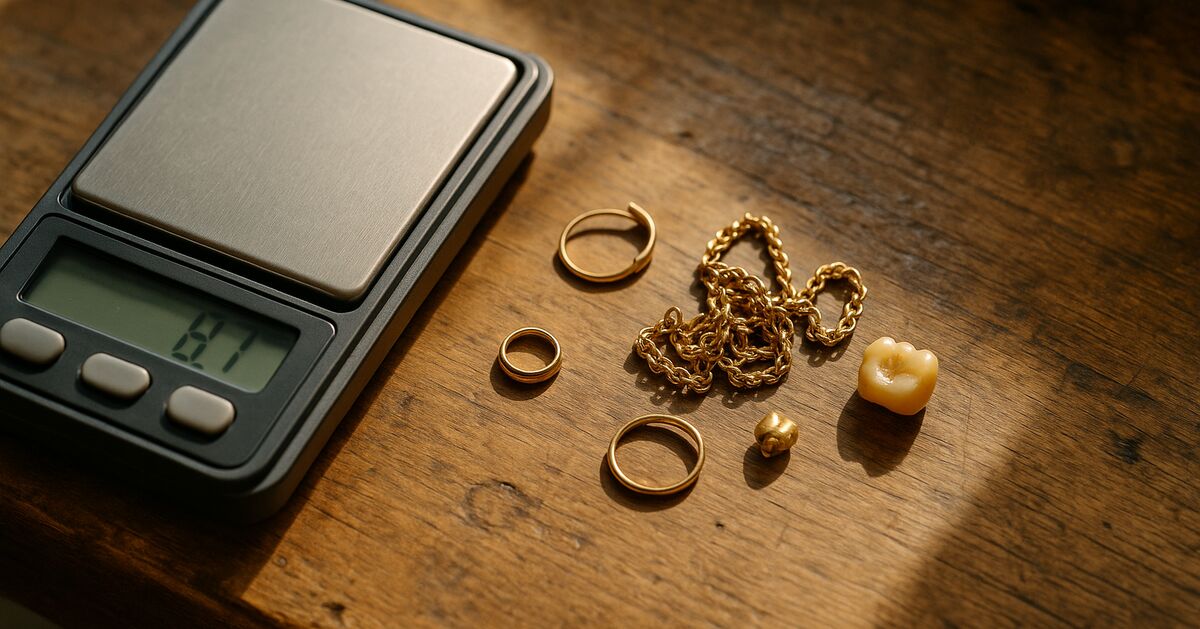
Scrap gold is everywhere - tucked in jewelry boxes, sitting in estate lots, pulled from old dental work - and many people selling it have no clear picture of what it is actually worth or who will pay the most for it. That gap between what you could get and what you actually get is the whole game, and it is often decided before you walk through any door or hit "submit" on any website.
This post lays out every serious buyer category you are likely to encounter, explains honestly what each one pays and why, and gives you the practical detail you need to compare offers with confidence.
What "scrap gold" actually means in practice
Scrap gold is any gold item whose primary value comes from the metal itself rather than from craftsmanship, brand, age, or collector interest. A broken 14-karat chain is scrap. A single earring missing its mate is scrap. Dental crowns and bridges are scrap. Thin industrial wire stripped from electronics is scrap - though it is worth knowing that electronic scrap involves trace amounts of gold mixed with other metals and is handled differently from jewelry-grade scrap.
What all these items share is that a buyer will assess them almost entirely on two numbers: weight and purity. Everything else in the transaction, from the buyer's business model to the overhead they are carrying, determines what percentage of that underlying metal value you will actually see.
Understanding the spot price of gold and how it flows through to a seller's offer is the single most useful piece of background knowledge you can have before you approach any buyer.
The buyer landscape, from lowest to highest payout
Pawn shops
Pawn shops are convenient, fast, and almost universally the lowest-paying buyer for scrap gold. That is not an accident or a character flaw on the pawnbroker's part - it is a direct result of their business model. A pawn shop must price in the possibility that you will pawn the item rather than sell it outright, meaning they need enough margin to store it, potentially resell it as jewelry, or send it to a refiner later. They also carry significant overhead: retail space, staff, security, and a license to lend money.
Pawn shops are widely reported to offer well below the metal value of scrap gold, often less than half, though exact figures vary by shop. The spread is wide because individual shops vary a great deal, and a well-run shop in a competitive market will do better than one that knows it has no nearby competition.
If you are in a genuine cash emergency and need money today, a pawn shop is a legitimate option. But if you have even a few days, you can do substantially better elsewhere.
Gold parties and traveling buyers
Gold parties - events hosted in someone's home or a hotel conference room, where a traveling buyer assesses and purchases items from a group of attendees - became widespread during the late 2000s gold price surge and have never fully gone away. The social setting is the point: it creates a sense of occasion and mild peer pressure that tends to suppress the instinct to shop around.
Payouts at gold parties are often in the same range as pawn shops or lower. The traveling buyer has transportation costs, the host typically receives a commission on sales made, and the whole operation is designed for volume and speed rather than fairness to any individual seller. There is rarely any pressure to accept on the spot, but the atmosphere is engineered to feel that way.
Skip them unless you are attending purely to learn how the weighing and testing process works, which can actually be educational.
Jewelry stores and estate buyers
Local jewelers who buy scrap gold vary enormously. A small family-run shop with decades of community reputation may pay fairly, especially if they refine or resell gold in-house. A chain retailer is less likely to be competitive because their margin requirements are higher.
Estate buyers and antique dealers who occasionally handle gold are a similar story: they may be excellent judges of whether a piece has value beyond melt, but they are less likely to be competitive on pure scrap. If your item has genuine antique or designer value, an estate buyer might actually pay you more than a refiner would. If it is genuinely just broken scrap, they probably will not.
The practical advice here is to get a quote from a local jeweler only after you have a baseline from an online buyer (explained below), so you know whether the local offer is in the right neighborhood.
Coin dealers
Coin dealers who also handle bullion and scrap gold can be solid buyers, particularly for items that sit on the border between scrap and collectible. A 14-karat charm bracelet is straight scrap. A gold coin - even a damaged one - is something a coin dealer will assess more carefully, and they may pay a premium over melt for it.
For genuine scrap with no collectible characteristics, coin dealers generally pay a higher share of melt value than pawn shops, though exact percentages vary by dealer. The comparison between coin dealers and other buyer types is worth reading if you have a mix of items to sell.
Dedicated online or mail-in gold buyers
This category is where most sellers of pure scrap gold will find the best net return, provided they choose carefully. Online buyers specialize in volume; they process large quantities of scrap and sell directly to refiners, which strips out several layers of middleman margin and lets them pass more of the metal value to sellers.
Payouts from reputable online buyers tend to be higher than other buyer types, though the exact share of melt value varies by buyer and lot size. The gap between a good online buyer and a pawn shop on the same lot of scrap can be substantial in total payout.
What makes online selling work well for scrap specifically - as opposed to numismatic coins or high-end watches where you want a buyer who can assess non-melt value - is that scrap is a commodity. Weight and purity are objective. A good online buyer will test your items, report the exact weight and karat they recorded, and show you their current price per gram at that karat. That transparency is something a pawn shop rarely offers.
The practical details matter. Look for a buyer who:
- Pays for insured, tracked shipping (and ideally emails you a printable label so you can ship immediately rather than waiting for a kit in the mail)
- Publishes their current prices per gram by karat, updated to reflect the live gold spot price
- Commits to a specific payment timeline in writing - open-ended timelines are a red flag
- Clearly states what happens to any gemstones in your items (some discard them, some return them, very few buy them)
- Offers to return your items at their cost if you reject the offer after assessment
That last point is important. Any buyer worth dealing with will return your property if you decline their offer. If you cannot find a clear statement to that effect, keep looking.
Refiners
Primary refiners - industrial operations that process large quantities of metal - generally do not deal with individual retail sellers directly. The economics do not work at small volumes. However, secondary refiners or refinery-affiliated buyers do operate in the retail and semi-wholesale space, and they can be among the best payers available because they have the lowest cost structure of any buyer.
The catch is that a refinery-linked buyer will often set minimum lot sizes or apply less favorable rates to very small quantities. If you have a single broken ring, you are better served by an online buyer. If you have a significant estate lot - several hundred grams of mixed gold - it is worth getting a direct quote from a refinery-affiliated operation as one of your comparison points.
What actually determines the offer you receive
Regardless of buyer type, a few factors always drive the number:
The gold spot price on the day of the transaction. Spot price fluctuates continuously during trading hours. A buyer publishing live prices is showing you their real-time cost basis. A buyer quoting you a fixed price per gram that does not reference today's spot is either building in a cushion against price moves or simply not being transparent.
The karat (purity) of your gold. 24-karat gold is pure. 18-karat is 75 percent gold. 14-karat is 58.3 percent gold. 10-karat is 41.7 percent gold. The buyer will test each item - either with acid test kits, electronic testers, or X-ray fluorescence analysis - to confirm purity before calculating an offer. Testing methodology matters: XRF testing is non-destructive and highly accurate; acid testing is accurate but requires a small surface scratch.
The weight of your items. Gold is typically weighed in troy ounces (31.1 grams each) or grams. The standard consumer kitchen scale reads in avoirdupois ounces, which are lighter (28.35 grams). Mixing these up is a common source of confusion. Know which unit your buyer is quoting in before you do any math.
The buyer's margin. Every buyer takes a spread between what they pay you and what they receive from a refiner or resale. That margin reflects their costs and their profit. It is not a secret, but buyers do not always volunteer it. Working backward from a quoted price to the implied payout percentage (relative to melt value) tells you everything you need to know about whether the offer is competitive.
Gemstones: sort this out before you ship
A question that comes up consistently with scrap gold jewelry is what happens to any stones set in the piece. The honest answer is that it depends entirely on the buyer, and you need to know their policy before you send anything.
Some buyers remove and discard small stones, which are typically too small to have meaningful resale value and add sorting labor. Some return stones on request. A smaller number actually buy quality diamonds, though usually with a minimum size requirement - one carat is a figure that has appeared frequently in the trade as a rough threshold, though individual buyers vary. Very few buyers assess colored stones at all.
If your scrap gold contains a stone you care about - either for sentimental reasons or because you believe it has real value - either remove it yourself before selling the metal, or confirm the buyer's policy in writing before you ship. Assuming a buyer will handle it the way you hope is a mistake that is difficult to undo.
Items that are not what they look like
Two categories of material catch sellers off guard regularly:
Gold-filled and gold-plated items. Gold-filled has a thicker layer of gold mechanically bonded to a base metal core. Gold-plated has only a thin surface coating. Neither is scrap gold in any meaningful sense, and many buyers will either reject them or pay a fraction of what you might expect. Gold-filled items do have some gold content and a small number of specialists process them, but the economics are very different from solid karat gold. If your items are marked "GF," "1/20," or "gold plated," manage your expectations accordingly.
Dental gold. Dental crowns and bridges are typically made from gold alloys, and they do have real melt value. The alloys used in dentistry can include gold, platinum, palladium, and silver in varying proportions. Most online scrap gold buyers accept dental gold, but confirm before you ship. Some refiners specialize in dental scrap specifically.
How to run a proper comparison
The practical approach is straightforward, and it is worth the modest time it takes:
- Weigh your items on a postal or kitchen scale to get an approximate total weight. Convert to grams if needed.
- Identify the karat marking on each piece (10K, 14K, 18K, or a European equivalent like 585 or 750).
- Look up today's gold spot price and calculate the approximate melt value of your lot yourself. There are free calculators widely available for this.
- Get at least two quotes - ideally three. One from an online buyer, one from a local coin dealer or jeweler, and one from a second online buyer if the lot is significant.
- Compare each offer as a percentage of melt value, not as a raw dollar figure against some other number.
This is the same process described in more detail in our guide to getting cash for silver, and the logic transfers directly to gold.
Shipping your gold safely
If you are sending items to a mail-in buyer, packaging matters. Use a small, sturdy box rather than an envelope. Wrap each item individually so pieces do not rattle or scratch against each other. Most reputable buyers will provide insured shipping labels at their expense - if a buyer expects you to cover uninsured shipping on items worth hundreds of dollars, that is a problem.
Take a photo of every item laid out clearly before you pack the box. Note the total weight you measured. Keep a copy of the tracking number until payment clears. These steps take five minutes and have saved sellers from a great deal of uncertainty.
A note on timing
Gold's spot price moves. If you are sitting on a significant lot and the market is trending upward, waiting a few weeks might improve your return. But timing the gold market is genuinely difficult, and the gap between a good buyer and a poor one matters far more than short-term price movement for any individual seller. Choosing a buyer that pays a much higher percentage of melt value can matter more to your final payout than trying to time short-term market moves.
For more on how pricing works across the full range of precious metals selling situations, the overview on selling gold and silver together covers the end-to-end process in one place.
And if you have questions that go beyond what is covered here, the FAQ addresses a range of common seller concerns, or you are always welcome to get in touch directly.
The bottom line is simple: scrap gold has real, objective value that you can calculate yourself before anyone makes you an offer. Do that calculation first, and no buyer can obscure whether their offer is fair.
Sources & further reading
- Gold and Precious Metals Market Data (Kitco Metals Inc.)
- Consumer Information: Selling Gold and Jewelry (U.S. Federal Trade Commission)
- Troy Weight and Precious Metals Measurement Standards (National Institute of Standards and Technology (NIST))
Revision history (1)
- Pre-publish editorial QA: 4 flagged, 4 softened; claim audit: 8 claims, 5 rewritten
Claim-by-claim audit (8 checked)
- “Pawn shops are widely reported to offer well below the metal value of scrap gold, often less than half, though exact figures vary by shop.” (rewritten to what the article can stand behind)
- “For genuine scrap with no collectible characteristics, coin dealers generally pay a higher share of melt value than pawn shops, though exact percentages vary by dealer.” (rewritten to what the article can stand behind)
- “Payouts from reputable online buyers tend to be higher than other buyer types, though the exact share of melt value varies by buyer and lot size.” (rewritten to what the article can stand behind)
- “The gap between a good online buyer and a pawn shop on the same lot of scrap can be substantial in total payout.” (rewritten to what the article can stand behind)
- “18-karat is 75 percent gold. 14-karat is 58.3 percent gold. 10-karat is 41.7 percent gold.” (reasoning shown in the article)
- “Gold is typically weighed in troy ounces (31.1 grams each) or grams.” (cited → nist.gov)
- “The standard consumer kitchen scale reads in avoirdupois ounces, which are lighter (28.35 grams).” (cited → nist.gov)
- “Choosing a buyer that pays a much higher percentage of melt value can matter more to your final payout than trying to time short-term market moves.” (rewritten to what the article can stand behind)