
UK Crown coins: six real reasons they sell well and for how
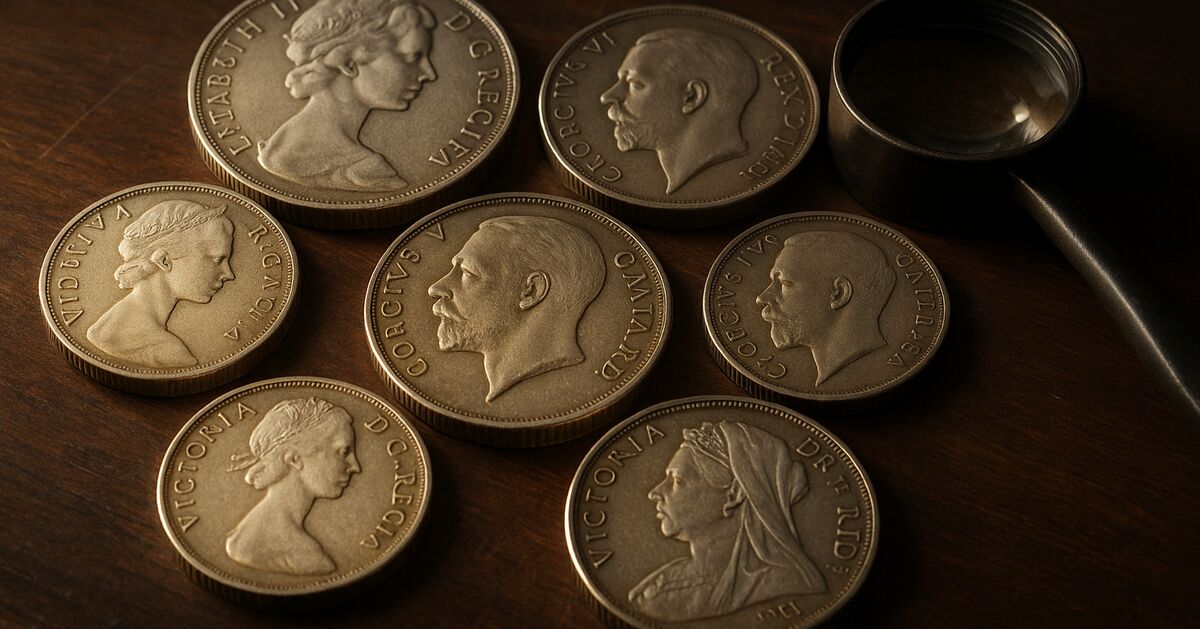
Knowing why a buyer wants your coin is one of the most underrated advantages a seller can have. UK Crown coins sit in a sweet spot that few other pieces occupy: genuine history, recognizable silver content, royal iconography, and a collector market that never quite goes quiet. If you have one to sell, or a whole tin of them inherited from a grandparent, understanding the six forces that make these coins desirable will help you read an offer clearly and push back when one falls short.
A quick word on what "Crown" actually means
The British Crown coin has one of the longest histories of any denomination. It first appeared under Henry VIII in 1526, struck in 22-carat "crown gold," and was worth five shillings at a time when coinage was still directly tied to the metal it contained. Gold and silver versions came and went through the reigns of Edward VI, Elizabeth I, James I, and Charles I, eventually settling into a recognizable large silver coin that persisted in various forms right through to the twentieth century.
The modern collector market covers a wide sweep: pre-decimal Crowns struck before 1971 in genuine sterling or 50% silver, commemorative Crowns issued from 1951 onward (many of which are cupro-nickel with no silver content at all), and a handful of proof and limited-edition pieces in sterling or fine silver that the Royal Mint has issued more recently. Knowing which type you have is the starting point for everything that follows.
Reason one: real silver content in older pieces
Pre-1920 British Crowns were struck in 92.5% sterling silver. Coins minted between 1920 and 1946 dropped to 50% silver. From 1947 onward, the standard circulating Crown became cupro-nickel, meaning no precious-metal melt value at all. This split is the single most important fact when you sit down to value a Crown for sale.
For a pre-1920 specimen in circulated condition, the silver alone gives it a meaningful floor price tied directly to the spot silver market. A standard Victorian or Edwardian Crown weighs around 28.3 grams. At 92.5% purity, that is roughly 26 grams of pure silver, or just under one troy ounce. When silver is trading at, say, £20 per troy ounce, the melt floor sits in that neighborhood, before any numismatic premium is added.
The 1920-1946 pieces contain roughly half that silver, so their melt floor is proportionally lower, but collector demand for interwar Crowns, particularly scarcer dates, can more than compensate.
The post-1947 cupro-nickel pieces have no melt value worth chasing. Their entire worth is numismatic. That matters enormously when you are comparing offers, because a dealer who quotes you a "silver price" on a 1977 Silver Jubilee Crown is either confused or hoping you will not notice.
You can read more about how silver content affects what you actually receive in our guide to selling silver coins: what they're worth and how to get a fair offer and in the broader where to sell silver: comparing buyer types and what each pays overview.
Reason two: unbroken historical narrative
Every Crown ever struck carries a portrait of the reigning monarch on the obverse. That gives the series a continuous thread from Tudor gold pieces right through to modern commemoratives, with the changing royal portraits acting as a calendar of British history. Collectors who build type sets, date runs, or reign sets are chasing exactly that narrative, and that sustained demand is what keeps the market for Crowns active even in years when silver prices are flat.
From a seller's perspective, this means your coin is unlikely to ever be worthless, even if it is post-1947 cupro-nickel. A Coronation Crown from 1953, a Churchill Crown from 1965, or a 1977 Silver Jubilee piece all have active collector markets. They may not fetch spectacular sums, but a patient seller going through the right channel will always find a buyer.
The caution here is that "active market" does not mean "high prices." Common commemorative Crowns in circulated condition change hands for a few pounds each. Only key dates, proof strikes, original packaging, and unusual die varieties command real premiums. If someone tells you otherwise, treat that as a prompt to get a second opinion.
Reason three: size and visual impact make them easy to sell
Large coins sell better at coin fairs and online auctions than small ones. It sounds almost too simple, but there is a real commercial truth here. A Crown is a big, weighty, impressive-looking coin. It photographs well, it displays well in a collector's cabinet, and it reads as "significant" to a casual buyer who might not know the difference between a florin and a shilling. That visual appeal translates into broader demand: you are not limited to serious numismatists. Gift buyers, casual collectors, and people assembling Victorian-era display pieces are all potential customers.
For a seller, broader demand means more competitive offers. When you list a large-format coin online, you are reaching a wider audience than you would with a tiny hammered sixpence, even if the sixpence is rarer.
Reason four: royal commemorative pieces attract non-coin collectors
A chunk of the Crown market is driven by people who are not coin collectors at all. They are royal memorabilia enthusiasts, history buffs, or people who received a commemorative Crown as a gift decades ago and now want a matching piece. The 1935 Silver Jubilee Crown (often called the "Rocking Horse" Crown after its dynamic equestrian reverse), the 1953 Coronation Crown, and the 1965 Churchill Crown all attract buyers from well outside the numismatic world.
This crossover appeal is genuinely useful to a seller. It means online platforms with a broad general audience, like eBay, can sometimes outperform specialist coin dealers for these pieces, because you are reaching buyers the dealer would never encounter. The trade-off, of course, is the time and effort involved in listing, packaging, and posting safely. If you want speed and simplicity, a dealer may still be the right call, even at a lower price.
Reason five: liquidity is real but varies sharply by type
One of the claims made about Crown coins is that they are highly liquid, meaning easy to turn into cash quickly. That is partially true and worth unpacking for a seller.
Common-date circulated Crowns in cupro-nickel genuinely are easy to sell fast, because dealers will take them in bulk without much scrutiny. The price per coin will be low, sometimes just a pound or two, but the transaction is quick and painless. Silver Crowns in decent condition take slightly longer because a dealer wants to check date, grade, and weight, but they are still a standard trade item that most coin dealers will buy on the spot.
Where liquidity breaks down is with key dates, high-grade examples, and proof strikes. These are genuinely valuable, but realizing that value requires finding the right buyer: a specialist auction house, an established online platform with the right audience, or a collector who is actively looking for that specific piece. Rushing the sale of a genuinely rare Crown through the first dealer you find is one of the costlier mistakes in this hobby.
Our frequently asked questions page covers some of the basics about how to compare offers, and if you are dealing with a mix of coins and other precious metal items from an estate, the guide on selling inherited or scrap precious metal: a consumer guide is worth reading before you approach any buyer.
Reason six: the inflation-hedge narrative helps the silver floor
Gold and silver have long been viewed by many investors as stores of value. That is not marketing language, it is a straightforward historical observation. When inflation rises, some investors move toward hard assets, which can put upward pressure on precious-metal spot prices. For pre-decimal silver Crowns, a higher silver price directly raises the melt floor, which in turn puts upward pressure on what dealers will offer even for common-date pieces.
This does not mean Crown coins are a reliable investment vehicle. They are not, and anyone selling you that idea deserves skepticism. Storage costs, the spread between buying and selling prices, and the unpredictable nature of collector demand all eat into returns. But for a seller, it does mean that timing matters. Selling a silver Crown when the silver spot price is low locks in a lower floor. If you have the flexibility to wait for a stronger silver market, that patience can be worth real money on a coin whose value is primarily driven by metal content.
What actually affects the offer you receive
When you sit down with a dealer or post a coin online, the following factors determine whether you walk away satisfied:
- Date and reign. Scarcer dates, particularly from short reigns or years with low mintage, command premiums. Common Victorian and Edwardian dates in average circulated condition are worth primarily their silver melt value.
- Grade (condition). A lightly circulated Crown with clear design detail is worth meaningfully more than a worn piece where the high points have flattened. Proof strikes in original cases of issue are in a different league entirely.
- Silver content. Pre-1920 = sterling silver. 1920-1946 = 50% silver. 1947 onward = cupro-nickel (no melt value).
- Packaging and provenance. Original Royal Mint presentation cases add value. A coin rattling around loose in a drawer does not carry that premium.
- Buyer type. Coin dealers, auction houses, online platforms, and pawnbrokers all price differently and serve different sellers. A dealer offers speed and certainty at a lower price. An auction takes longer but may reach specialist buyers willing to pay more.
Watch out for buyers who offer a single blanket rate for all Crowns regardless of date or silver content. That approach systematically undervalues the better pieces in any collection while appearing simple and fair. It is worth getting at least two independent quotes before committing, and you should always know the current silver spot price before you walk into any conversation about coins with silver content.
For a broader look at the dynamics between different buyer types, where to sell silver: comparing buyer types and what each pays lays out the trade-offs honestly.
Selling a Crown that turns out to be gold
A small number of early Crown pieces were struck in gold, and it is not impossible, though it is rare, to encounter one in an inherited collection. If you suspect you have a gold Crown rather than a silver one, do not treat it as a standard coin-shop transaction. Gold Crowns are specialist items that belong in specialist auctions. The difference between a hasty sale and a patient one can be substantial. Our guide to how to get cash for gold: a practical seller's guide covers the gold side of this in detail.
The honest bottom line
UK Crown coins are genuinely desirable for the six reasons above: silver content in older pieces, continuous historical interest, visual appeal, crossover collector demand, reasonable liquidity for common types, and a silver floor that rises with inflationary pressure on precious metals. None of that makes them magic. Common pieces in average condition are worth modest sums, and the gap between what a rushed sale fetches and what a careful one achieves can be significant.
The sellers who do best are the ones who identify what they have before they approach any buyer, understand whether value is coming from metal content or numismatic demand, and take the time to get more than one offer. The home page has resources to help you start that process, and if you have questions about a specific piece, the contact page is the right place to ask.
Crown coins reward patience and preparation. Fortunately, those are exactly the qualities that also protect you from leaving money on the table.
Sources & further reading
- British coinage history and denominations (The Royal Mint)
- Silver commodity spot price data and market information (London Bullion Market Association)
- Consumer guidance on buying and selling coins and precious metals (Financial Conduct Authority (UK))
Revision history (1)
- Pre-publish editorial QA: clean; claim audit: 2 claims, 2 rewritten
Claim-by-claim audit (2 checked)
- “Gold and silver have long been viewed by many investors as stores of value.” (rewritten to what the article can stand behind)
- “When inflation rises, some investors move toward hard assets, which can put upward pressure on precious-metal spot prices.” (rewritten to what the article can stand behind)