
Selling inherited or scrap silver: a practical guide
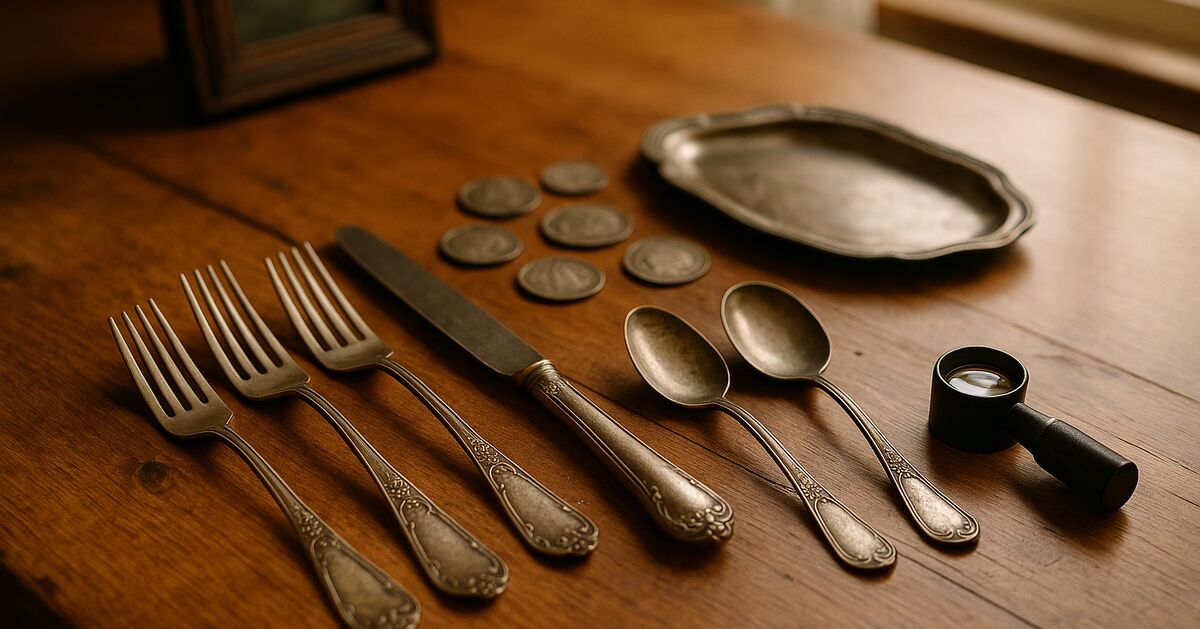
Inherited a box of old silver sitting on the closet shelf, or pulled some scrap pieces out of a drawer and wondered what they might be worth? You are in the right place. This guide covers the whole journey, from the moment you open that box to the moment a payment lands in your hand. It is written from eighteen years of buying precious metals from real people in real situations, so the goal is practical honesty, not reassurance.
Start by understanding what you actually have
Before you weigh anything or call anybody, spend twenty minutes sorting what is in front of you. The reason is simple: different categories of silver sell through completely different channels, attract completely different buyers, and carry completely different price expectations. Lumping everything together and asking "what will you give me for this?" is the fastest way to leave money on the table.
A rough sorting into four piles works well:
- Coins - any coins that look old, especially anything dated before 1965 in the United States
- Flatware and hollowware - spoons, forks, trays, teapots, candlesticks
- Jewelry and chains - rings, bracelets, necklaces
- Bars and rounds - any bullion-style pieces with a weight or purity stamped on them
Each pile has its own guide on this site. For coins specifically, the how to sell silver coins: identify, value, and pick the right buyer post goes deep on date ranges, mint marks, and when collector value exceeds melt value. For jewelry, selling silver jewelry: what it's worth and how to get a fair offer covers the same territory. This post focuses on the overall process and the pitfalls that trip people up across every category.
What actually determines what your silver is worth
Three factors do almost all the work, and they interact in ways that can surprise sellers.
1. Silver content, not silver appearance.
A piece that looks bright and shiny and valuable might be silver plate, which contains almost no actual silver and is worth very little at the scrap counter. A piece that looks dark and tarnished might be solid sterling silver (92.5% pure) or even fine silver, which is worth a great deal. Appearance is a terrible guide. What matters is what is stamped on the piece.
Common purity marks to know:
- 925 or the word Sterling - 92.5% silver, the standard for flatware and jewelry
- 999 or Fine Silver - 99.9% pure, found on modern bullion bars and rounds
- 90% silver - the composition of pre-1965 U.S. dimes, quarters, halves, and dollars
- 800 - common on Continental European pieces, meaning 80% silver
- EP, EPNS, A1, Sheffield Plate - these indicate silver plate, not solid silver
If you cannot find a hallmark, look at the back of a spoon bowl, the inside of a ring shank, or the underside of a tray. Use a loupe or a phone camera in macro mode. If there is truly no mark, a reputable buyer will acid test or XRF scan the piece before making any offer. That is normal and expected.
2. Weight.
Once you know the purity, weight is the other half of the equation. Melt value is simply: weight in troy ounces multiplied by purity percentage multiplied by the spot price of silver. A kitchen scale in grams is fine for a rough estimate, but note that precious metals trade in troy ounces (1 troy oz = 31.1 grams), not the avoirdupois ounces on most postal scales.
Manufacturer and date matter for bullion bars: reputable refiners like Engelhard, Johnson Matthey, and PAMP carry a small premium over spot because the market trusts their assay. Generic bars trade closer to spot, and obscure or unverifiable bars can trade at a discount until a buyer can verify them. For flatware, prominent historical manufacturers like Gorham, Reed and Barton, or Tiffany can add value if the pattern is collectible, but the base melt value is always the floor.
3. The spot price at the moment you sell.
Silver trades around the clock on global commodity markets. The price you see quoted this morning may be different by the afternoon. Buyers set their offers as a percentage of spot, so a buyer offering "90% of spot" gives you a better real-dollar figure when spot is high and a lower figure when spot falls. Watching the spot price for a few days before committing to a sale gives you a feel for whether the market is trending in your favor.
A word on condition and cleaning
Condition matters more for some categories than others. For scrap silver destined for the refiner, a tarnished piece and a polished piece of the same weight and purity pay out identically. Tarnish is silver sulfide on the surface; it does not meaningfully reduce the silver content.
For collectible coins, condition matters enormously, and cleaning can permanently destroy value. A Morgan dollar in high collectible grade can be worth significantly more than its melt value, so have it assessed before assuming it's just scrap. That same coin, once cleaned with a polishing cloth, drops into the "details grade" category in coin grading and loses that premium forever. If you have coins that might carry collector value, do not clean them. Set them aside and have them assessed by a numismatist or a coin dealer before doing anything else.
For sterling flatware and hollowware intended for resale rather than scrap, a gentle polish with a proper silver polish (not a brass or chrome product) can make a set more presentable to a retail buyer. Use cotton gloves when handling finished pieces. One detail worth knowing: sterling silver can develop black spots from contact with latex gloves, eggs, mustard, and certain rubber compounds. That is a chemical reaction, not damage to the metal structure, and it can usually be polished out. But it is a good reason to store clean silver wrapped in acid-free cloth rather than in rubber-banded bundles.
Getting an honest price: how the market actually works
No buyer pays 100% of spot. Every buyer, including the most reputable ones, builds in a margin to cover their operating costs, assay costs, and the time between buying from you and selling into the wholesale market. That margin is not dishonesty; it is economics. What varies is how large that margin is and how transparent the buyer is about it.
A realistic range for scrap sterling or coin silver:
- A local coin dealer or pawn shop may pay a discount to melt value, and the exact percentage varies by location and demand, so it's worth asking directly how they price their offers.
- Mail-in buyers generally pay a percentage of melt value for straightforward scrap, often more for larger lots, but you should ask each buyer for their specific rate before shipping.
- A local refiner (if accessible): often the best return on large quantities of consistent material, but minimum weights usually apply
The frequently asked questions page covers common questions about these percentages in more detail if you want to dig further.
Getting more than one quote is the single most effective thing you can do to improve your outcome. This is not complicated or confrontational: simply visit or contact two or three buyers with a representative sample of what you have. The spread between offers can be surprisingly large, and knowing that spread costs you nothing except a little time.
Evaluating a buyer: what to look for
The buyer's reputation matters more than almost anything else in this transaction. You are handing over an asset, often before you receive payment, and you need to trust that their assessment of weight and purity is honest and that the payment will follow as agreed.
Signs of a trustworthy buyer:
- They weigh your items in front of you, or send you a detailed weight and purity report before making an offer (for mail-in transactions)
- They explain exactly how they calculated the offer, including what percentage of spot they are paying
- They have verifiable reviews and a track record
- They are not rushed or pressured about your decision
- They accept the return of your items if you decline the offer, before payment changes hands
Signs to walk away from:
- An offer with no explanation of how it was calculated
- Pressure to decide immediately or a claim that the price will drop if you walk out
- A buyer who wants to mix your items into a bag with others before you agree to a price
- Any request to hand over your items before you have a clear, written offer in front of you
For perspective on what to watch for across the broader precious metals selling process, the home page's overview section is a good starting point if you are brand new to this.
Mail-in buyers: how to approach them sensibly
Mail-in buyers are a legitimate option, particularly for people in areas with few local dealers, or for large lots that are awkward to transport. The process typically works like this: you send in your silver, the buyer weighs and assays it, makes an offer, and you either accept payment or request your items back.
The critical things to get right:
- Insure the package for full replacement value. The U.S. Postal Service and major couriers offer declared-value insurance. Use it. Standard shipping liability is usually limited, so check the carrier's terms and use declared-value insurance for full replacement value.
- Photograph every piece before shipping. Lay items out on a clean surface, photograph them clearly, and keep the images. This protects you if there is any later dispute about what was sent.
- Ship in a rigid box, not an envelope. Silver pieces can cut through padded mailers. Use a sturdy box with plenty of cushioning.
- Get the buyer's return policy in writing before shipping. A reputable mail-in buyer will tell you clearly: if you decline the offer, they ship your items back at their expense or yours. Know this before you send anything.
When silver is worth more than its melt value
It is worth pausing on this because a lot of inherited silver gets sold purely as scrap when it should not be.
Collectible silver coins can carry significant premiums over melt. Selling junk silver coins: what they're worth and how to get a fair offer covers the pre-1965 category in detail, but the short version is: always check a coin's date and mint mark before treating it as raw scrap. Key-date coins and low-mintage issues can be worth many times their silver content.
Antique and collectible flatware patterns from notable makers also sometimes command a retail premium when sold as a set to someone who is completing or replacing pieces. A full service for twelve in a sought-after Gorham or Tiffany pattern is worth more sold intact to the right buyer than melted. The tradeoff is time: finding that buyer takes longer than walking into a scrap buyer. Whether the premium is worth the wait is a personal judgment.
Sterling hollowware with unusual maker's marks, early American pieces, or Georgian and Victorian British silver can attract collector and dealer interest well above melt. When in doubt about whether something might have collector value, ask a specialist before committing to a scrap price.
Inherited silver: a few specific practical points
When the silver comes from an estate, a few extra considerations come up.
First, be clear on your legal right to sell. If the estate is still in probate, check with the executor or administrator, or an attorney, about who is authorized to sell the items. This is not usually complicated, but it is worth confirming before you proceed, especially for high-value lots.
Second, inherited items sometimes include pieces that look silver but are not: silver plate, nickel silver (no silver content at all), pewter, and pot metal with a silver finish are all common finds. Knowing before you approach a buyer means you will not be surprised or feel embarrassed when they set pieces aside.
Third, the mix in an inherited collection is often uneven. There may be genuine sterling flatware alongside plate, solid coins alongside base-metal souvenirs, and fine jewelry alongside costume pieces. Sorting carefully before getting quotes means you can present each category to the right buyer, rather than taking whatever a single generalist offers for the whole box.
If you have also inherited gold alongside the silver, the practical guide to selling gold covers that side of the process in comparable depth.
The mindset that gets you the best outcome
Selling silver is not complicated, but it rewards patience and a little preparation. Sellers who do best are the ones who take thirty minutes to sort and identify what they have, check the spot price so they know the theoretical ceiling, get at least two quotes, and ask any buyer to show their working before accepting an offer.
The sellers who do worst are the ones in a hurry, or who take the first number offered without any frame of reference. The precious metals market is transparent enough that you can always build a rough melt-value estimate yourself, and any offer that is dramatically below that deserves an explanation.
If you have specific questions that this guide did not answer, the blog has detailed posts on most sub-categories of silver, and the contact page is there if you want to put a question to us directly. Take your time, do the math, and get more than one number. That really is all it takes.
Sources & further reading
- Silver commodity spot price data and market information (Kitco Metals)
- Troy weight and precious metals measurement standards (National Institute of Standards and Technology (NIST))
- Declared value and insurance for USPS Priority Mail shipments (U.S. Postal Service)
- Consumer guidance on buying and selling precious metals (Federal Trade Commission)
Revision history (1)
- Pre-publish editorial QA: 1 flagged, 1 softened; claim audit: 5 claims, 5 rewritten
Claim-by-claim audit (5 checked)
- “A local coin dealer or pawn shop may pay a discount to melt value, and the exact percentage varies by location and demand, so it's worth asking directly how they price their offers…” (rewritten to what the article can stand behind)
- “Mail-in buyers generally pay a percentage of melt value for straightforward scrap, often more for larger lots, but you should ask each buyer for their specific rate before shipping…” (rewritten to what the article can stand behind)
- “Standard shipping liability is usually limited, so check the carrier's terms and use declared-value insurance for full replacement value.” (rewritten to what the article can stand behind)
- “A Morgan dollar in high collectible grade can be worth significantly more than its melt value, so have it assessed before assuming it's just scrap.” (rewritten to what the article can stand behind)
- “If the estate is still in probate, check with the executor or administrator, or an attorney, about who is authorized to sell the items.” (rewritten to what the article can stand behind)