
Selling gold and silver in Dallas: what it's worth and how
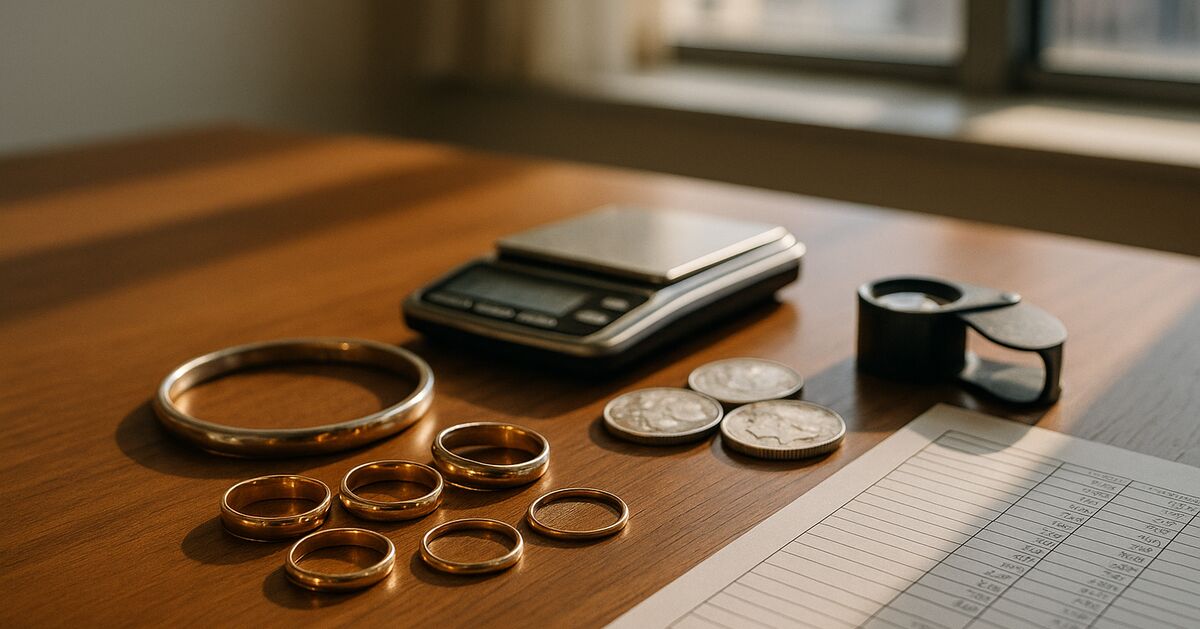
Selling gold or silver in Dallas is not difficult, but getting a genuinely fair price takes a little more than walking into the nearest "we buy gold" shop and taking whatever number appears on a sticky note. The Dallas - Fort Worth metroplex has a dense, competitive market for precious metals, which is actually good news for sellers: competition keeps buyers honest, but only if you know how to use it.
This guide covers the real mechanics of how prices are set, the types of buyers operating in the Dallas market, the mistakes that cost sellers money, and what a fair process actually looks like from start to finish.
What your gold or silver is actually worth before you talk to anyone
The first thing to understand is that "what it's worth" has two distinct meanings in this business, and confusing them is the single most expensive mistake a first-time seller makes.
Spot price is the live, per-troy-ounce market price of pure gold or pure silver, traded on commodity exchanges around the world. It changes by the minute during trading hours. You can look it up on any financial data site right now. This is the theoretical ceiling: you will never receive 100 percent of spot, because buyers have to cover their operating costs and make a margin to stay in business.
Melt value is spot price multiplied by the weight of pure metal actually contained in your item. A 14-karat gold ring is 58.3 percent pure gold; a sterling silver bracelet is 92.5 percent pure silver. A piece that weighs one troy ounce on the scale does not contain one troy ounce of tradeable metal. Once you understand melt value, offers that seemed reasonable start looking very different.
Offers from reputable buyers can vary widely, but many sellers find that reasonable offers tend to fall well below full melt value once a buyer's costs and margin are factored in. Bullion coins in standard condition often command closer to spot because their purity is government-guaranteed and they are easy to resell without refining. Collector coins with numismatic value can trade above melt entirely, though that depends on the specific coin and its grade.
If you have inherited a mixed collection and want a framework for sorting it before you start calling buyers, the guide to selling inherited or scrap silver walks through a practical triage process that applies equally well to gold pieces mixed in with the silver.
How the Dallas buyer landscape actually breaks down
The DFW market has several distinct types of buyers, and they serve different purposes. Knowing which type fits your situation saves time and often money.
Coin dealers and numismatic shops
Coin shops are the right starting point if you have anything that might have collector value: pre-1933 U.S. gold coins, Morgan or Peace silver dollars, rare date issues, or coins in unusually sharp condition. A good coin dealer will evaluate numismatic premium separately from melt value, which means you may receive significantly more than scrap price for the right pieces. The trade-off is that coin dealers tend to be selective: they will pay well for what they want to carry in their inventory and offer closer to generic scrap value for everything else.
Dallas has a healthy concentration of established coin dealers, particularly in the suburbs of Plano, Richardson, and along the Preston Road corridor. The Metroplex Coin Club and similar hobbyist groups sometimes publish dealer recommendations, which is a useful starting point for vetting shops before you visit.
Pawn shops
Pawn shops are widely available across Dallas, from Oak Cliff to Garland to Irving, and they are a genuinely convenient option if you need cash the same day. Pawn shops carry overhead for a broad retail operation, so their offers on precious metals may often be lower than what a dedicated precious-metals buyer offers, though this can vary by shop. That does not make them dishonest, just expensive for the seller. If convenience is the priority and the difference in payout does not matter much given the quantity of metal you have, a pawn shop can work fine. For larger quantities or higher-value pieces, the difference in offer price is worth the extra effort of finding a specialist buyer.
Precious metals dealers and refinery buyers
Several dedicated precious-metals buyers operate in the Dallas area, including buyers who deal directly with refiners. These buyers can often offer better percentages of melt value than pawn shops because their cost structure is leaner and their volume is higher. They tend to be more comfortable with unusual items: dental gold, scrap jewelry lots, old silverware sets, or industrial silver. If you have a sizeable quantity to sell, this category of buyer is usually worth prioritizing.
Online and mail-in buyers
The online channel is worth understanding even if you plan to sell locally. A reputable mail-in buyer uses an independent third-party laboratory to weigh and assay your items, which removes any conflict of interest from the testing process. You receive a written offer before you commit, and if you decline, your items are returned. The process can take roughly several days to a couple of weeks from shipping to receiving payment, depending on the buyer.
The main practical advantage is price competition: if a local Dallas buyer knows you have a credible online offer in hand, they have a reason to sharpen their number. Getting one mail-in quote costs you nothing but a few days, and it gives you a useful benchmark. For the specifics of how the shipping and insurance process works safely, the frequently asked questions section covers the logistics in plain terms.
The factors that move your offer up or down
Understanding what a buyer considers when making an offer helps you anticipate the number and spot when something does not add up.
Purity. The higher the karat (for gold) or the cleaner the silver content, the higher the melt value. Common gold purities in jewelry range from 10 karat (41.7% pure) through 14 karat (58.3%), 18 karat (75%), and 22 karat (91.7%) up to 24 karat (99.9%) for bullion. Sterling silver is 92.5% pure. Lower purities simply contain less metal per gram, so the melt value is proportionally lower.
Weight. Buyers work in troy ounces (31.1 grams each), not the avoirdupois ounces used for everyday weights. One avoirdupois ounce is 28.35 grams, meaningfully less than a troy ounce. A buyer who quotes you per-gram is easier to verify because grams are grams in any system, but always confirm which ounce system is being used if the quote is per-ounce.
Market volatility. When spot prices are moving rapidly in either direction, buyers tend to widen their spread (offer a lower percentage of spot) to protect themselves against the risk of holding metal whose value may shift before they can sell it. This is not necessarily dishonest; it is just how the risk calculus works. Selling into a calm, stable market tends to produce better percentage offers than selling during a sharp run-up or a sudden drop.
Item type and condition. Bullion coins and bars in standard condition are easy for buyers to verify and easy to resell without any processing, so they attract the best offers. Jewelry requires testing and often refining, which adds cost. Items with heavy plating, solder, or non-metal components (stones, clasps, weighted handles) introduce complications that buyers price into their offers. If you are also sorting through coin lots, the guide to selling silver dollars explains how buyer type and coin condition interact in detail.
Quantity. Larger lots often attract better percentage offers from buyers because the overhead per ounce goes down. If you have a small amount, that is fine; just manage your expectations accordingly.
Testing: what buyers do and what you can do first
Any honest buyer will test your items before making a final offer. The main methods in use are:
- Acid testing: a small scratch on a touchstone, a drop of nitric acid at a specific concentration, and a color reaction that indicates purity class. Fast and inexpensive, but not highly precise.
- Electronic testing: a handheld device that passes a small current through the metal and reads conductivity as a purity indicator. Useful for quick triage, but subject to interference from plating.
- XRF (X-ray fluorescence) analysis: a gun-shaped device that reads the elemental composition of metal without damaging it. More accurate than acid or electronic tests and becoming standard among serious buyers.
- Fire assay: the most accurate method, used by refineries. A small sample is melted and chemically analyzed. Overkill for most consumer lots, but used for large transactions.
You can do basic home tests before you go: a magnet test eliminates ferrous fakes (real gold and silver are not magnetic), and a hallmark search under a loupe tells you a lot about declared purity. Hallmarks on gold jewelry often appear on the inner shank; on silver flatware, they appear on the back of the handle or bowl. Understanding what the markings mean before you walk in gives you standing to question a buyer's assessment.
Practical steps to get the best offer in Dallas
Here is the process that actually produces better results, laid out in sequence.
1. Sort and weigh at home. Group items by apparent metal type and karat if you can read the hallmarks. A postal or kitchen scale in grams gives you a starting weight; remember that buyer scales may differ slightly and stones/settings do not contribute melt value. Expect some adjustments.
2. Look up spot price the morning you plan to sell. Knowing where spot sits when you walk in means you can sanity-check any offer. If a buyer quotes you a price per gram, multiply by the grams you have, then divide by the spot melt value of those grams. The result is the percentage of melt value on offer. Anything below 70 percent for common jewelry deserves a follow-up question.
3. Get at least two or three offers. In a metro the size of Dallas - Fort Worth, there is no reason to accept the first number you hear. Coin shops, dedicated metal buyers, and one online quote give you a useful triangle of comparison. Buyers who know you are comparison-shopping frequently improve their initial offer.
4. Ask about the testing method. A buyer who uses XRF or a third-party laboratory is making a more defensible assessment than one relying only on acid tests. It matters less for obvious bullion and more for mixed lots of uncertain karat.
5. Get the offer in writing before you hand anything over. Any reputable buyer will give you a written or printed offer showing the weight, purity, spot price used, their percentage of melt, and the resulting dollar amount. If a buyer resists putting the offer in writing, that is a signal worth heeding.
6. Understand the payment method. Check, electronic transfer, and cash are all standard. Some buyers impose a small fee for wire transfers. Cash is convenient for small transactions; for larger ones, a paper trail in the form of a check or transfer record is worth having.
If you are also working through gold pieces alongside the silver, the guide to selling inherited or scrap gold covers the gold-specific details, including how to handle items of uncertain karat and what to expect from refinery-connected buyers.
Common traps that cost Dallas sellers money
A few patterns come up again and again in seller accounts and forum discussions that are worth naming directly.
The "we test for free" line used as a switch. A buyer offers to test your items, then returns with a lower purity reading than your hallmarks suggest. This happens, and sometimes it is legitimate (old jewelry is sometimes mis-stamped or has been repaired with lower-karat solder). But it also happens as a pressure tactic. If you get a purity reading that contradicts clear hallmarks, ask for an XRF test or seek a second opinion before accepting.
Pressure to decide on the spot. A reputable buyer understands that you may want to compare offers. Anyone who insists the price is only good for the next ten minutes is using a sales tactic, not reflecting a genuine market constraint. Spot price moves, but not fast enough to justify a ten-minute deadline on a normal trading day.
Confusing troy and avoirdupois ounces. As noted above, the difference is about 10 percent. Sellers who do not know about troy ounces sometimes accept an offer that appears reasonable per-ounce but is actually low because the buyer is quoting in troy while the seller is mentally calculating in avoirdupois.
Ignoring the melt math on silver flatware. Sterling flatware in Dallas estates is common, particularly from mid-century households. A full canteen or service for twelve can represent a meaningful amount of silver, but the math only works if the flatware is genuinely sterling (stamped "925" or "Sterling") rather than silver plate. Silver plate has a thin wash of silver over a base metal core and has no meaningful melt value. Confusing the two is an honest mistake, but it leads to unrealistic expectations that end in disappointment when the buyer tests the pieces.
Shipping your items if you choose an online buyer
If you decide to use an online mail-in buyer rather than, or in addition to, a local Dallas shop, the shipping process matters. Use USPS Priority Mail with the declared value insurance the buyer provides, or purchase third-party insurance if the declared value of your package exceeds the standard postal limit. Never put words like "gold," "silver," or "jewelry" on the outside of the package. Use a plain box, double-taped, with no branding that signals the contents. Keep your tracking number and photo-document everything you pack before sealing the box.
A detailed breakdown of what to expect when selling across the broader precious metals landscape, including how online buyers and local dealers compare on payout, is available in the practical guide to selling gold and silver at the best price over on the blog.
A note on timing
People often ask whether they should wait for spot to go higher before selling. The honest answer is that nobody reliably times commodity markets, including people who spend their careers in them. If you need liquidity, sell when you need it. If you are not in a hurry, there is nothing wrong with waiting a few weeks to see where prices settle, but trying to call the top of a silver or gold rally is a speculative exercise, not a strategy.
What you can control is the percentage of melt value you capture through careful buyer selection, and that effort reliably returns more money than most timing attempts. A seller who gets 88 percent of melt on the day they sell often does better than a seller who waits three months hoping for a higher spot price and then accepts 72 percent at the first shop they visit.
The Dallas market is competitive enough to reward the extra effort of shopping around. Take a couple of hours, get three offers, ask the right questions, and you will almost certainly walk away with a significantly better outcome than the first-offer path. That is the whole playbook, and it works.
Sources & further reading
- Gold and precious metals commodity market data (U.S. Commodity Futures Trading Commission)
- Troy weight and precious metals measurement standards (National Institute of Standards and Technology (NIST))
- Jewelers Vigilance Committee: consumer guidance on jewelry purchasing and selling (Jewelers Vigilance Committee)
- Consumer guidance on selling gold and precious metals (U.S. Federal Trade Commission)
Revision history (1)
- Pre-publish editorial QA: 2 flagged, 2 softened; claim audit: 3 claims, 3 rewritten
Claim-by-claim audit (3 checked)
- “Offers from reputable buyers can vary widely, but many sellers find that reasonable offers tend to fall well below full melt value once a buyer's costs and margin are factored in.” (rewritten to what the article can stand behind)
- “Pawn shops carry overhead for a broad retail operation, so their offers on precious metals may often be lower than what a dedicated precious-metals buyer offers, though this can va…” (rewritten to what the article can stand behind)
- “The process can take roughly several days to a couple of weeks from shipping to receiving payment, depending on the buyer.” (rewritten to what the article can stand behind)