
Gold and silver exchange: a practical guide for sellers of
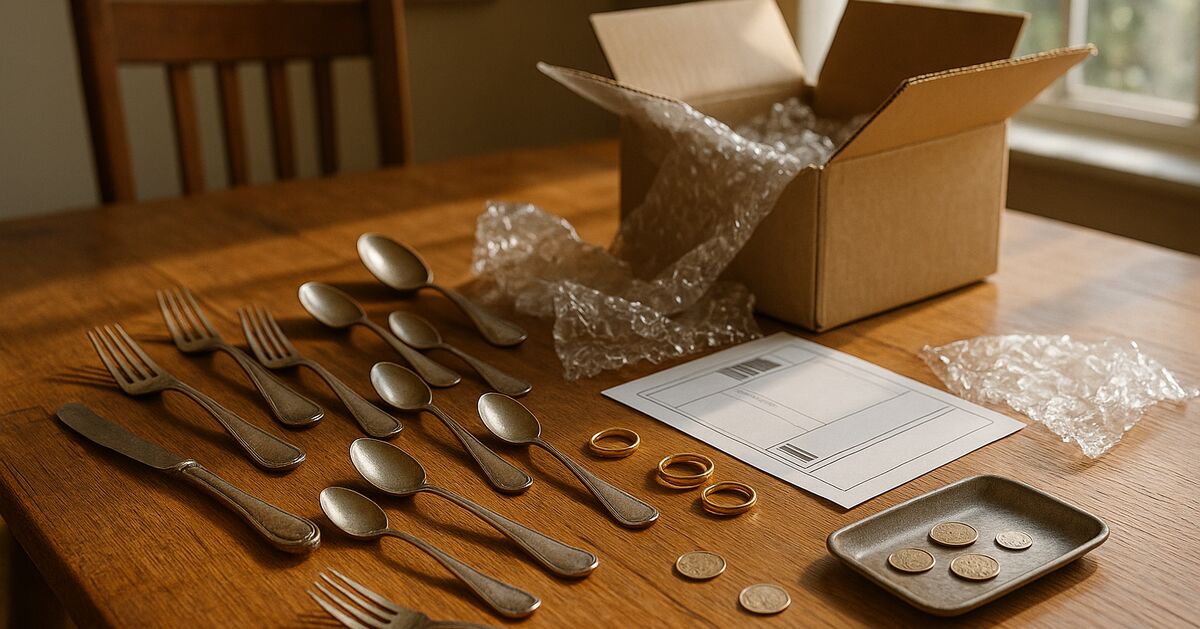
Somewhere in the back of a drawer, or the bottom of a box from an estate, there is a bracelet, a tray, a handful of mismatched rings, or a set of flatware wrapped in tarnished cloth. You suspect it is worth something. You are probably right. What you may not know yet is how the process of exchanging it for cash actually works, and where the honest path through it lies.
This guide covers the whole journey: understanding what you have, preparing it for a buyer, choosing the right channel, shipping it safely, and knowing what a fair offer looks like when it arrives. I ran a mail-in precious metals buying business for eighteen years. The advice here is drawn from that experience.
Start by understanding what you are actually selling
Before you contact any buyer, spend thirty minutes sorting what you have into broad categories. The reason matters: different items are valued on completely different bases, and mixing them up in your mind (or in a single envelope) leads to confusion later.
Sterling silver carries a hallmark, typically "925" or the word "Sterling." This includes flatware, hollowware, tea sets, trays, candlesticks, and jewelry. Its value is almost entirely tied to weight and the silver spot price. A heavy sterling tray from a thrift store is worth more at melt than a delicate antique salt cellar, because weight is what the refiner pays for.
Silver-plated items look like sterling but are a base metal (usually copper or brass) with a thin silver coating. Plated pieces carry marks like "EPNS," "Silver Plate," "Sheffield Plate," or no precious metal mark at all. Their scrap value is essentially zero in the silver sense, though some pieces have antique or decorative value worth investigating separately.
Gold jewelry is valued by weight and karat. The karat stamp (10K, 14K, 18K, 22K, 24K) tells you what fraction of the piece is pure gold. A 14K piece is 58.5% gold by weight; an 18K piece is 75%. Heavier pieces of higher karat are worth significantly more per gram.
Coins are a separate world. Junk silver (pre-1965 US coins), silver dollars, gold coins, and bullion coins all have melt value, but many carry additional numismatic (collector) value that a raw melt offer ignores entirely. If you have coins, research them before selling them as scrap. Our post on finding and selling silver: a practical field guide for new sellers walks through how to identify those extra-value pieces.
Bullion bars and rounds are straightforward: they exist purely as metal, and buyers treat them that way. Weight and purity are stamped directly on the piece.
How the mail-in exchange process works
The mail-in model exists because good buyers - ones who pay fair prices - rarely operate out of your neighborhood strip mall. The math of running a high-volume, low-margin precious metals operation demands efficiency, and efficiency means centralized testing and purchasing. Here is how a legitimate process flows:
Step one: request a shipping label. A reputable buyer provides a prepaid, trackable Priority Mail label at no cost to you. You print it at home. There is no reason to ever pay for outbound shipping to a precious metals buyer.
Step two: pack carefully. Wrap each item individually in bubble wrap or cloth. Put heavier pieces at the bottom. Fill empty space with packing material so nothing shifts. Photograph everything before you seal the box, and make a written list with rough descriptions. This protects you if there is ever a dispute.
Step three: check the insurance. USPS Priority Mail includes up to $100 of coverage by default. Many buyers arrange additional coverage, often up to $5,000, through their own carrier account or a third-party insurer. Read the buyer's terms before you ship and confirm in writing what is covered. Some carriers limit or exclude coverage for coins and bullion, so if you have coins, ask the buyer specifically how they are handled and what coverage applies.
Step four: drop it off. At a Post Office counter, not a blue collection box. Get a receipt. Keep your tracking number somewhere you can find it.
Step five: wait for the offer. The package goes to the buyer's testing facility. A qualified assayer weighs the pieces, tests metal purity (typically by X-ray fluorescence or acid testing for jewelry, and by visual / weight checks for stamped bullion), and reports findings. A legitimate buyer turns this around fast, usually within 24 hours of receiving the package. You receive the offer by email, with a breakdown of what was tested and how the offer was calculated.
Step six: accept or decline. If you accept, payment goes out promptly. If you decline, your items are returned at the buyer's expense. Any buyer who charges you a "return shipping fee" or who delays returns indefinitely is a red flag worth taking seriously.
What fair payment actually looks like
The spot price of silver and gold changes by the minute. A buyer's offer is always a percentage of that spot price, not the spot price itself, because the buyer has costs: testing, insurance, overhead, and a margin for their business. The gap between spot and offer is not automatically unfair. What matters is how large that gap is.
For sterling silver flatware and hollowware, a fair buyer pays a meaningful percentage of the silver melt value (weight in troy ounces of pure silver, multiplied by the spot price). If a buyer's offer is dramatically below what you calculated yourself using a basic silver calculator and the day's spot price, that gap deserves an explanation.
For gold jewelry, the same logic applies. Know the karat, weigh the pieces if you can, look up the spot price, and calculate the rough melt value before any offer arrives. Our guide on selling inherited or scrap precious metal: tips that actually work walks through this calculation in plain detail.
A note on weight units: buyers and refiners work in troy ounces, not standard (avoirdupois) ounces. One troy ounce equals approximately 31.1 grams, while a standard ounce is 28.35 grams. If you weigh your silver on a kitchen scale and compare it to a quoted price per troy ounce, the math will not line up unless you convert correctly. For a full explanation of why this matters, see our article on weight units explained: Troy, grams, and pennyweight for silver sellers.
How to compare buyers before you commit
A single offer tells you nothing. A set of offers tells you a great deal.
Before committing to any buyer, collect at least two or three offers. Some buyers will quote you based on a description and photographs without requiring you to ship first. Others will quote only after they have the items in hand. Either model can be legitimate, but the mail-in-first model requires more trust, which is exactly why vetting the buyer upfront matters.
Things to check:
- BBB standing. Look for an accredited business with a clean complaint history. A business that handles thousands of transactions and has never had a resolved complaint is genuinely rare; note it.
- Clear return policy. It must be in writing, free of charge, and unconditional if you decline the offer.
- Transparent pricing. The best buyers publish what they pay as a percentage of spot, or at least publish a live price table you can check. Opacity here is a warning sign.
- Verifiable testing process. An independent third-party testing lab is a meaningful safeguard. It separates the person making the offer from the person doing the testing, which keeps both parties honest.
- Real contact information. A phone number that connects to a human, an email that gets a real reply, and a physical address for the testing facility are all reasonable things to expect from a legitimate operation.
If you are new to this world and not sure what the full landscape of buyer types looks like, our broader coverage on the how to sell silver home page. walks through the differences between mail-in buyers, coin dealers, pawnbrokers, and refiners.
What gets sold, and what gets sorted out first
Not everything that looks like silver or gold is worth selling at melt value. A few things to sort before you send anything:
Costume jewelry often looks like gold or silver but contains no precious metal at all. If there is no hallmark and a magnet attracts the piece, it is almost certainly base metal.
Gold-filled and gold-plated items have very thin gold layers over base metal. The scrap value is low, but it is not zero. Ask the buyer how they handle these before you include them.
Antique or collectible pieces with maker's marks, unusual designs, or historical provenance may be worth more to a specialist than as scrap. A Georg Jensen sterling piece, a Tiffany & Co. bowl, or a Victorian-era presentation spoon with original engraving can be worth multiples of melt value to the right buyer. When in doubt, photograph the hallmarks and ask a specialist before sending to a scrap buyer. Our article on recycling precious metals: a practical guide to scrap and inherited silver and gold covers exactly how to make this call.
Weighted sterling pieces are a common trap. Candlesticks, knife handles, and some hollowware items are often filled with pitch, plaster, or resin to add stability. The sterling shell is genuine, but the overall weight includes the filler. A good buyer tests and weighs only the metal portion. Ask about this process specifically if you have candlesticks or handled items.
Common mistakes that cost sellers money
A pattern that comes up repeatedly among first-time sellers is accepting the first offer received without any basis for comparison. The precious metals market is competitive. You have leverage, and you should use it.
Another frequent problem: selling coins as scrap without checking their collector value first. A bag of pre-1965 US dimes is junk silver, and selling it at melt is perfectly reasonable. A single 1916-D Mercury dime in the same bag is worth many times its silver content to a coin collector. Sort before you sell.
Cleaning coins before selling is a separate issue worth a firm warning: do not do it. Cleaning a coin, even a genuinely old and rare one, can significantly reduce its collector value, so leave coins exactly as you found them. Leave coins exactly as you found them.
And a practical note on timing: silver and gold prices move daily, sometimes significantly. If you are selling a meaningful quantity, it is worth watching spot prices for a week or two before committing to a buyer. Prices are public and easy to track. Selling into a rising market, or at least not into a sharp dip, can meaningfully affect your return.
After the offer: what payment looks like
Most mail-in buyers pay by check. Some offer ACH bank transfer or PayPal. Check the options before you ship, because payment timing varies. A check mailed from a buyer in another state may take several days to arrive. ACH is faster. If speed matters to you, ask about it upfront.
Keep a record of what you sold, for how much, and on what date. If the total proceeds are above certain thresholds, the sale may be reportable for tax purposes depending on where you live. The IRS treats precious metals as collectibles. A tax advisor can tell you how the proceeds from your specific situation are treated.
A final word on trust
The cash-for-gold and cash-for-silver industry has attracted its share of bad actors over the years. Mailers that send a check and make return nearly impossible. Buyers who quote a price by phone and pay something different once they have your items. Operations with no real testing process and no real accountability.
The antidote is simple: do your homework before anything leaves your hands. Verify the buyer's reputation, understand the return policy, know the rough value of what you have, and get more than one offer. None of this is complicated, and all of it is worth doing.
For a deeper look at the questions worth asking before you accept any offer, and the red flags worth walking away from, browse through the frequently asked questions section. It covers the most common sticking points sellers run into, with straight answers.
Inherited silver and scrap gold sitting in a drawer is not doing anyone any good. With a bit of preparation and a careful choice of buyer, turning it into cash is genuinely straightforward. Take your time, do the comparison work, and the process tends to go well.
Sources & further reading
- USPS Priority Mail insurance and coverage terms (U.S. Postal Service)
- IRS guidance on collectibles and capital gains (Publication 550) (Internal Revenue Service)
- Troy weight and precious metals measurement standards (National Institute of Standards and Technology (NIST))
- Better Business Bureau: how to check business accreditation and complaints (Better Business Bureau)
- FTC consumer guidance on selling gold and jewelry (Federal Trade Commission)
Revision history (1)
- Pre-publish editorial QA: clean; claim audit: 7 claims, 2 rewritten
Claim-by-claim audit (7 checked)
- “USPS Priority Mail includes up to $100 of coverage by default.” (cited → usps.com)
- “Some carriers limit or exclude coverage for coins and bullion, so if you have coins, ask the buyer specifically how they are handled and what coverage applies.” (rewritten to what the article can stand behind)
- “A 14K piece is 58.5% gold by weight; an 18K piece is 75%.” (reasoning shown in the article)
- “One troy ounce equals approximately 31.1 grams, while a standard ounce is 28.35 grams.” (cited → nist.gov)
- “The IRS treats precious metals as collectibles.” (cited → irs.gov)
- “If the total proceeds are above certain thresholds, the sale may be reportable for tax purposes depending on where you live.” (cited → irs.gov)
- “Cleaning a coin, even a genuinely old and rare one, can significantly reduce its collector value, so leave coins exactly as you found them.” (rewritten to what the article can stand behind)