
Six gold investing truths every seller needs to know first
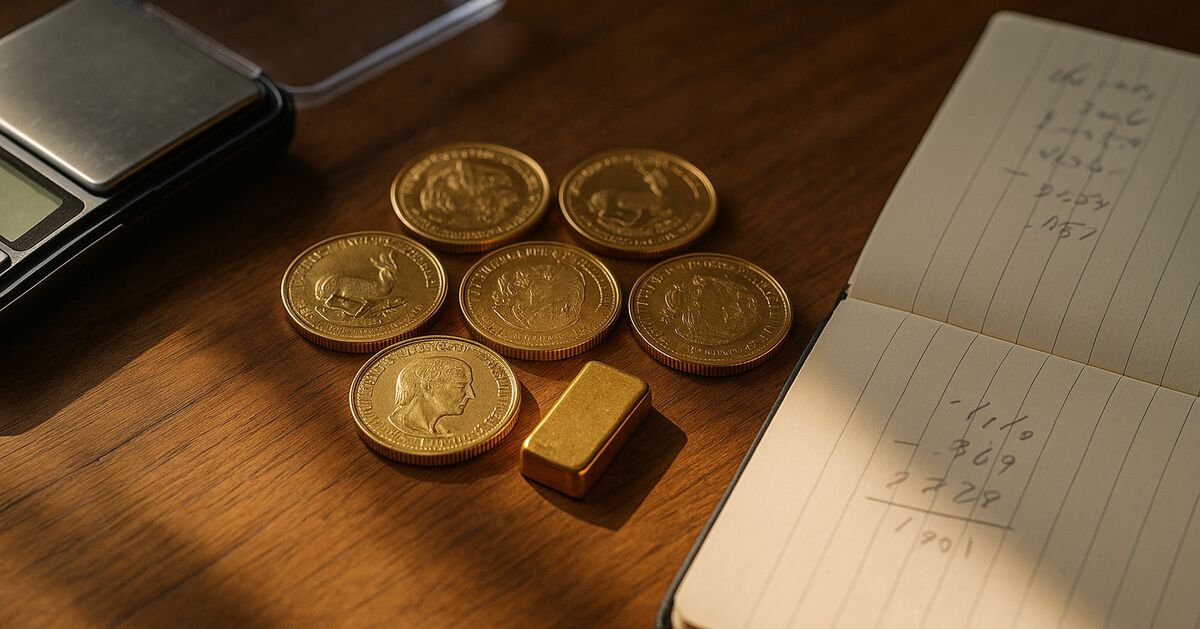
Eighteen years behind a buying desk teaches you something unexpected: the sellers who get the best prices are often the ones who understood gold investing before they ever decided to sell. They knew what they owned, why it had value, and what a fair offer looked like. The sellers who got stung were the ones who never thought about any of that until the day they needed cash.
This post is written for you if you are holding gold and thinking about selling it. The "investment tips" framing is deliberate. Understanding how buyers think, and how gold is supposed to work as an asset, puts you in a far stronger position across the table.
1. Know why you bought it, because the reason shapes what you should expect when you sell
Gold means different things to different people. Some buyers hold it as a hedge against inflation. Others treat it as a crisis asset, something to own when they trust nothing else. A smaller group buys specific coins because they genuinely enjoy the history and craft. And some people inherit gold and have no idea why it is in the drawer.
Each of those situations produces different metal, in different forms, with different buyer pools and different price dynamics.
If you bought bullion specifically to protect wealth over the long term, you probably held it long enough that the metal has appreciated. Your sale is straightforward: weight, purity, live spot, done. If you bought rare or semi-numismatic coins partly for their collector appeal, melt value is only the floor, not the ceiling. If you inherited a mixed box of gold jewelry, chains, and broken pieces, you are essentially selling scrap, and the calculations are different again.
Before you contact a single buyer, be clear about what you are holding and why it was bought. That clarity stops you from undervaluing a collectible coin by treating it as scrap, or from overvaluing a common coin by assuming it has collector premium it does not actually carry.
Our guide to selling inherited or scrap precious metal walks through the sorting and identification step in detail, and it is worth reading before you get your first quote.
2. Understand the difference between physical gold and paper gold, because buyers treat them completely differently
When gold was sold to retail investors, it typically came in two forms: direct physical ownership (coins and bars you hold in your hand) or indirect exposure through certificates, accounts, and exchange-traded products.
As a seller, this distinction matters enormously. Physical gold, coins, bars, and jewelry, can be sold to a wide range of buyers: coin dealers, bullion traders, online refiners, pawn shops, jewelers. Competition between those buyers is your friend, because you can shop the offer.
Paper gold, ETF shares, digital accounts, and allocated certificates, is sold back through the platform that issued it or through a brokerage. You do not negotiate that price at all; the market gives you what it gives you on that day.
If you are selling physical metal, the competitive market is genuinely on your side. Getting multiple offers is not just advisable; it is the single most reliable way to improve your outcome. Many first-time sellers make the mistake of contacting only one buyer and accepting the first number offered. That number is usually not the best available.
The frequently asked questions page covers the mechanics of getting multiple quotes and what to do when offers differ significantly.
3. Timing matters less than you think, but condition and form matter more than almost anyone expects
A piece of advice that circulated widely in investment circles was to buy gold when prices dip. For a seller, the instinct flips: hold on if the market is weak, sell when prices are strong. That logic is not wrong, but it is only part of the picture.
The spot price of gold is public, updated by the second, and every serious buyer in the market has access to the same number. What varies between buyers is not the spot price they see; it is the percentage of spot they are willing to pay you. A buyer offering 92% of spot is categorically better than one offering 80%, regardless of where the gold price sits on any given day.
This means that hunting the right buyer matters at least as much as hunting the right day to sell. A well-timed sale to a low-paying buyer still leaves money on the table. An "ordinary" market day with a competitive buyer can easily outperform a price peak with a poor one.
Form and condition also move the final number in ways that surprise sellers. Gold bars from recognized refiners with assay cards still attached command better offers than bars without documentation, because the buyer's verification step is simpler. Coins in genuine uncirculated condition may carry numismatic value above melt. Heavily alloyed gold jewelry with solder repairs, plating, or silver fill is discounted because the refining cost is higher. None of this is unfair; it reflects real costs. But knowing it in advance prevents unpleasant surprises.
4. Gold futures and complex products are irrelevant to you as a physical seller, but understanding them explains buyer behavior
Investors are sometimes encouraged to trade gold futures as a way to get leveraged exposure to price moves. As a seller of physical metal, futures are not your concern directly. But understanding that futures markets exist, and that buyers use them to hedge their positions, explains something that confuses a lot of sellers: why a buyer's offer sometimes seems lower on volatile days even when spot is high.
When gold prices are swinging sharply, a buyer who pays you a fixed price today is taking on risk between now and the moment they can move your metal. They hedge that risk using futures or forward contracts, and the cost of that hedge rises when volatility rises. So the buyer's margin shrinks, and they protect it by shading their offer slightly lower.
This is not an excuse for a bad offer; it is a real market mechanism. Knowing it means you understand why the calmest market conditions often produce the most straightforward transactions, and why a buyer who seems low on a volatile day may come back to a better number when things settle.
5. Track the live gold price before you take any meeting or call
This sounds obvious, but a surprising number of sellers walk into a conversation without having looked at the gold price that morning. The result is that they have no frame of reference when a buyer quotes a price or offers a percentage of spot.
Gold spot prices are published continuously on financial data sites during trading hours and are easy to find. Check the price on the morning you are getting quotes, and check it again if a day or two passes before you finalize. The price can move meaningfully in that window.
More importantly, learn to convert spot price into a per-gram or per-pennyweight figure, because that is the unit many buyers use when they weigh your metal and make an offer. If you are not confident with the unit conversions, our post on weight units explained for silver sellers covers the exact same math for gold: troy ounces, grams, and pennyweight all show up in gold transactions, and knowing which unit a buyer is using stops a lot of confusion.
Once you know today's spot price per gram, you can do a back-of-envelope calculation: weight in grams multiplied by purity (a 0.750 hallmark means 75% pure gold) multiplied by spot price per gram gives you melt value. A reputable buyer's offer should be a sensible fraction of that number. If the arithmetic does not come close, ask the buyer to walk you through their calculation.
6. Find buyers who can demonstrate transparency, not just buyers who claim trustworthiness
The original advice here was to find reputable brokers in your area. That instinct is sound, but "reputable" needs to be defined by evidence, not by how professional a shop looks or how confidently a buyer talks.
Transparent buyers will tell you the spot price they are working from, show you the scale reading, explain the purity test they used, and state clearly what percentage of melt value they are offering. Buyers who give you a flat cash number without explaining the calculation are not necessarily dishonest, but they are making it impossible for you to verify whether the offer is fair.
The seller-side version of due diligence includes checking independent review platforms, asking for the calculation to be shown step by step, and, critically, getting at least one other offer to use as a comparison. You are not obligated to accept the first number anyone gives you.
It is also worth understanding that gold testing methods vary. X-ray fluorescence (XRF) guns are accurate and non-destructive. Acid testing is generally considered cheaper but less precise than XRF, and it can leave a small mark on the item. Some buyers still use specific gravity. If you are uncertain whether a buyer is testing correctly, our guide on testing silver and gold at home explains how these methods work and what their limitations are, so you can have an informed conversation.
For a broader look at the warning signs that a sale is going wrong before it concludes, the post on common complaints when selling silver and gold is worth reading in full.
Putting it together: what a prepared seller actually does
A seller who has absorbed these six points walks into any transaction with a clear head. They know what form their gold is in and which buyer types are relevant. They have looked up spot price that morning. They have done the melt-value arithmetic themselves. They have contacted more than one buyer. They know what questions to ask, and they know what a reasonable percentage-of-spot offer looks like for the type of metal they have.
That preparation does not guarantee a perfect outcome, and the market will always move in ways nobody predicts. But it eliminates the most common and costly mistakes: selling to the only buyer you spoke to, not knowing the spot price during the negotiation, misidentifying what you have, or accepting a flat number without understanding the calculation behind it.
Gold's value as an asset comes from the fact that it is universally recognized, easily verified, and traded in liquid markets around the world. All of those features work in your favor as a seller, but only if you show up informed enough to use them.
If you are still working out the basics of what you have before you start approaching buyers, the home page has a clear overview of the selling process and links to more detailed guides on specific types of metal. And if something in your situation is unusual enough that you want a second opinion on how to handle it, the contact page is there.
The sellers who do best are the ones who treat the sale the way the original buyer treated the purchase: deliberately, with research done first, and with a clear idea of what a good outcome looks like.
Sources & further reading
- Gold as a store of value and inflation hedge overview (World Gold Council)
- Commodity futures trading and market regulation (U.S. Commodity Futures Trading Commission)
- Consumer guidance on precious metals investments (U.S. Federal Trade Commission)
- XRF and precious metals assay methodology (National Institute of Standards and Technology (NIST))
- Weights and measures standards for commercial transactions (National Institute of Standards and Technology (NIST))
Revision history (1)
- Pre-publish editorial QA: 3 flagged, 3 softened; claim audit: 2 claims, 2 rewritten
Claim-by-claim audit (2 checked)
- “Many first-time sellers make the mistake of contacting only one buyer and accepting the first number offered.” (rewritten to what the article can stand behind)
- “Acid testing is generally considered cheaper but less precise than XRF, and it can leave a small mark on the item.” (rewritten to what the article can stand behind)