
Selling silver cufflinks and small personal items
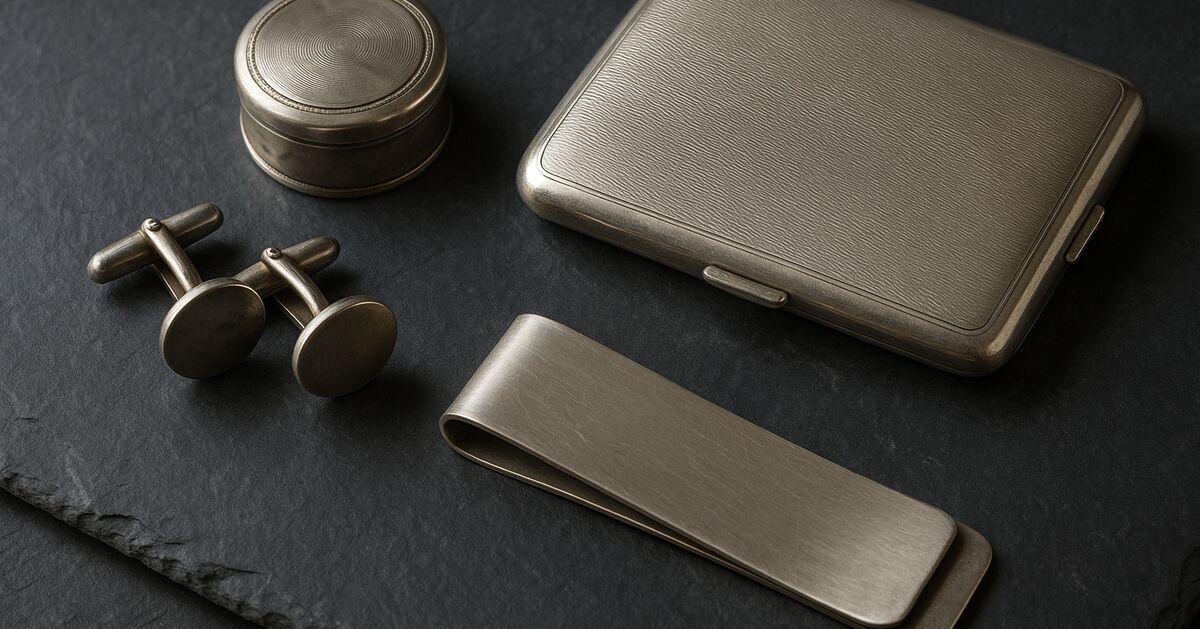
Silver cufflinks sit in a drawer for years, usually in pairs, sometimes in a little velvet pouch, occasionally loose in a box of estate odds and ends. They feel almost too small to bother selling. That instinct costs sellers real money.
Small silver personal items, cufflinks, money clips, pill boxes, cigarette cases, card cases, thimbles, even tie clips, occupy a genuinely interesting corner of the silver market. They are not flatware, so the usual flatware rules do not apply. They are not coins, so the coin dealer calculus does not fit either. Understanding exactly what they are, what moves their value, and who will pay the most for them is the difference between getting scrap price and getting two or three times that.
This guide walks through the whole picture: how to figure out what you have, what realistic values look like, and how to match your items to the right buyer.
First: Is it actually silver?
This matters more with small personal items than with almost any other category, because the mix of genuine silver and silver-plated base metal in this segment is enormous. Costume jewelers, department stores, and gift manufacturers have been selling silver-plated cufflinks and pill boxes for well over a century. Many are beautiful objects. Almost none are worth melting.
Look for hallmarks. On British pieces, you are looking for the lion passant (sterling), a date letter, an assay office mark, and the maker's mark, typically stamped on the inside of a pill box lid, on the back bar of a cufflink, or inside a card case. American sterling pieces should carry "Sterling" or "925." German pieces often carry "800" or "835." "EPNS," "A1," "Sheffield Plate," or no mark at all typically signals silver plate.
A loupe (a small magnifying glass, 10x is standard) helps enormously here. If you cannot find a clear hallmark, an acid test kit or a visit to a local coin and bullion dealer can confirm the metal in a few minutes. Do not guess: the questions to ask before you accept an offer on silver start with knowing exactly what you have.
The two value tracks for small silver
Every small silver personal item sits somewhere on a spectrum between pure melt value and collector or decorative value. Understanding which track your pieces are on shapes everything else.
Melt value is the floor. A pair of plain sterling cufflinks weighing 15 grams total contains roughly 14.5 grams of fine silver (sterling is 92.5% pure). At any given spot price, that is a calculable number. Buyers who process scrap generally offer less than full spot value for retail-weight material, with the percentage depending on market conditions and buyer type. The exact percentage shifts with market conditions and buyer type, as explained in depth on the home page.
Collector and decorative value is the ceiling, and for small personal items it can be considerably higher than melt. A plain pair of cufflinks with no maker of note and no design appeal might sell for melt. A pair with a recognizable maker's mark (Tiffany, Cartier, Georg Jensen, Asprey, Mappin & Webb), a sought-after motif (sporting subjects, Art Nouveau enamel, heraldic engraving), or a compelling date from a specific period can sell for multiples of melt on the secondary market. The same logic applies to pill boxes, card cases, and cigarette cases.
The practical implication: never sell a small silver item as scrap before you have spent twenty minutes confirming there is no collector story to it.
What actually moves the price up or down
Several factors push a small silver item toward one end of the spectrum or the other.
Maker and retailer. A hallmark is one thing; a retailer's cartouche is another. A plain silver pill box is worth its silver. A plain silver pill box engraved with "Tiffany & Co." on the lid is worth considerably more to a collector or a specialist dealer, even at the same weight.
Design period and style. Arts and Crafts, Art Nouveau, Art Deco, and Edwardian pieces in good condition attract buyers who collect silver specifically from those periods. A cufflink set with a stylized enamel thistle from 1905 is not competing with scrap; it is competing in a decorative arts market.
Condition. Small personal items see heavy use. Cufflink shanks get bent or replaced. Pill box hinges crack. Card cases get dropped. Pristine condition commands a premium. Heavy wear, deep scratches, or a replaced part (especially a hinge or clasp) pulls the value toward melt. Patina is fine; damage is not.
Completeness. Pairs sell better than singles. A matched set of six cufflinks in an original fitted box is worth more than six loose individual pieces. If you have the original box or case, keep it with the items.
Engravings and personalization. This one cuts both ways. A crisply engraved coat of arms or a presentation inscription from a notable person or event adds story and sometimes real value. A personal monogram ("To Frederick, Christmas 1947") typically reduces the pool of buyers, because collectors generally want clean pieces. It does not destroy value, but it narrows the market.
Weight. Heavier pieces contain more silver, which raises the melt floor. A substantial silver cigarette case from the 1930s might weigh 90 to 120 grams, putting its melt value meaningfully high. A pair of thin cufflinks might weigh 8 grams between them, making the melt floor low enough that collector premium becomes the only interesting value.
Types of buyers and what each one pays
Matching your items to the right buyer type matters more for small personal items than for bullion or flatware, because the spread between scrap price and collector price can be very wide.
Coin and bullion dealers / scrap buyers. These buyers process volume and will offer melt-based prices. For items with no collector story, this is often the most efficient channel. Expect offers noticeably below full melt value for small lots, often somewhat better for larger weights. They are not the right buyer for a Georgian card case with a known maker.
Antique silver dealers. Specialists in antique silver, particularly those who operate shops or sell at antique fairs, understand the collector market for small personal items. They will pay more than scrap for pieces with genuine collector appeal, because they know who will buy them next. The trade-off is that they need margin too, so their offer will not match what a collector pays retail. However, for quality pieces, their offer can substantially exceed melt value, often making them the better choice.
Online auction platforms. eBay and specialist auction houses both reach collectors directly. This approach maximizes potential price but requires you to handle photography, listing, packaging, and postage. It also takes time: a good listing might sit for weeks before finding the right buyer. For distinctive pieces, though, the effort often pays off. Research completed sales (not just active listings) for comparable items before setting expectations.
Jewelry and pawn shops. Results vary enormously. Some jewelry shops have staff who understand silver and will make sensible offers; others do not distinguish between a mediocre piece and a fine one. Always get more than one offer. The why two buyers quoted different prices for the same silver dynamic is especially pronounced for small personal items, because buyer knowledge varies so much in this category.
Mail-in buyers. A practical option for items you have assessed as scrap-only. For pieces with potential collector value, mail-in is usually not the right channel, because the buyer is set up for volume processing rather than individual appraisal. If you do use a mail-in service, read the terms carefully before you ship. The specifics of how those terms work are covered in how to read a mail-in silver buyer's terms before you ship.
Researching your specific pieces
Before approaching any buyer, spend time on research. Here is a practical sequence.
- Photograph the hallmarks. Use your phone's macro mode or a loupe and photograph the marks clearly. Good lighting and a dark background help.
- Identify the hallmarks. For British silver, Jackson's Silver & Gold Marks of England, Scotland & Ireland (available in most public libraries) is the standard reference. Online resources like the Antique Silver Marks database cover many marks. For American pieces, identification is usually simpler: "Sterling" is the main marker, with maker's marks sometimes identifiable through online research.
- Search completed sales. eBay's "sold" filter and the archives of major auction houses (Christie's, Bonhams, Sotheby's, and specialist silver auctioneers like Woolley & Wallis in the UK) let you see what comparable pieces actually sold for, not asking prices, actual hammer prices.
- Weigh your items. A small postal scale accurate to 0.1 grams is inexpensive and essential. Weigh each item individually. Multiply the weight by 0.925 to get fine silver content, then multiply by the current spot price (available from commodity exchanges and bullion sites) to find the melt floor.
This research takes an hour or two but changes your negotiating position entirely. You walk into conversations knowing your floor and having some sense of whether there is collector upside.
Common mistakes sellers make
A mistake that comes up again and again when sellers bring in small personal items is treating the whole group as a single lot. Mixing a genuinely interesting Art Deco cigarette case in with a bag of plain cufflinks lets a buyer make a blended offer that undersells the best piece. Sort first: separate anything with a notable maker, a strong design, or obvious age and condition from the plain or worn pieces.
Another common problem is not checking whether items are solid silver or plated before taking them anywhere. Walking into a dealer with a mix of sterling and plate wastes time on both sides and can lead to awkward misunderstandings about offer values.
Cleaning is also worth mentioning. Polishing a small silver item before sale can feel like good presentation, but with antique pieces it can reduce value by removing original patina or surface detail. Gentle cleaning of dirt is fine; do not attempt to make a Victorian piece look freshly made. This principle applies across the silver market and is covered in detail elsewhere on our blog.
Finally, do not ignore the possibility that a piece is worth more intact than melted. Selling silver plates and medallions: melt or collectible? covers the same fundamental question in a different context, and the logic applies equally here: always check the collector story before committing to scrap.
Realistic price expectations
Plain sterling cufflinks with no maker of note, moderate weight (say 10 to 18 grams the pair), and no design premium will typically sell at or near melt value through most channels. At current silver prices in the general range of $25 to $32 per troy ounce (which fluctuates, so always check spot on the day), a 15-gram pair contains roughly 0.44 troy ounces of fine silver, giving a melt value in the neighborhood of $11 to $14. Scrap buyers offer a fraction of that; you are not looking at dramatic sums. This is the realistic floor.
Named-maker pieces shift the picture entirely. A pair of Jensen cufflinks in good condition with clear hallmarks can sell for well above melt value, depending on the pattern and condition. A fine Art Deco enamel set from a known maker can go higher still.
Pill boxes and card cases with maker pedigree similarly range from melt (for plain, damaged, or unmarked pieces) to several hundred dollars for quality examples with interesting history.
The honest summary: most plain small silver personal items are worth their silver content, which is modest. The interesting money is in identified, condition-sound, designed pieces, and finding those requires a bit of homework that most sellers skip.
A word on patience
Small silver personal items rarely need to be sold in a hurry. If you have items with potential collector value, the worst thing you can do is rush them through the nearest cash buyer under time pressure. Take the time to research, photograph, and approach the right channel. The difference between a hasty scrap sale and a considered antique dealer or auction sale can be substantial, and for items that have sat in a drawer for decades, a few extra weeks of patience costs nothing.
For context on what rushing a sale typically costs across the silver market more broadly, the post on selling silver in a bear market: what changes touches on the relationship between urgency, timing, and price received. The underlying principle is the same whether markets are rising or falling: sellers who understand their material and choose their moment do better than sellers who don't.
Small items, handled thoughtfully, are worth the effort.
Sources & further reading
- Hallmarking standards for precious metals in the UK (London Assay Office)
- Troy ounce and precious metal weight standards (National Institute of Standards and Technology (NIST))
- Precious metals consumer guidance (U.S. Federal Trade Commission)
Revision history (1)
- Pre-publish editorial QA: clean; claim audit: 8 claims, 4 rewritten
Claim-by-claim audit (8 checked)
- “Buyers who process scrap generally offer less than full spot value for retail-weight material, with the percentage depending on market conditions and buyer type.” (rewritten to what the article can stand behind)
- “Expect offers noticeably below full melt value for small lots, often somewhat better for larger weights.” (rewritten to what the article can stand behind)
- “However, for quality pieces, their offer can substantially exceed melt value, often making them the better choice.” (rewritten to what the article can stand behind)
- “A pair of Jensen cufflinks in good condition with clear hallmarks can sell for well above melt value, depending on the pattern and condition.” (rewritten to what the article can stand behind)
- “At current silver prices in the general range of $25 to $32 per troy ounce (which fluctuates, so always check spot on the day), a 15-gram pair contains roughly 0.44 troy ounces of …” (reasoning shown in the article)
- “American sterling pieces should carry "Sterling" or "925." German pieces often carry "800" or "835."” (cited → assayofficelondon.co.uk)
- “On British pieces, you are looking for the lion passant (sterling), a date letter, an assay office mark, and the maker's mark, typically stamped on the inside of a pill box lid, on…” (cited → assayofficelondon.co.uk)
- “Melt value is the floor. A pair of plain sterling cufflinks weighing 15 grams total contains roughly 14.5 grams of fine silver (sterling is 92.5% pure).” (reasoning shown in the article)