
Austrian gold ducat coins: a practical seller's guide
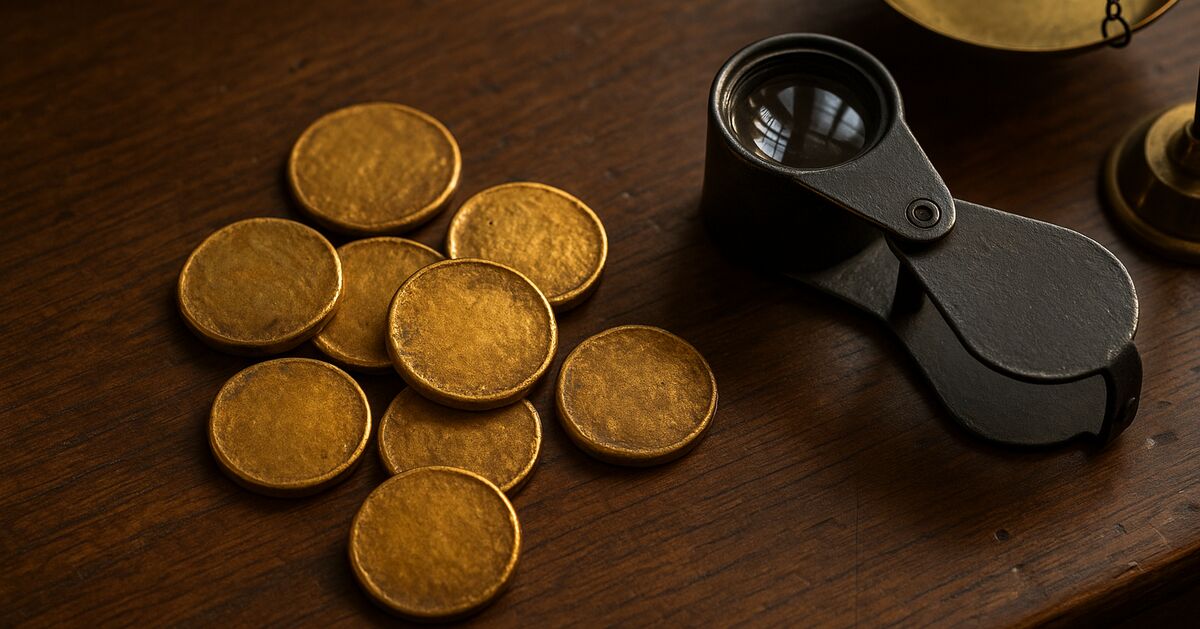
Austrian gold ducats turn up in estate collections more than people expect. A grandparent who emigrated from Central Europe, a great-uncle with a taste for old coins, an antique dealer's unsorted box - these are exactly the places where a small, thick, honey-gold coin with a double-headed eagle on the back quietly sits for decades. If one has landed in your hands, this guide will help you understand what it is, what it is actually worth, and how to make sure you get a fair price when you sell.
What an Austrian gold ducat actually is
The ducat was one of the most widely circulated gold coins in European trade history. The name traces back to a Latin inscription that appeared on many early examples: "Sit tibi, Christe, datus, quem tu regis iste ducatus" - a phrase meaning, roughly, "O Christ, let this duchy which you rule be dedicated to you." The inscription is itself a nod to Matthew 22:19-21, the passage where Christ is shown a Roman coin and says "render unto Caesar." That scriptural connection gave the ducat its name and its character as a coin meant to carry moral as well as monetary weight.
Ducats were minted across much of Europe for centuries. The Byzantine Empire, Venice, Hungary, the Netherlands, Denmark, Germany, Poland, Spain, and a dozen other states all produced versions. Austria's mint history with the ducat is generally traced back to at least the early 1600s, though exact dating varies depending on which Habsburg territory is counted. By the time Austria became the dominant ducat-minting power, the coin had a reputation for consistent weight and purity that made it trusted from the Baltic to the Levant.
The specific coins you are likely to hold
When people talk about "Austrian gold ducats" today, they are generally referring to one of three things.
The Franz Joseph I ducat. The obverse carries the portrait of Emperor Franz Joseph I with the Latin inscription "FRANC IOS I D G AUSTRIAE IMPERATOR" (Franz Joseph I, by the grace of God, Emperor of Austria). The reverse shows the imperial arms superimposed on a crowned double-headed eagle. These were struck through 1914, which is why they are sometimes called the 1914 ducat even when the date on the coin reads differently. After Franz Joseph died in 1916, the Austrian mint produced restrikes dated 1915, still carrying his image. Those restrikes are common and were made well into the twentieth century, so the date on a Franz Joseph ducat alone tells you almost nothing about when it was actually made.
The Francis I commemorative ducats. When Emperor Francis I (Francis Stephen of Lorraine, husband of Maria Theresa) died in 1765, Maria Theresa issued an edict that ducats be struck bearing his portrait and the date of his death, July 21, 1765. These were issued as commemorative mementos. Upon Maria Theresa's own death in 1780, her portrait in turn became the face of commemorative coins issued under an imperial decree - the same decree that governed the famous Maria Theresa Thaler. These pieces sit at an interesting crossroads between circulated trade coin and deliberate memorial object.
Modern restrikes. The Austrian Mint has continued producing restrike ducats as bullion and collector pieces for many decades. They carry historical designs but were minted long after the original production runs. Distinguishing a genuine period-struck coin from a later restrike matters enormously to a coin collector; it matters far less to a bullion buyer, who is pricing primarily on gold content.
Purity and weight: the numbers that drive the melt value
Austrian ducats are generally described as struck at 23¾ carats, though this figure should be verified against a numismatic reference before relying on it. In modern decimal terms, this is commonly cited as a fineness of approximately 0.986, but sellers should confirm this with a numismatic source or assay before relying on it for pricing. This is exceptionally high purity - higher than 22-carat (0.917 fine) British sovereigns or American gold eagles, and close to but not quite the 0.999 fine used in modern bullion coins like the Canadian Maple Leaf.
A standard single Austrian gold ducat is commonly reported to weigh about 3.49 grams, though sellers should verify this by weighing the coin themselves. A four-ducat piece is commonly reported to weigh about 13.96 grams, though this should be confirmed by weighing the coin directly. Because the purity is 0.986, the actual gold content of a single ducat is approximately 3.44 grams of pure gold, or about 0.1107 troy ounces. A four-ducat coin contains roughly 0.4438 troy ounces of pure gold.
To estimate melt value at any given moment, multiply the current spot price of gold (in dollars per troy ounce) by 0.1107 for a single ducat, or by 0.4438 for a four-ducat coin. That is your floor. The real question is whether your coin is worth more than the floor - and that depends on its condition, its date, and whether it is a genuine period issue or a restrike.
For a broader look at how melt value and buyer premiums interact across different coin types, the guide to selling gold coins on this site is worth reading alongside this one.
Restrikes versus originals: why it matters when you sell
This is the detail that trips up a lot of people selling inherited ducats. Because the Austrian Mint produced restrikes over many decades - using original dies, with original dates, on properly alloyed blanks - a casual visual inspection will not tell you whether a Franz Joseph ducat dated 1915 was struck in 1916 or in 1975. Both coins look nearly identical. Both are genuine Austrian Mint products. Both are 0.986 fine.
For a bullion buyer, the distinction is unimportant. You will receive melt value plus a small handling premium regardless.
For a coin dealer or collector buyer, the distinction is significant. A documented, original-strike Franz Joseph ducat in uncirculated condition carries a meaningful numismatic premium over its gold content. A restrike in similar condition carries a much smaller one. The problem is that proving originality requires either clear provenance documentation (purchase receipts, old collector notes, a credible family history) or specialist attribution. Without that, most dealers will price it as a restrike and offer accordingly. Do not argue with that assessment unless you have documentation to back your claim.
If you genuinely believe you have a period-original coin in excellent condition, get it attributed by a professional numismatist or submitted to a third-party grading service such as PCGS or NGC before selling. Grading costs money and takes time, so do the math first: only bother if the potential premium is meaningfully larger than the grading fee.
Who buys Austrian gold ducats and what each pays
There are three realistic buyer categories for an Austrian gold ducat, and they pay very differently.
Bullion dealers and precious-metals buyers. These buyers price almost entirely on gold content. Bullion dealers commonly offer a percentage of melt value below full spot price, though the exact range varies by dealer and should be confirmed by getting multiple quotes. A single ducat is a small transaction for a bullion dealer, so their percentage offer may be at the lower end of that range. This is a quick, predictable sale with no uncertainty about outcome, but you leave any numismatic value on the table entirely.
Coin dealers. A good coin dealer who handles European gold will recognize an Austrian ducat immediately and will price it correctly. For a common restrike, dealers may offer a price close to or at melt value, since they can often resell it at a modest premium, though this varies by dealer. For a genuine period-strike in fine condition, a knowledgeable dealer will factor in the numismatic premium and may offer meaningfully above melt. The catch is that coin dealers vary enormously in their expertise with European material. A dealer who specializes in U.S. coins may know little about Habsburg-era ducats and will simply default to melt value anyway.
Auction houses and specialist buyers. For genuinely rare date or mint-state originals with solid provenance, a specialist coin auction is where the numismatic premium is most fully realized. The audience is the people most likely to pay full collector value. The drawback is the longer timeline and a seller's commission that can be significant, so sellers should confirm the exact commission rate with the specific auction house before committing.
The breakdown of buyer types and what each pays for silver maps the same logic onto a different metal, and the framework transfers directly to gold coins. Reading it will help you think through which channel fits your situation.
Practical steps before you sell
Step one: weigh the coin. A genuine standard single ducat weighs 3.49 grams. A four-ducat piece weighs 13.96 grams. If your coin is significantly lighter or heavier than these figures, something is wrong and you need a professional assessment before proceeding.
Step two: do not clean it. This bears repeating because it comes up constantly. Cleaning a coin removes the natural surface patina that collectors and graders use to assess originality. A cleaned coin is worth less to a numismatic buyer than an uncleaned one, even if the cleaning looks like an improvement to an untrained eye. Leave it alone.
Step three: look at the edge. Austrian ducats have a reeded (milled) edge. A smooth edge on a coin that otherwise resembles a ducat is a red flag.
Step four: get at least two quotes. One quote is not a market. Take the coin to a coin dealer and a bullion dealer separately, tell each of them you are comparing, and see what comes back. The spread between offers will immediately tell you whether the coin is being treated as bullion or as something with collector value. The FAQ on this site covers some of the practical logistics of getting and comparing quotes if you are new to the process.
Step five: understand the spot-price dependency. Gold prices move daily. The melt value of your ducat today may be meaningfully different from what it was last week or will be next month. There is no strategy here except knowing the current spot price at the moment you are negotiating and using it to check any offer you receive against the rough melt floor. A buyer who cannot or will not tell you what spot price they are using is a buyer to be cautious around.
Buyer behavior to watch for
Inherited coins attract a subset of buyers who assume the seller knows nothing and will accept the first number offered. A few patterns to recognize: an offer given as a round dollar amount with no explanation of how it was calculated; pressure to decide quickly; dismissive language about the coin's condition designed to lower your expectations; and claims that the coin is "not really collectible" or "just bullion" without any examination of the date or strike. These are soft-pressure moves rather than honest negotiations.
The post on pressure tactics used by silver buyers was written for silver sellers, but the techniques described appear just as reliably when gold coins are on the table. Worth a read before you sit down with an unfamiliar buyer.
The commemorative and heirloom question
A question that comes up when selling inherited ducats: should I keep it? Austrian gold ducats, particularly the Maria Theresa-era commemoratives and the Franz Joseph pieces, genuinely are objects with history attached. The inscription on the coin is nearly 700 years old in its origins. The Habsburg double-headed eagle was the symbol of an empire that shaped Central Europe for centuries. If the coin came to you from family members who lived through that history, there is a non-financial argument for keeping it that is perfectly reasonable.
But if you are selling, sell without guilt. Gold does not expire, and the value locked in a 3.49-gram coin earning nothing in a drawer is real money that could be doing something useful. The people who minted these coins understood their monetary function as well as their symbolic one.
Selling alongside other inherited precious metals
Austrian ducats rarely arrive alone. They tend to appear with other gold coins, silver pieces, old jewelry, or mixed estate items. If you are sorting through a broader collection, working through everything systematically before approaching buyers will put you in a much stronger position. Lumping everything together and accepting a single bulk offer is a reliable way to undervalue at least some of what you have.
The practical end-to-end guide to selling gold and silver together covers how to handle mixed lots in a way that does not sacrifice value on either metal.
A final word on expectations
An Austrian gold ducat is a coin worth knowing about before you sell it. It is not a million-dollar rarity in most cases, but it is also not junk. A single 1915 restrike Franz Joseph ducat, at gold prices typical of recent years, has a melt value that is genuinely meaningful, and a period-original in fine condition is worth more still. The few hours spent weighing, researching, and getting two or three quotes will return more per hour than almost any other task you do this week.
Take your time, know the spot price, and deal with buyers who can explain their numbers. That is the whole playbook, and it works every time.
For more practical guidance on the broader process of selling precious metals, the home page of this site is a good starting point, and the blog index has detailed guides covering everything from identifying hallmarks to understanding what refiners actually pay.
Sources & further reading
- Precious Metals: Gold, Silver, and Platinum Group Metals (U.S. Geological Survey, National Minerals Information Center)
Revision history (2)
- Pre-publish editorial QA: 1 flagged, 0 softened; claim audit: 9 claims, 8 rewritten
- Pre-publish editorial QA: 1 flagged, 0 softened; claim audit: 11 claims, 9 rewritten
Claim-by-claim audit (9 checked)
- “Austrian ducats are generally described as struck at 23¾ carats, though this figure should be verified against a numismatic reference before relying on it.” (rewritten to what the article can stand behind)
- “In modern decimal terms, this is commonly cited as a fineness of approximately 0.986, but sellers should confirm this with a numismatic source or assay before relying on it for pri…” (rewritten to what the article can stand behind)
- “A standard single Austrian gold ducat is commonly reported to weigh about 3.49 grams, though sellers should verify this by weighing the coin themselves.” (rewritten to what the article can stand behind)
- “A four-ducat piece is commonly reported to weigh about 13.96 grams, though this should be confirmed by weighing the coin directly.” (rewritten to what the article can stand behind)
- “Bullion dealers commonly offer a percentage of melt value below full spot price, though the exact range varies by dealer and should be confirmed by getting multiple quotes.” (rewritten to what the article can stand behind)
- “For a common restrike, dealers may offer a price close to or at melt value, since they can often resell it at a modest premium, though this varies by dealer.” (rewritten to what the article can stand behind)
- “The drawback is the longer timeline and a seller's commission that can be significant, so sellers should confirm the exact commission rate with the specific auction house before co…” (rewritten to what the article can stand behind)
- “Austrian ducats are generally described as having a reeded (milled) edge, but this detail should be confirmed against a trusted numismatic reference before using it to judge authen…” (rewritten to what the article can stand behind)
- “Austria's mint history with the ducat is generally traced back to at least the early 1600s, though exact dating varies depending on which Habsburg territory is counted.” (rewritten to what the article can stand behind)